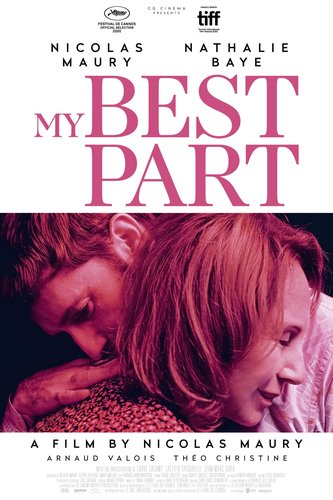
My Best Part

My Best Part (Garçon chiffon)

Movie · 2020 · 9 people

Nicolas Maury both directed and stars in My Best Part (French title Garçon chiffon), a French comedy-drama from 2020. Over 108 minutes it follows an actor in his thirties who loses his footing and goes back to his family. It was named in the official selection of the 2020 Cannes Film Festival but could not be shown there because of the pandemic in France. Instead it had its theatrical premiere on 28 August at the Angoulême Francophone Film Festival, was screened for distributors in the Industry Selects programme at the Toronto International Film Festival and opened commercially in France on 28 October.

Maury's character, Jérémie Meyer, is going through a hard time in both career and love; his relationship with his boyfriend Albert (Arnaud Valois) has been shaken and he feels close to a breakdown. To recover he leaves Paris for the Limousin region and his mother, Bernadette Meyer, played by Nathalie Baye. The homecoming leads Jérémie to question both his bond with her and his own uncertainties. Théo Christine plays Kévin, and Laure Calamy, Jean-Marc Barr and Laurent Capelluto complete the cast.

Maury wrote the screenplay with Sophie Fillières and Maud Ameline. In Germany the film is known as Die Rolle meines Lebens.

DirectorNicolas Maury

Reactions

You can pick up to 3 reactions.

Cast

Only cast members with a profile on this site are listed.
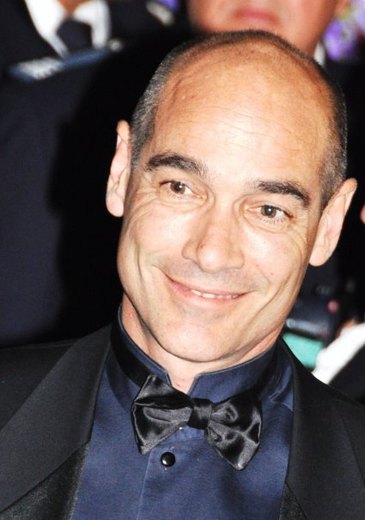
Jean-Marc Barr Jean-Marc Barr Actor · 66 years old Nathalie Baye Nathalie Baye Actor · died at 77 Laure Calamy Laurent Capelluto Nicolas Maury Florence Giorgetti Roxane Mesquida Dominique Reymond Astrid Whettnall

Through different eyes

Cinephile Looks at script, editing and directing choices; keeps a distance from formula films.

When a director writes himself into the lead, the camera can easily become the actor's mirror, and My Best Part runs that risk. In the script he wrote with Sophie Fillières and Maud Ameline, Maury makes his hero's indecision the material for both comedy and drama, but the shifts between the two tones are not always smooth. The return-from-Paris-to-the-hometown structure is also a familiar template; what holds the film up is not reinventing it but its wish to work through the tension between mother and son in fine detail. A first feature walking the line between personal and self-absorbed: its courage deserves credit, its looseness deserves criticism.

History & Society Lens Asks about the period, the social background and what the work reflects.

The film reads a man's crisis in his thirties from inside the mother's house in Limousin rather than from Paris. The choice is meaningful: when an acting career and a relationship built in the big city are shaken, the place of refuge is still the family in the provinces. A grown son's return to his mother paints a familiar picture of today's blurred line between independence and dependence. This back-and-forth between centre and province, career and family, loneliness and belonging is a subject that will speak especially to a generation trying to hold on in the big city.

Family Viewer Asks whether the whole household can watch it; cares about humour and heart.

This film is for grown-ups. It is about a man's collapse in his work and love life and his reckoning with his mother. There is a comic side, but laughs are not the focus. It is not a good pick for young children, and teenagers will most likely be bored. It suits adults who are curious about the bond between a mother and her grown child and want a quiet evening film.

These are not reader reviews: they are short editorial takes written from different viewer perspectives with AI assistance. Reader reviews are below.

Reviews (0)

Log in Log in to write a review.

Comments