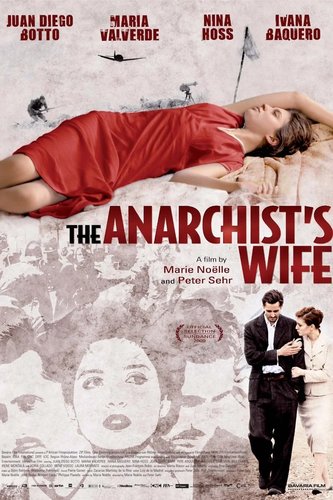
The Anarchist's Wife (Die Frau des Anarchisten)

The Anarchist's Wife (Die Frau des Anarchisten)

Movie · 2008 · 15 people

Marie Noëlle and Peter Sehr shared the directing of The Anarchist's Wife (in Spanish La mujer del anarquista), a 2008 historical drama made as a Spanish-German-French co-production. Shot in Spanish and French with a running time of about 122 minutes, it is known in Germany as Die Frau des Anarchisten and in France as La Femme de l'anarchiste.

The story unfolds during the Spanish Civil War and is built around a love story. Manuela (María Valverde) is a passionate woman ahead of her time, and her husband Justo (Juan Diego Botto) is a lawyer and an anarchist leader. When the war ends, Franco's regime treats Justo as a fugitive, and Manuela cannot learn anything about him. Searching openly or asking others for help would put her in serious danger; still, loving him more than the revolution and its principles, she keeps waiting for his return.

The screenplay is by Ray Loriga and Marie Noëlle. The film won the Bernhard Wicki Award at the 2008 Munich Film Festival and was also shown that year at the Valladolid International Film Festival.

DirectorPeter Sehr, Marie Noëlle

Reactions

You can pick up to 3 reactions.

Cast

Names without a link have no profile here yet.
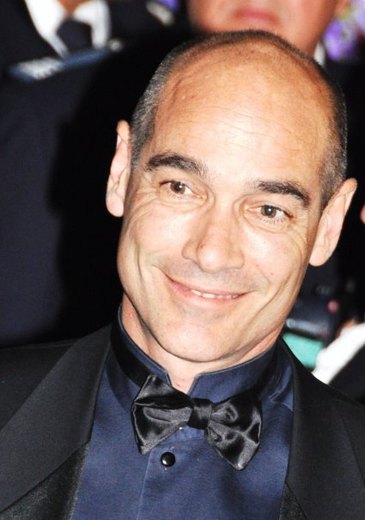
Jean-Marc Barr Jean-Marc Barr Actor · 66 years old Pierre Juan Diego Botto María Valverde Ivana Baquero Irene Visedo Nina Hoss Irene Montalà Luis Callejo Laura Morante Adrià Collado Biel Durán Pere Arquillué i Cortadella Javier Almeda Ludwig Blochberger Toni Sevilla

Through different eyes

History & Society Lens Asks about the period, the social background and what the work reflects.

Telling the Spanish Civil War not from the front but through a woman waiting at home is a valuable choice among films about the period. What did it mean for those left behind when a husband was branded a fugitive under Franco's regime? If even asking is dangerous, silence becomes a way of life. The film presents that silence as the most everyday face of post-war repression. Manuela loving her husband more than the revolution sets up a strong tension between ideology and personal bond. A meaningful window on the era, for those who know it and those who don't.

Cinephile Looks at script, editing and directing choices; keeps a distance from formula films.

The shared direction and the screenplay by Ray Loriga and Marie Noëlle give the film a consistent but cautious language. The problem lies in the dramatic structure: when the engine of the story is waiting, sustaining tension across 122 minutes gets hard, and the middle section grows heavy. Trying to balance a love story against the historical backdrop, the film sometimes leans on classic melodrama patterns and steers clear of surprise. The Bernhard Wicki Award in Munich is an understandable choice, but next to bolder examples of the genre, the film stays on safe ground.

Family Viewer Asks whether the whole household can watch it; cares about humor and heart.

A heavy, sad film about war, loss and a long wait. Not for young children; the subject is too much for them. High-school-age teenagers, especially if they have covered this period in history class, could watch it with their family and talk it over afterwards. Not one for a cheerful family night, but right for a quiet, thoughtful evening.

These are not reader reviews: they are short editorial takes written from different viewer perspectives with AI assistance. Reader reviews are below.

Reviews (0)

Log in Log in to write a review.

Comments