
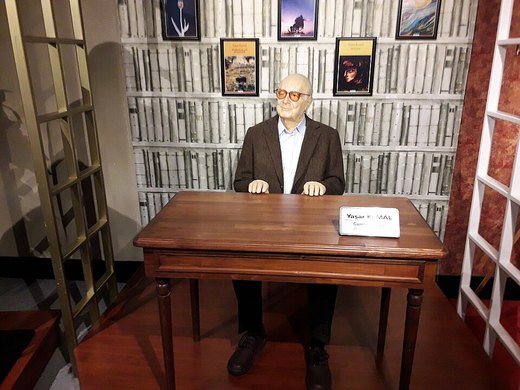
Yaşar Kemal
Screenwriter · died at 91
Profile
| Age | died at 91 |
|---|---|
| Birth date | October 6, 1923 |
| Birthplace | Gökçedam |
| Died | February 28, 2015 |
| Profession | Screenwriter, Novelist, Journalist, Poet |
| Zodiac sign | Libra |
Yaşar Kemal — Biography
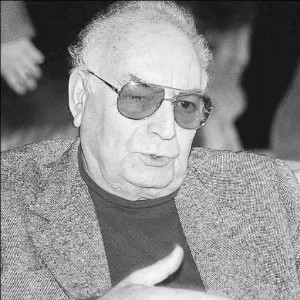
Born Kemal Sadık Gökçeli and known by his pen name Yaşar Kemal (6 October 1923, Hemite/Gökçedam, Osmaniye – 28 February 2015, Istanbul), he was a Turkish novelist, short-story writer, poet, journalist and human-rights advocate of Kurdish descent, widely regarded as one of the leading figures in modern Turkish literature. He published his first poem at sixteen in the magazine Görüşler in 1939, later compiling laments gathered from the Çukurova and Taurus regions into his 1943 book "Ağıtlar," and wrote his first short story, "Pis Hikâye," while doing his military service. Through the circle around the Adana magazine Çığ in the 1940s he came to know figures such as Pertev Naili Boratav and Nurullah Ataç, and his close friendship with Arif Dino, brother of the painter Abidin Dino, proved formative for his intellectual development. He adopted the name "Yaşar Kemal" upon joining the newspaper Cumhuriyet, where he worked from 1951 to 1963 and became known for columns and interviews documenting the economic and social hardships of rural Anatolians.
He began his best-known work, the novel İnce Memed (Memed, My Hawk), in 1947 but set it aside before completing the first volume in 1953–54; serialized in Cumhuriyet and published in two volumes in 1955, it follows a folk-hero figure who defends Çukurova's poor against oppressive landlords, and the completed four-volume saga, later translated into more than forty languages, took thirty-two years to finish. Drawing heavily on Anatolian legends and oral storytelling, several of his novels were later adapted for the screen. He received 38 awards over his lifetime, was a member of the PEN writers' association, and became the first Turkish author ever put forward for the Nobel Prize in Literature.
Kemal's outspoken writing on Kurdish identity repeatedly drew legal action: in the mid-1990s he was tried under Turkey's anti-terror laws over an article criticizing the armed conflict between the PKK and Turkish security forces, and he later received a suspended prison sentence for another piece condemning racism against Kurds. Married to Thilda Serrero from 1952 until her death in 2001, he remarried Ayşe Semiha Baban in 2002. He died in Istanbul on 28 February 2015 at age 91 from organ failure and was buried at Zincirlikuyu Cemetery; in 2017, a hundred-member jury assembled by the newspaper Hürriyet ranked İnce Memed as the single greatest novel in Turkish literature.
Photos
Reactions
You can pick up to 3 reactions.
Comments (0)