Confessions of a Police Captain

Confessions of a Police Captain (Confessione di un commissario di polizia al procuratore della repubblica)

Movie · 1971 · 15 people

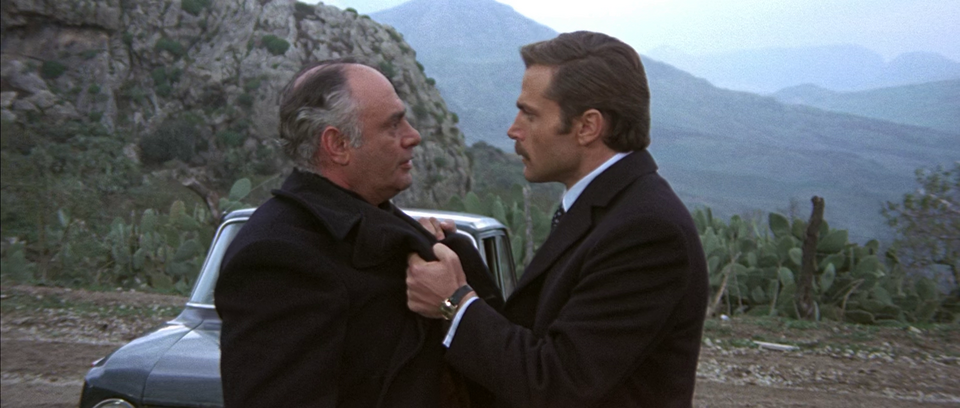
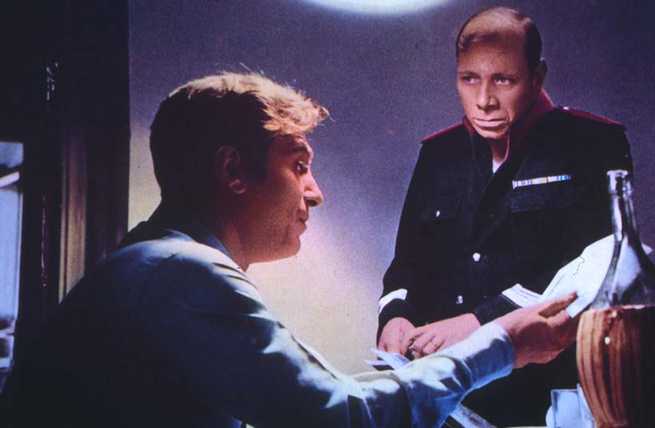
Confessions of a Police Captain (Confessione di un commissario di polizia al procuratore della repubblica) was directed by Damiano Damiani in 1971 as an Italian crime drama. He wrote the screenplay with Salvatore Laurani, working from a story he had developed with Fulvio Gicca Palli. Franco Nero, Martin Balsam and Marilù Tolo lead the cast.

District prosecutor Traini is determined to imprison Ferdinando Lomunno, whom he sees as the chief of the city's organized crime. He discovers that commissioner Bonavía carries a personal grudge against Lomunno, who long ago ordered the killing of a young union leader Bonavía admired. Traini insists on staying within the bounds of the law, whereas Bonavía, having lost all trust in it, gradually turns into a man dispensing justice on his own terms. Through the clash between these two figures, the film examines how deeply the state and the mafia have become intertwined.

Produced by Euro International Film, the picture opened on 26 March 1971. It received the Golden Prize at the 7th Moscow International Film Festival that year and the Prix International de l'Académie du Cinéma at the Étoile de Cristal Awards in 1972.

DirectorDamiano Damiani
Production companyEuro International Film

Reactions

You can pick up to 3 reactions.

Cast

Only cast members with a profile on this site are listed.
Giancarlo Prete Giancarlo Prete Actor · died at 58 Nello Pazzafini Nello Pazzafini Actor · died at 62 Franco Nero Martin Balsam Marilù Tolo Claudio Gora Luciano Catenacci Arturo Dominici Michele Gammino Adolfo Lastretti Calisto Calisti Giancarlo Badessi Filippo De Gara Paolo Cavallina Gianni Palladino
Through different eyes

Cinephile Looks at script, editing and directing choices; keeps a distance from formula films.

Damiani builds the film on a thesis more than on a clash of characters: prosecutor Traini, who insists on staying within the law, against commissioner Bonavía, who has lost his faith in justice and turns to his own methods. That two-pole design gives the script a clear spine; almost every situation seems set up to test one stance or the other. Its strength is also its weakness: at times the characters risk turning from people into spokesmen for a position. Still, tying this duel of ideas to the tension of a crime drama keeps the film from dry didacticism. The Golden Prize in Moscow shows it was read as political cinema in its own day.

History & Society Lens Asks about the period, the social background and what the work reflects.

In depicting an order where the state and the mafia are entangled, the film opens its deepest wound through the killing of a union leader. That detail matters: organised crime is linked not only to violence but to the suppression of labour and the right to organise. The split between Traini and Bonavía carries the dilemma of a society that has lost trust in its institutions: the law looks slow and besieged, while the man seeking his own justice risks drawing close to the same violence. Seen this way, the film also reads as a period document of the crisis of trust in early-seventies Italy.

Action & Thriller Fan Puts pace, tension and set pieces first; little patience for slow drama.

A mafia boss, a commissioner with an old score to settle and a by-the-book prosecutor: everything tension needs is on the table. Bonavía's turn to his own methods keeps a sense of danger running through the film. Still, this is a crime drama, so expect reckonings and arguments rather than chases. Satisfying for crime fans, but anyone hunting for action scenes may find the pace slow.

These are not reader reviews: they are short editorial takes written from different viewer perspectives with AI assistance. Reader reviews are below.

Reviews (0)

Log in Log in to write a review.

Comments