Let Joy Reign Supreme

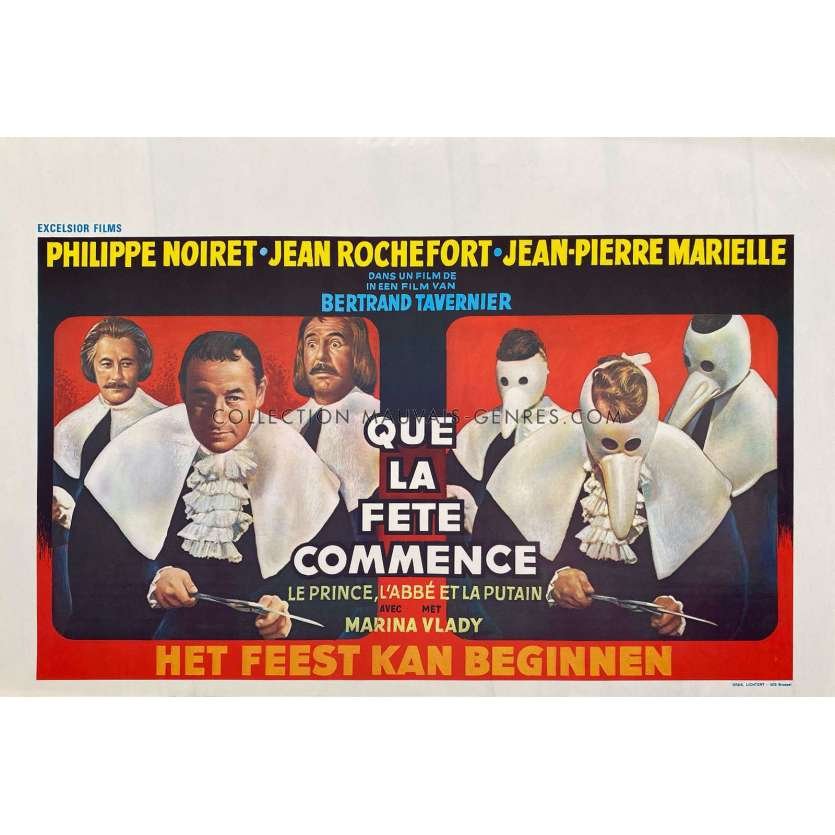
Let Joy Reign Supreme (Que la fête commence)

Movie · 1975 · 15 people

Bertrand Tavernier directed the 1975 French historical film Let Joy Reign Supreme, originally titled Que la fête commence…. Running about 114 minutes, it reaches back to the Régence, the regency years at the start of the eighteenth century in France. It also stands out among Tavernier's works for its honors: it won the Prix Méliès from the French Syndicate of Cinema Critics and four César Awards, five prizes in all.

The story rests on a real episode, the Pontcallec Conspiracy in Brittany. Philippe Noiret, Jean Rochefort and Jean-Pierre Marielle share the leading roles. Christine Pascal, Jacques Hilling, Alfred Adam, Bernard Lajarrige, Agnès Château, Andrée Tainsy, Bernadette Le Saché, Brigitte Roüan, Bruno Balp, Daniel Duval, François Dyrek and Christian Clavier are also in the cast.

Tavernier wrote the screenplay with Jean Aurenche and Pierre Bost. The Césars came for best director, best supporting actor, best screenplay and best production design, and the film was also nominated for best film, best supporting actress and best music. In Germany it was released as Wenn das Fest beginnt….

DirectorBertrand Tavernier

Reactions

You can pick up to 3 reactions.

Cast

Only cast members with a profile on this site are listed.

Christian Clavier Christian Clavier Film actor · 74 years old Michel Berto Actor · died at 56 Philippe Noiret Jean Rochefort Jean-Pierre Marielle Christine Pascal Jacques Hilling Agnès Château Alfred Adam Andrée Tainsy Bernadette Le Saché Bernard Lajarrige Brigitte Roüan Bruno Balp Daniel Duval

Through different eyes

History & Society Lens Asks about the period, the social background and what the work reflects.

The film goes back to the Regency years in France at the start of the eighteenth century and takes up a real event, the Pontcallec conspiracy in Brittany. In French history this is a period often overlooked between the splendour of Louis XIV and the Revolution, so the choice is valuable in itself. The relationship between power in Paris and a conspiracy in the provinces offers interesting ground for thinking about the tension between centre and periphery. For viewers unfamiliar with the period, though, the background may not be clear enough; knowing a little about the Regency and the context of the conspiracy makes what the film has to say far more meaningful.

Cinephile Looks at script, editing and directing choices; keeps a distance from formula films.

Tavernier's film is one of those that refuse to reduce the costume drama to a display of sets and costumes. The screenplay he wrote with Jean Aurenche and Pierre Bost tries to strike the difficult balance of bringing a real historical event to the screen, and the César for best screenplay rewards that effort. The awards for best director and best production design point to how carefully the period texture was built. Five prizes in all, plus nominations in other categories including best film, show that it was more than a genre exercise and carried real weight in the French cinema of its day. A good starting point for anyone curious about cinema that uses the historical film as a way of thinking.

Yeşilçam Nostalgic A viewer raised on the classics, looking for warm storytelling and strong acting.

Seeing Philippe Noiret, Jean Rochefort and Jean-Pierre Marielle in the same film is a gift in itself for anyone who loves the richness of French acting, and the César for best supporting actor shows how much the performances matter here. Yet three great actors sharing the lead is both a richness and a reason there is no single hero for the audience to attach to. Finding one's way through such a large cast may take some effort for someone used to warm stories with one clear centre.

These are not reader reviews: they are short editorial takes written from different viewer perspectives with AI assistance. Reader reviews are below.

Reviews (0)

Log in Log in to write a review.

Comments