The Intruder

The Intruder (L'Intrus)

Movie · 2004 · 15 people

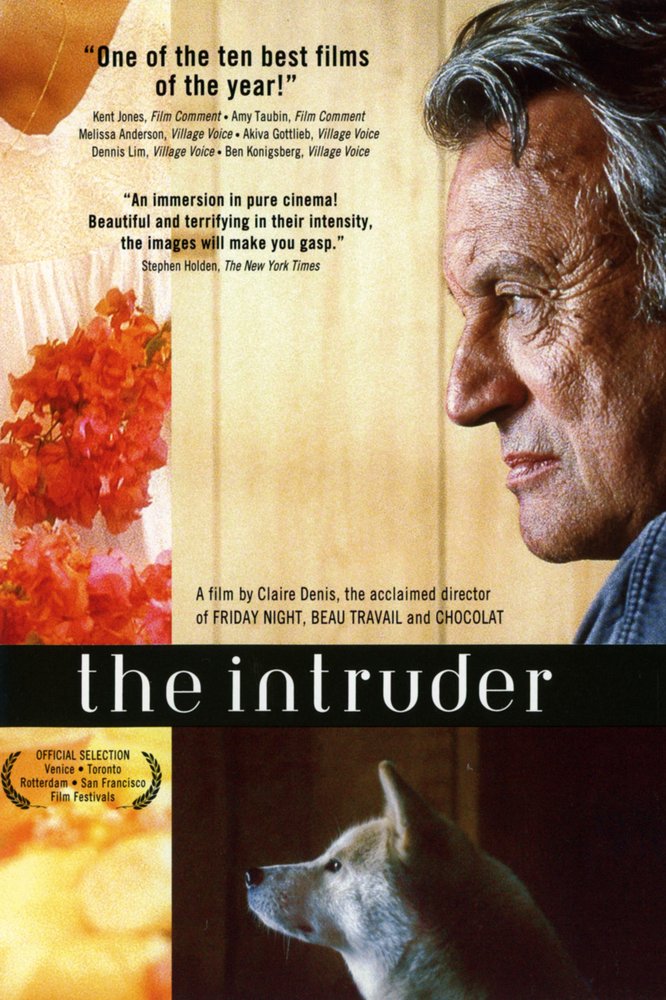
Claire Denis directed The Intruder, in French L'Intrus, a 2004 French drama whose screenplay she wrote with Jean-Pol Fargeau. It takes its inspiration from a short book of the same name by the French philosopher Jean-Luc Nancy. Made in French and running about 130 minutes, it is regarded as Denis's most complex film. It had its world premiere in competition at the 61st Venice International Film Festival on 9 September 2004 and was released in France on 4 May 2005.

At its centre is Louis Trebor (Michel Subor), a solitary man who lives with his dogs in a forest near the French-Swiss border. With a failing heart that urgently needs a transplant, he leaves his home and his estranged son behind to seek an illicit one. He also decides to go to Tahiti to find a son he has not seen for years, and as he pursues him he starts to face his past. Béatrice Dalle appears as the Queen of the Northern Hemisphere, Florence Loiret Caille as Antoinette and Alex Descas as a priest. Grégoire Colin is also in the cast.

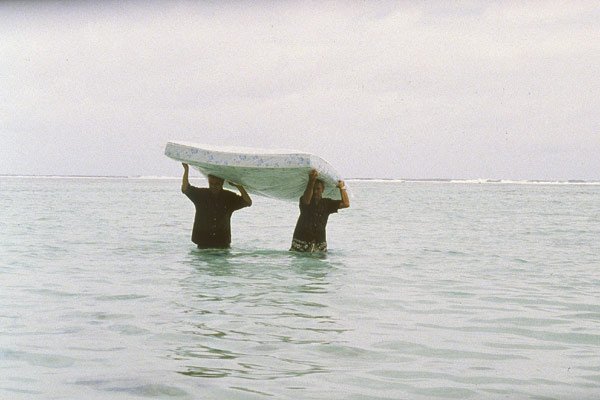
The narrative avoids a linear flow and moves impressionistically between waking life and dream, and the film is counted among Denis's most enigmatic works.

DirectorClaire Denis
The Intruder (L'Intrus) The Intruder (L'Intrus) The Intruder (L'Intrus)

Reactions

You can pick up to 3 reactions.

Cast

Only cast members with a profile on this site are listed.

Grégoire Colin Grégoire Colin Film actor · 51 years old Michel Subor Béatrice Dalle Florence Loiret Caille Yekaterina Golubeva Bambou Lolita Chammah Alex Descas Kim Dong-Ho Se-tak Chang Hong-suk Park Edwin Alin Henri Tetainanuarii Jean-Marc Teriipaia Anna Tetuaveroa

Through different eyes

Cinephile Looks at script, editing and directing choices; keeps a distance from formula films.

Claire Denis almost entirely abandons linear storytelling here; the film builds an impressionistic structure that drifts between waking and dream, linking scenes by association rather than cause and effect. Its inspiration in Jean-Luc Nancy's book explains this: the heart transplant becomes a metaphor for the stranger who enters the body. That daring deserves respect. My reservation is that the mystery, past a certain point, stops producing meaning and becomes a wall that keeps the viewer out. As it grows unclear which scenes are real and which imagined, the character's reckoning with his past blurs too. Rich for those ready to surrender to images and rhythm, draining for those who want a story.

History & Society Lens Asks about the period, the social background and what the work reflects.

The most thought-provoking thing about the film is that it centres on a man who turns to an illegal heart transplant to survive. The question of where the organ in someone's body came from points to a world in which borders and money decide who gets to live. It also matters that the story stretches from a forest on the French-Swiss border to Tahiti, a route that reaches into France's overseas past. The journey of a father who leaves one estranged son behind to look for another he has not seen in years asks how late family ties can still be mended. The film does not argue these themes openly; it lets you sense them.

Family Viewer Asks whether the whole household can watch it; cares about humour and heart.

This is not a family film. The story does not move in a straight line, dream and reality blur, and the plot turns on an illegal heart transplant. Children and teenagers will most likely lose the thread and get bored. Even among adults it suits only patient viewers who like art cinema. For a family evening, pick something else.

These are not reader reviews: they are short editorial takes written from different viewer perspectives with AI assistance. Reader reviews are below.

Reviews (0)

Log in Log in to write a review.

Comments