Trepalium

Trepalium

TV Series · 2016 · 7 people

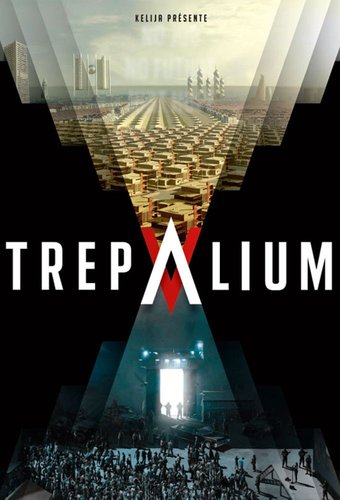
Trepalium is a six-episode French science-fiction and dystopian miniseries set in a near future where eighty percent of the population is jobless and the privileged few live behind a wall. Antarès Bassis and Sophie Hiet created it. Each episode runs about 52 minutes, and it aired on Arte on February 11 and 18, 2016, in two blocks of three, simultaneously in France and Germany. It questions the place of work in society. The title fuses trépas, meaning death, with tripalium, the ancient instrument of torture linked to the French word travail.

The privileged twenty percent live in the City, apart from everyone else. Izia, a young woman, was born in the Zone on the poor side and fights to survive. Tension keeps rising as rebellion spreads among the unemployed, activists multiply sabotage and the balance between City and Zone grows fragile. To ease matters, the authorities launch a program promising work in the City to ten thousand people from the Zone.

Vincent Lannoo directed, the writers include Thomas Cailley, Sébastien Mounier and Antarès Bassis, and Arte France produced. The cast features Lubna Azabal, Léonie Simaga, Pierre Deladonchamps, Ronit Elkabetz, Aurélien Recoing and Charles Berling. It was shown out of competition at the La Rochelle TV Fiction Festival in September 2015. Planned as a limited series, it got no second season.

DirectorVincent Lannoo
Production companyArte France
NetworkArte

Reactions

You can pick up to 3 reactions.

Cast

Names without a link have no profile here yet.

Lubna Azabal Lubna Azabal Actor · 53 years old Lisbeth Léonie Simaga Pierre Deladonchamps Ronit Elkabetz Aurélien Recoing Charles Berling Achille Ridolfi

Through different eyes

AI-assisted editorial takes written from different viewer perspectives. They are not reader reviews; those are below.

Series Binger A series devotee tracking character arcs, cast chemistry and season pacing.

Being a closed six-episode miniseries is Trepalium's biggest advantage: the story never drags, and there are no half-tied knots left for a second season. It is a great fit if you want a dystopia with a clear beginning and end that you can finish in a weekend. That brevity has a cost, though. Building the world of the City and the Zone takes a fair amount of time, so the supporting characters' arcs sometimes feel rushed and some relationships don't get the room they deserve. If you like long-haul bonds with characters, you may find yourself wishing for a few more episodes.

History & Society Lens Asks about the period, the social background and what the work reflects.

Trepalium's starting point lies in the etymology of its title: thinking about work through a word derived from an instrument of torture, and about labor together with pain. The series turns that idea inside out; in a world where most of the population is unemployed, work stops being suffering and becomes a privilege everyone chases. The program promising ten thousand people from the Zone jobs in the City looks less like a way of bringing down the wall between classes than a way of managing it. At a time of ongoing debate about automation and precarious work, it is a thought-provoking series that voices anxieties about labor and exclusion through a harsh allegory.

Cinephile Looks at script, editing and directing choices; keeps a distance from formula films.

Trepalium's dystopia rests on one of the genre's most literal metaphors, an actual wall separating the wealthy from everyone else. That directness is both its strength and its weakness: the allegory is legible within minutes, and after that it becomes hard to find new layers to surprise the viewer. The series works best when it brings the big idea down to individual choices, showing what a job offer means in one person's life; at its weakest, dialogue explaining the system gets ahead of the drama. The six-episode frame gives more room to build a world than a feature film would, but it never fully sheds the weight of being a thesis piece.

Reviews (0)

Log in Log in to write a review.

Comments