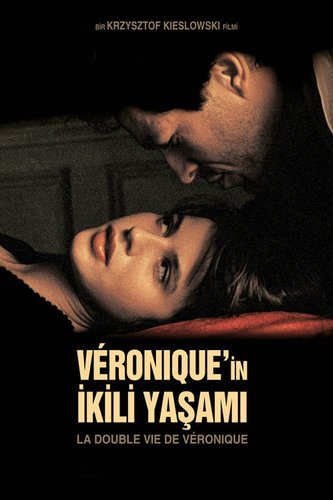
Véronique’in İkili Yaşamı

The Double Life of Véronique (La Double Vie de Véronique)

Movie · 1991 · 14 people

Krzysztof Kieślowski made the poetic 1991 drama The Double Life of Véronique (La double vie de Véronique), spoken in French and Polish. It explores identity, love and intuition through two young women who have never met but share a mysterious emotional bond. Kieślowski's first film made partly outside his native country, it won the FIPRESCI Prize and the Ecumenical Jury Prize at Cannes in 1991, and Irène Jacob took Best Actress. It was chosen as Poland's Oscar entry but not accepted as a nominee.

The film falls into two parts. The first third or so follows Weronika, a young choir soprano in Poland. After her sudden death on stage, the story moves to France and to Véronique, a music teacher who closely resembles her. Irène Jacob plays both. Véronique is overtaken by an unexplained sense of loss and gives up singing, then follows the trail of Alexandre (Philippe Volter), a puppeteer and children's author who sends her mysterious packages.

Kieślowski wrote the screenplay with Krzysztof Piesiewicz, and the music is by Zbigniew Preisner, who had worked with him on Dekalog. Canal+ and Norsk Film are credited, and the film runs about 98 minutes.

DirectorKrzysztof Kieślowski
Production companyCanal+

Reactions

You can pick up to 3 reactions.

Cast

Only cast members with a profile on this site are listed.
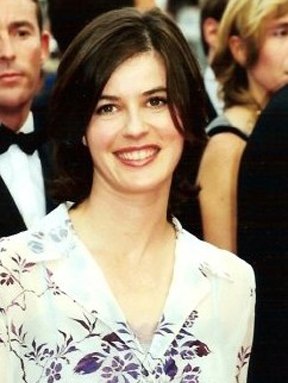
Irène Jacob Irène Jacob Film actor · 60 years old Aleksander Bardini Claude Duneton Guillaume de Tonquédec Philippe Volter Sandrine Dumas Jerzy Gudejko Kalina Jędrusik Louis Ducreux Władysław Kowalski Gilles Gaston-Dreyfus Halina Gryglaszewska Chantal Neuwirth Anna Kadulska
Through different eyes

Cinephile Looks at script, editing and directing choices; keeps a distance from formula films.

Kieślowski's daring is in the structure: the first third of the film belongs to one woman, then the story starts again almost from scratch with another woman who closely resembles her. That break makes room for a narrative centred on intuition and mood rather than plot. Irène Jacob carrying both roles is what holds the design up, so her Best Actress prize at Cannes is no accident. In a story that opens with a choir soprano, Zbigniew Preisner's music works almost like a character. My reservation: a poetic language that deliberately leaves meaning suspended can shut out viewers who want a clear explanation, and at times the mystery reads more as vagueness than depth.

History & Society Lens Asks about the period, the social background and what the work reflects.

A story split between Poland and France, and Kieślowski's first film made partly outside his own country, it invites a reading as a product of a period of transition. Two women who have never met yet share a deep bond could, in my view, also be seen as a quiet image of how Eastern and Western Europe related in those years: the same face, two separate lives. The film does not force that reading, though; it is less a political allegory than a personal inquiry into identity, love and intuition. Anyone looking for an explicit take on the history of the time may find it too inward-looking.

Family Viewer Asks whether the whole household can watch it; cares about humour and heart.

A calm, poetic, mysterious film: nothing loud, but nothing fast either. Young children will get bored and miss most of it. At its centre is a sense of loss following a sudden death, so the mood is heavy. Suitable for adults used to art films and for older teenagers; if you want a fun family evening, choose something else.

These are not reader reviews: they are short editorial takes written from different viewer perspectives with AI assistance. Reader reviews are below.

Reviews (0)

Log in Log in to write a review.

Comments