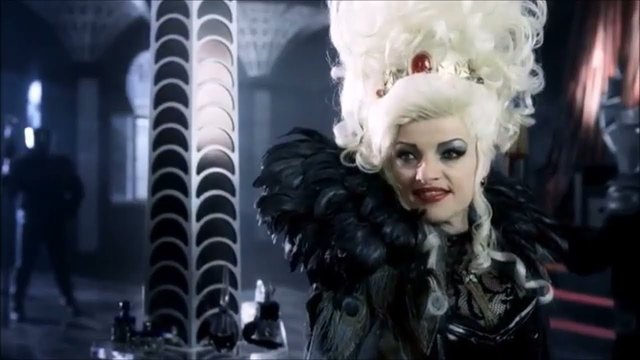
7 Dwarves – Men Alone in the Wood

7 Dwarves – Men Alone in the Wood (7 Zwerge – Männer allein im Wald)

Movie · 2004 · 14 people

Snow White and the Seven Dwarfs serves as no more than a very loose template for 7 Dwarves – Men Alone in the Wood (7 Zwerge – Männer allein im Wald), and the 2004 German comedy pokes fun at plenty of other Brothers Grimm fairy tales along the way. Otto Waalkes, who came up with the film and plays the lead, made it with director Sven Unterwaldt, screenwriter Bernd Eilert and composer Joja Wendt. The film runs about 85 minutes and was backed by Filmstiftung NRW.

It was a major hit in Germany: drawing almost seven million viewers, it was the second most-watched film in German cinemas in 2004 and ranks eleventh among the most successful German films since attendance counts began in 1968. Alongside Waalkes, the cast includes Hilmi Sözer, Nina Hagen, Cosma Shiva Hagen, Heinz Hoenig, Mavie Hörbiger, Tom Gerhardt, Harald Schmidt, Helge Schneider, Christian Tramitz, Markus Majowski and Hans Werner Olm.

The success led to a 2006 sequel, 7 Dwarves: The Forest Is Not Enough, and a 2014 computer-animated film, The Seventh Dwarf.

DirectorSven Unterwaldt

Reactions

You can pick up to 3 reactions.

Cast

Only cast members with a profile on this site are listed.

Hilmi Sözer Hilmi Sözer Actor · 56 years old Tom Gerhardt Cosma Shiva Hagen Nina Hagen Heinz Hoenig Mavie Hörbiger Markus Majowski Hans Werner Olm Harald Schmidt Ralf Schmitz Helge Schneider Martin Schneider Christian Tramitz Otto Waalkes

Through different eyes

Family Viewer Asks whether the whole household can watch it; cares about humour and heart.

A comedy that pokes fun at fairy-tale characters looks tailor-made for families with children at first glance. But this film does not tell the story of Snow White; it sends up the Grimm fairy tales. Parody jokes may land better with older children who know the tales, and with adults. For little ones, it is a good idea to take a look yourself first.

Cinephile Looks at script, editing and directing choices; keeps a distance from formula films.

A project conceived by and starring Otto Waalkes naturally leans heavily on his comic persona. Fairy-tale parody is a flexible formula: Snow White is only a loose frame, and the film drops in on many other Grimm tales. That freedom opens plenty of room for gags, but it also risks turning the story into a loosely linked string of sketches. A cast this large can magnify the problem, since the effort to give everyone a moment weakens dramatic unity. In my view it should be judged as a parade of jokes rather than a story, and it is worth remembering that local humour does not always cross borders.

History & Society Lens Asks about the period, the social background and what the work reflects.

Reaching almost seven million viewers and becoming the second most-watched film in German cinemas in 2004 shows that this comedy turned into a pop-culture event. The Grimm fairy tales are cornerstones of German cultural memory, and mocking them so freely reflects the closeness that comes from sending up a shared heritage together. The way its success grew into a brand, with a sequel and an animated film, sums up the strength of homegrown box-office comedy at the time. Yet humour this local may not reach viewers who do not share its cultural codes.

These are not reader reviews: they are short editorial takes written from different viewer perspectives with AI assistance. Reader reviews are below.

Reviews (0)

Log in Log in to write a review.

Comments