Banzo

Banzo

Movie · 2024 · 15 people

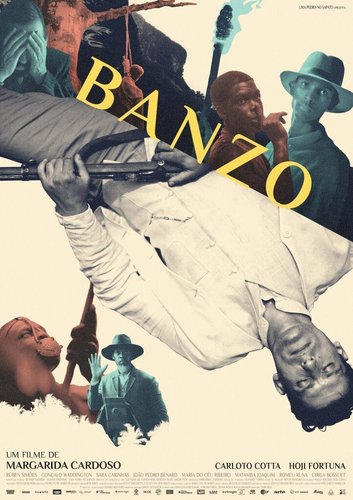
Banzo looks back at Portuguese colonialism in Africa through the memory of the people it enslaved. Margarida Cardoso wrote and directed this 2024 Portuguese-language drama, a co-production between France, the Netherlands and Portugal. The title comes from "banzo," the deep sorrow and homesickness of enslaved people. Filipa Reis produced it.

The story is set in 1907 on a plantation island of São Tomé and Príncipe, then a Portuguese colony. Afonso, a doctor, is sent to cure forced laborers suffering from "pathological nostalgia," which sometimes ends in suicide. His medical method fails because he cannot grasp the emotional and spiritual side of their pain. Carloto Cotta plays Afonso and Hoji Fortuna plays Alphonse; Rúben Simões, Gonçalo Waddington, Sara Carinhas, João Pedro Bénard, Maria do Céu Ribeiro and Matamba Joaquim are also in the cast. At its core is the violent relationship between colonists and the Black workers they exploited.

The film screened in national competition at IndieLisboa on May 28, 2024, taking the Universities Culturgest Award for best Portuguese feature and the Tree of Life Award. At the 15th Sophia Awards it won ten of its fourteen nominations, including Best Film and Best Director. Portugal chose it as its entry for the Best International Feature at the 98th Academy Awards, but it was not nominated.

DirectorMargarida Cardoso

Reactions

You can pick up to 3 reactions.

Cast

Names without a link have no profile here yet.

Hoji Fortuna Hoji Fortuna Actor · 52 years old Alphonse Carloto Cotta Rúben Simões Gonçalo Waddington Sara Carinhas João Pedro Bénard Maria do Céu Ribeiro Matamba Joaquim Romeu Runa Cirila Bossuet Beatriz Batarda Albano Jerónimo Jó do Mocho Adriano Luz Dinarte Branco

Through different eyes

AI-assisted editorial takes written from different viewer perspectives. They are not reader reviews; those are below.

Cinephile Looks at script, editing and directing choices; keeps a distance from formula films.

Margarida Cardoso's most interesting choice is to approach colonialism through a failed diagnosis. The "pathological nostalgia" the doctor tries to treat with medicine sets up the film's real question: how can science see a pain it cannot measure? It's an intellectually strong but risky frame; building the story around a doctor's assignment can easily push the workers whose suffering it depicts into the background. How well the film keeps that balance is for each viewer to judge. The run of prizes from IndieLisboa to the Sophia Awards, and Portugal choosing it for the Oscars, show how seriously it was taken at home; but awards don't answer that structural question.

History & Society Lens Asks about the period, the social background and what the work reflects.

What makes Banzo valuable is that it treats colonialism not only as a system of exploited labor but as one that made people sick in spirit. Naming the forced laborers' suffering with a word for the homesickness of enslaved people deliberately links two eras. It also matters that a European country looks at its own colonial legacy through memory and historical wounds; rather than consigning the wrong to a distant past, the film tries to name the wound. Keeping the violent relationship between colonists and workers at its center stops it from becoming a romantic period piece.

Family Viewer Asks whether the whole household can watch it; cares about humor and heart.

Forced laborers' suffering, violence and suicide: the film's ground is heavy. With high-school-age teens it can work as a companion to history lessons, but leave time to talk afterwards. Not suitable for younger kids, and adults shouldn't expect a light evening film either.

Reviews (0)

Log in Log in to write a review.

Comments