
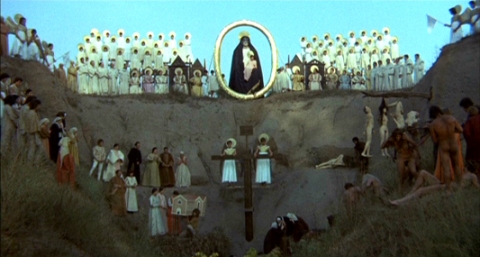
The Decameron (Il Decameron)
Dekameron'un Aşk Öyküleri is the Turkish title of Il Decameron (The Decameron), a 1971 erotic comedy written and directed by Pier Paolo Pasolini, co-produced by Italy, France and West Germany. It adapts Giovanni Boccaccio's collection of one hundred tales. As the first film of Pasolini's "Trilogy of Life", it was followed by The Canterbury Tales (1972) and Arabian Nights (1974). At the 1971 Berlin Film Festival it won the Silver Bear Extraordinary Jury Prize.
Pasolini chooses nine tales and moves them from Florence to Naples, telling them in Neapolitan dialect. The cheerfulness of the rising bourgeoisie gives way to the joy and innocence of ordinary people, and the dialect points to the poor south being exploited by the richer north. Franco Citti plays Ciappelletto and Ninetto Davoli plays Andreuccio of Perugia, while Pasolini himself appears as the pupil of the painter Giotto. Silvana Mangano has a brief, uncredited role as the Madonna. Nudity, broad humour and satire of the Church run through it.
Alberto Grimaldi produced and Ennio Morricone composed the music. The film was first shown in Turkey in January 1973. Pasolini aimed not to recreate Boccaccio's world faithfully but to criticise the modern one; he is said to have been dismayed by the poor imitations that followed and to have disowned the film.
| Director | Pier Paolo Pasolini |
|---|---|
| Production company | Produzioni Europee Associati |
Reactions
You can pick up to 3 reactions.
Cast
Only cast members with a profile on this site are listed.
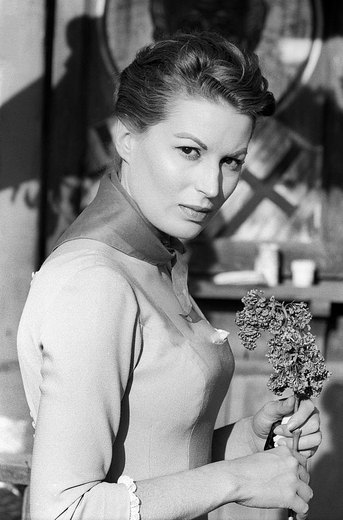 Silvana Mangano
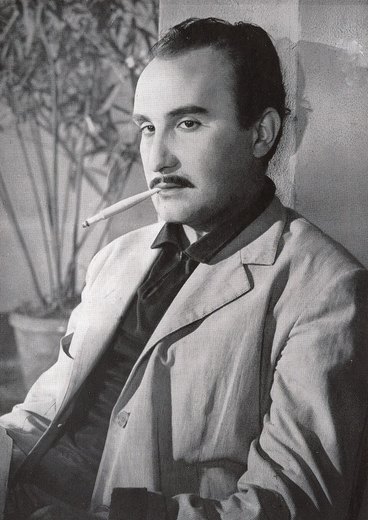 Gianni Rizzo
Franco Citti
Ninetto Davoli
Pier Paolo Pasolini
Angela Luce
Giuseppe Zigaina
Guido Alberti
Giacomo Rizzo
Vincenzo Amato
Monique van Vooren
Giani Esposito
Maria Gabriella Maione
Guido Mannari
Elisabetta Genovese
Comments