My American Uncle

My American Uncle (Mon oncle d'Amérique)

Movie · 1980 · 15 people

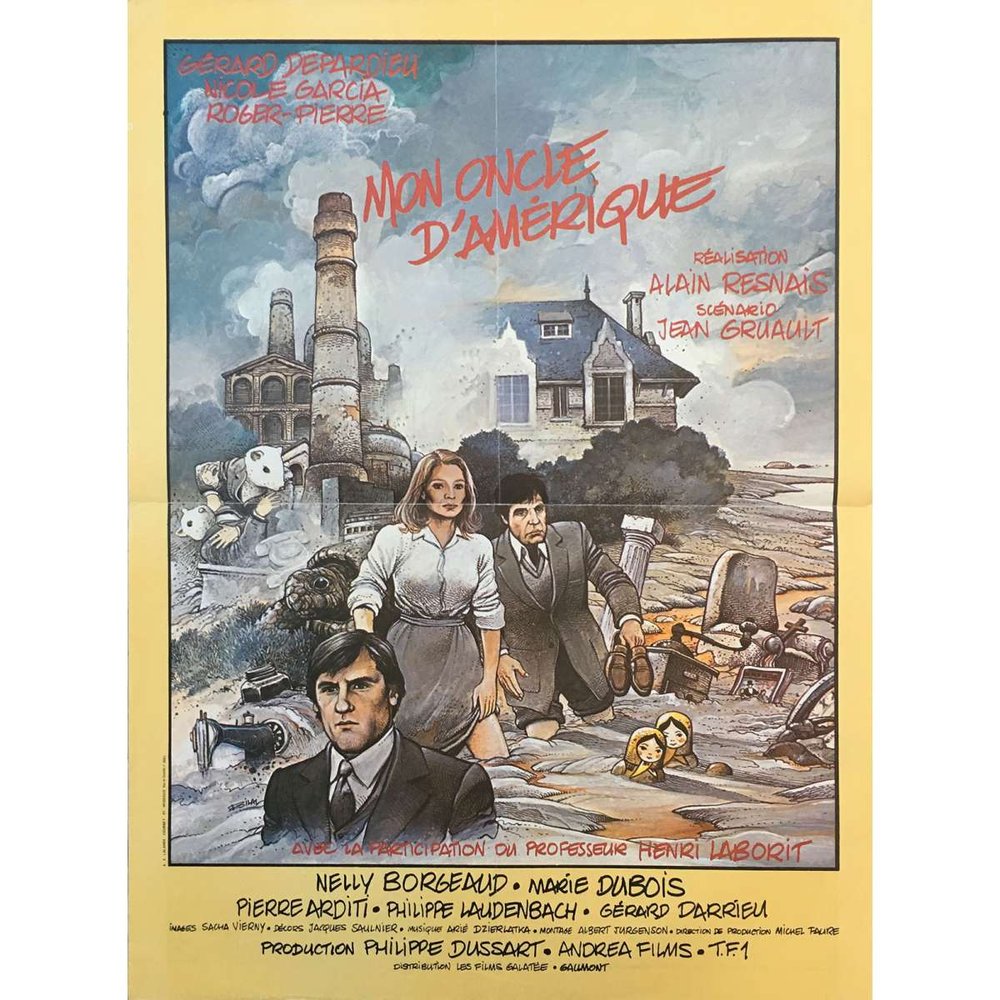
Alain Resnais directed Mon oncle d'Amérique in 1980; the French film is called My American Uncle in English and Amerikalı Amcam in Turkey. Its comedy-drama story runs side by side with the theories of Henri Laborit, a French surgeon, neurobiologist, philosopher and writer. It won the Grand Prix at the 33rd Cannes Film Festival.

The story rests on the crossing of three lives that were lived without knowing each other. Laborit argues, from his work on behavioural science, that people and laboratory rats behave alike socially when it comes to survival, struggle and depression, and that reward and punishment work equally on both. The three characters' stories provide the evidence for that claim. Gérard Depardieu plays factory manager René Ragueneau, Nicole Garcia plays actress Janine Garnier and Roger Pierre plays politician Jean Le Gall, with Nelly Borgeaud as Arlette Le Gall. The cast also lists Pierre Arditi, Danielle Darrieux, Jean Gabin, Jean Marais and Laborit himself. Whether life will prove the professor right is the question that drives the film.

Jean Gruault wrote the screenplay, with Laborit also credited as a writer, and the film runs about two hours. It uses both colour and black-and-white footage.

DirectorAlain Resnais

Reactions

You can pick up to 3 reactions.

Cast

Only cast members with a profile on this site are listed.
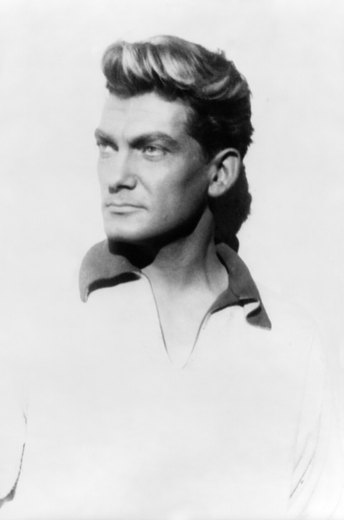
Jean Marais Jean Marais Actor · died at 84 Max Vialle Max Vialle Actor · died at 65 Gérard Depardieu Nicole Garcia Pierre Arditi Henri Laborit Danielle Darrieux Jean Gabin Roger Pierre Albert de Médina Alexandre Rignault Bernard Malaterre Brigitte Roüan Catherine Frot Catherine Serre
Through different eyes

Cinephile Looks at script, editing and directing choices; keeps a distance from formula films.

Resnais builds a structure cinema has rarely tried: three fictional lives run side by side with Henri Laborit's ideas on behavioural science, and the stories serve as evidence for a thesis. With Laborit both in the cast and among the writers, the film sits on the border between essay and fiction. Mixing colour and black-and-white footage looks like a tool for separating those layers and tying them back together. The Grand Prix at Cannes rewarded that daring. My reservation is the didactic risk built into the design: when characters are set up like subjects in an experiment, it can become harder to connect with them as people. For some viewers that distance will be the film's intelligence; for others, its coldness.

History & Society Lens Asks about the period, the social background and what the work reflects.

The film's bold claim is that, when it comes to survival, struggle and depression, people behave socially much like laboratory rats. Its three characters, a factory manager, an actress and a politician, come from different professional and social worlds, which gives the thesis a wide field to be tested on. The question of how reward and punishment work at the workplace, in the family and in a career connects easily with today's debates about working life. Still, an approach that reduces people to biological responses risks pushing cultural and historical factors into the background; arguing with the thesis may be more fruitful than simply accepting it.

Family Viewer Asks whether the whole household can watch it; cares about humour and heart.

This is not a family film; it speaks mostly to adults who enjoy thinking things through. A scientist's views on human behaviour are told alongside the lives of three people. It touches on heavy subjects such as depression and the struggle to survive. Young children will most likely be bored, while older teens interested in psychology may find it fascinating. Not the right choice for a relaxed evening film.

These are not reader reviews: they are short editorial takes written from different viewer perspectives with AI assistance. Reader reviews are below.

Reviews (0)

Log in Log in to write a review.

Comments