
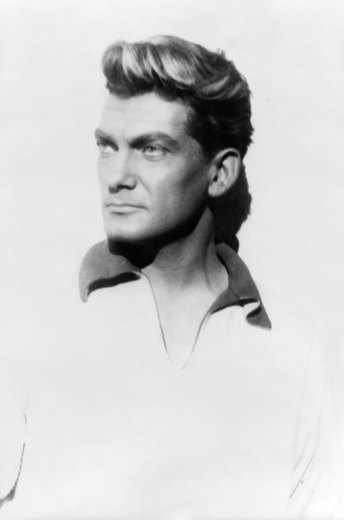
Jean Marais
Film actor · died at 84
Profile
| Age | died at 84 |
|---|---|
| Birth date | December 11, 1913 |
| Birthplace | Cherbourg |
| Died | November 8, 1998 |
| Profession | Film actor, Actor, Sculptor, Painter |
| Zodiac sign | Sagittarius |
| Real name | Jean-Alfred Villain-Marais |
| Education | Lycée Condorcet |
| Ödülleri | Onursal César (1993), Légion d'honneur |
| Ölüm Yeri | Cannes |
Jean Marais — Biography
Jean Marais, in full Jean-Alfred Villain-Marais (born 11 December 1913 in Cherbourg, died 8 November 1998 in Cannes), was a French actor, theatre director, writer, painter, sculptor and ceramic artist. One of the best-known stars of post-war French cinema, Marais appeared in more than seventy films and played popular heroes in productions ranging from swashbuckling costume pictures to spy films.
He was educated at the Lycée Condorcet in Paris. In 1937 he began a life together with the poet, playwright and director Jean Cocteau, who regarded him as his muse and directed him in many plays and films. Marais made his real breakthrough on stage in Cocteau's successful works: Œdipe Roi in 1937, Les Parents terribles the following year and La Machine à écrire in 1941. After their relationship ended the two remained close friends.
His turning point in cinema was L'Éternel Retour (1943), written by Cocteau after the legend of Tristan and Iseult and directed by Jean Delannoy; in the middle of the Second World War the film made him an icon of French youth. Cocteau then gave him leading roles in the films he directed himself, La Belle et la Bête (1946), L'Aigle à deux têtes (1948), Les Parents terribles (1949) and Orphée (1950), and also wrote the screenplays for Ruy Blas (1948) and La Princesse de Clèves (1961).
From the 1950s on he gave new life to cloak-and-dagger films and became the popular hero of costume adventure cinema. Films such as Le Comte de Monte Cristo (1955), Le Bossu (1959), Le Capitan (1960), Le Capitaine Fracasse and Le Miracle des loups (1961), Les Mystères de Paris and Le Masque de fer (1962), mostly made under the direction of André Hunebelle, drew large audiences. He performed most of his dangerous scenes himself, fifteen years before Jean-Paul Belmondo.
Turning to modern action and spy films in the 1960s, he is remembered above all for the Fantômas trilogy: Fantômas (1964), Fantômas se déchaîne (1965) and Fantômas contre Scotland Yard (1967). In these films he played both the masked criminal genius Fantômas and the journalist Fandor. In the 1966 production Le Saint prend l'affût he took the role of Simon Templar.
In later years, apart from Peau d'âne (1970), directed by Jacques Demy, he made fewer films for lack of offers; he concentrated on the theatre and became a recognised sculptor and potter in Vallauris. On television he took the title role in Joseph Balsamo (1973), and in his later years he appeared in productions such as Lien de parenté (1986), Les Enfants du naufrageur (1992) and Stealing Beauty (1996). In 1993 he received an Honorary César for his whole career and in 1996 the Légion d'honneur for his contributions to French cinema; he died in Cannes at the age of 84.
Photos

Reactions
You can pick up to 3 reactions.
Filmography / Projects
- 1937 Bizarre, Bizarre
- 1948 The Eagle with Two Heads
- 1950 Orpheus (Orfe)
- 1951 Nez de cuir
- 1952 L'Amour, Madame
- 1953 Dortoir des grandes
- 1953 Julietta
- 1954 Boum sur Paris
- 1954 Royal Affairs in Versailles (Si Versailles m'était conté...)
- 1955 Napoleon (Napoléon) (translated)
- 1955 School for Love (Futures Vedettes)
- 1956 Elena and Her Men
- 1956 If Paris Were Told to Us
- 1957 Amour de poche
- 1957 White Nights (Beyaz Geceler)
- 1958 La Tour, prends garde !
- 1958 La Vie à deux
- 1959 Le Bossu
- 1960 Testament of Orpheus
- 1960 Austerlitz
- 1960 Captain Blood
- 1961 Captain Fracasse
- 1961 Le Miracle des loups
- 1962 I Don Giovanni della Costa Azzurra
- 1962 Les Mystères de Paris
- 1964 Fantômas
- 1964 Potato (Patate) (translated)
- 1964 Thomas the Impostor
- 1965 Fantômas se déchaîne
- 1965 Pleins feux sur Stanislas
- 1965 Man from Cocody
- 1967 Fantômas contre Scotland Yard
- 1967 The Saint Lies in Wait
- 1968 The Woman is a Stranger
- 1970 Peau d'Âne
- 1973 Joseph Balsamo
- 1980 My American Uncle
- 1986 Line de parenté (Lien de parenté) (translated)
- 1992 Les Enfants du naufrageur
- 1995 Les Misérables (Sefiller)
- 1996 Stealing Beauty
- 1999 Luchino Visconti
- 2016 Belmondo par Belmondo
Comments (0)