Beyaz Geceler

White Nights (Le notti bianche)

Movie · 1957 · 14 people

Luchino Visconti directed and, with Suso Cecchi d'Amico, scripted White Nights (Le notti bianche) from Dostoevsky's 1848 short story of the same name, and it won the Silver Lion at the 18th Venice festival. Shot in black and white and running 97 minutes, this 1957 Italian-French romantic melodrama is counted among the key films of his move away from neorealism.

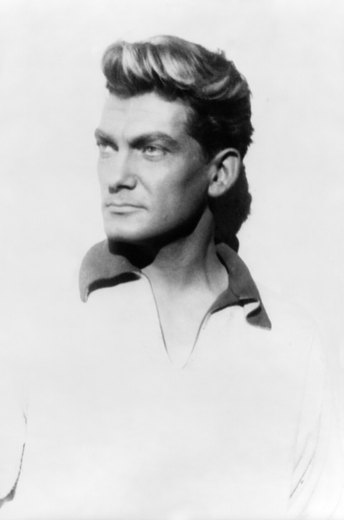
The story begins when two lonely people cross paths in a single night. Marcello Mastroianni plays Mario, a shy clerk made solitary by his place in society. Maria Schell plays Natalia, whose isolated life has left her lonely: a sailor promised to return after a year, and she is waiting for him. Over successive nights Mario falls in love with her. Jean Marais appears as the lodger, and Marcella Rovena plays the owner of the boarding house.

The dim, misty photography is by Giuseppe Rotunno and the music by Nino Rota. Visconti follows two inward-looking people through a theatrical atmosphere between reality and fantasy. Vides Cinematografica produced it. Critics and audiences received it warmly, and the Istanbul Film Festival showed it in 1994 and 2001. The same story was filmed by Jean Dréville in 1938 and by Robert Bresson in 1971.

DirectorLuchino Visconti
Production companyVides Cinematografica

Reactions

You can pick up to 3 reactions.

Cast

Only cast members with a profile on this site are listed.

Marcello Mastroianni Marcello Mastroianni Actor · died at 72 Jean Marais Jean Marais Actor · died at 84 Maria Schell Corrado Pani Marcella Rovena Maria Zanoli Clara Calamai Dirk Sanders Giorgio Abertazzi Lys Assia Renato Terra Mimmo Palmara Pietro Ceccarelli Sandro Moretti
Through different eyes

Cinephile Looks at script, editing and directing choices; keeps a distance from formula films.

Visconti's move away from neorealism shows most clearly in the atmosphere here: the setting feels less like a real city than a state of mind. Rotunno's dim, misty black-and-white turns that artifice from a flaw into the very substance of the story, blurring the line between reality and fantasy in the image itself. Still, the theatrical approach does not work equally well everywhere. Some dialogue passages lean too far towards stage drama, and the tension of a short story occasionally stretches into a drawn-out wait. Rota's score, by contrast, carries the emotional swings without overplaying them. Set beside the other adaptations of the same story, Visconti's is the operatic, dense and deliberately ornate one.

History & Society Lens Asks about the period, the social background and what the work reflects.

What makes the film interesting is that it treats loneliness as a social condition rather than a private misfortune. What isolates Mario is his place in society as much as his shyness: a minor clerk left invisible to those around him. Natalia's loneliness is of another kind, a life defined by waiting on a man's promise. The film leans towards glorifying that wait as romantic fidelity and leaves little room for her own choices, which may keep today's viewers at a distance. Even so, two people on the margins finding brief shelter in each other still makes a thought-provoking picture of the disconnection of modern life.

Family Viewer Asks whether the whole household can watch it; cares about humour and heart.

A love story that carries a heavy sadness rather than harsh scenes. Being black-and-white, slow and built on conversation, it is unlikely to hold young children's attention. It suits high-school-age teens with an interest in literature, and adults. If the family watches together, pick a patient evening; this is not for anyone after quick entertainment.

These are not reader reviews: they are short editorial takes written from different viewer perspectives with AI assistance. Reader reviews are below.

Reviews (0)

Log in Log in to write a review.

Comments