Elena and Her Men

Elena and Her Men (Elena et les Hommes)

Movie · 1956 · 5 people

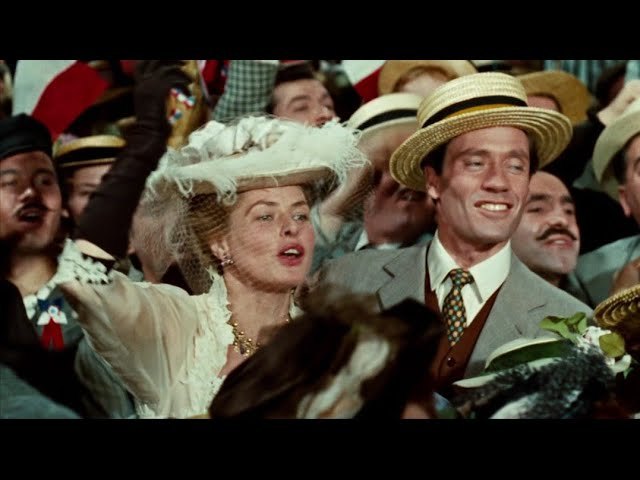
Jean Renoir shot Elena and Her Men (French: Elena et les Hommes) in 1955 and released it in 1956, a Franco-Italian film blending drama and romance with comedy. English-speaking markets first knew it as Paris Does Strange Things. Ingrid Bergman, Jean Marais and Mel Ferrer lead the cast. It was Bergman's first film after leaving her husband, Roberto Rossellini.

The story is set in Paris at the start of the Belle Époque. Bergman's Elena is convinced she was made to help the men she meets fulfil their destinies. Renoir summed her up in one sentence: "Elena is Venus." Early drafts were to feature General Boulanger, accused of plotting against the republic, but in the final version Renoir dropped historical accuracy and shifted the emphasis to Bergman's heroine.

Many critics see the film as the third part of Renoir's "trilogy of spectacle", after The Golden Coach (1952) and French Cancan (1955). Its look is bright and picturesque, recalling Impressionist paintings and popular prints, with deliberately artificial settings. It was prepared in a French and an English version, the latter differing in places and twelve minutes shorter. It found success with audiences and critics in France but scored poorly in the United States, and a restored copy appeared in the early 21st century.

DirectorJean Renoir

Reactions

You can pick up to 3 reactions.

Cast

Only cast members with a profile on this site are listed.
Through different eyes

Cinephile Looks at script, editing and directing choices; keeps a distance from formula films.

Seen as the last part of Renoir's "trilogy of spectacle", the film's artificiality makes sense: the sets are deliberately left stage-like, and the colours look lifted from an Impressionist canvas or a popular print. That is not a flaw but a conscious choice of style. Bergman's Elena, true to the "Venus" label, works less as a person than as a principle the men revolve around, which at times thins out the dramatic intensity. The tone, shifting between comedy, romance and drama, will not hold every viewer; perhaps that explains the cool reception in the United States. Still, it is worth seeing for the pleasure of its mise-en-scène. Check which version you are watching: the English cut is twelve minutes shorter.

History & Society Lens Asks about the period, the social background and what the work reflects.

The film uses Paris at the start of the Belle Époque as its backdrop. Early drafts were to show General Boulanger, accused of plotting against the republic, directly on screen; in the final version Renoir dropped historical accuracy and put the weight on his heroine. That choice turns the film into a fable more than a period piece, and viewers curious about the historical background may not find what they are looking for. On the other hand, a woman who believes she steers men's destinies raises an interesting question about the gender roles of the era: is Elena truly free, or a mirror held up to a man's world?

These are not reader reviews: they are short editorial takes written from different viewer perspectives with AI assistance. Reader reviews are below.

Reviews (0)

Log in Log in to write a review.

Comments