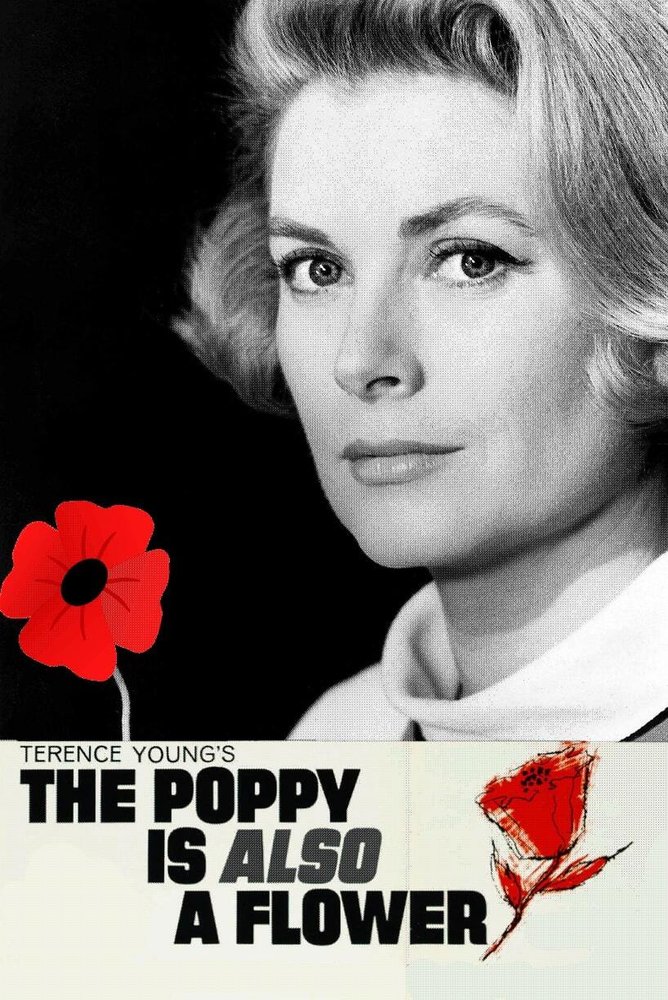
The Poppy Is Also a Flower

The Poppy Is Also a Flower (Opération Opium)

Movie · 1966 · 15 people

Backed by the United Nations and made for ABC, The Poppy Is Also a Flower (1966) is one of a series of television specials meant to showcase the organization's work, told here as a spy and anti-narcotics story. The American, French and Austrian co-production runs about 95 minutes. The story is by Ian Fleming, with a screenplay by Jo Eisinger, and the directing credit is shared by Terence Young and Georges Lampin.

The plot follows an opium smuggling route that stretches from Iran to Europe. Two undercover agents chase a shipment of opium marked with a radioactive substance, hoping to expose the whole trafficking network. As the mission unfolds, the damage caused by the drug trade and the corruption around it come into view. A large share of the desert and border scenes was shot on location in Iran.

The film stands out for its international cast: Yul Brynner, Omar Sharif, Eli Wallach, Angie Dickinson, Senta Berger, Stephen Boyd, Trevor Howard, Jack Hawkins, Rita Hayworth and Marcello Mastroianni appear. The narrator is Grace Kelly, billed as Princess Grace of Monaco. It was also released as Poppies Are Also Flowers, The Opium Connection, Danger Grows Wild in the UK, and Opération Opium in France.

DirectorTerence Young, Georges Lampin

Reactions

You can pick up to 3 reactions.

Cast

Only cast members with a profile on this site are listed.

Marcello Mastroianni Marcello Mastroianni Actor · died at 72 Charles Millot Charles Millot Actor · died at 81 Stephen Boyd Senta Berger Yul Brynner Angie Dickinson Hugh Griffith Jack Hawkins Rita Hayworth Trevor Howard E. G. Marshall Amedeo Nazzari Jean-Claude Pascal Anthony Quayle Gilbert Roland

Through different eyes

Action & Thriller Fan Puts pace, tension and set pieces first; little patience for slow drama.

A story by Ian Fleming, an opium shipment tagged with a radioactive substance and two agents on its trail: on paper, a proper spy adventure. But when the real purpose is to showcase an organisation's work, the tension is bound to trail behind the message at times. If you want a tight chase, be ready for a film that may lecture like a public-service spot. Shooting the desert and border scenes on real locations is a plus, though.

Cinephile Looks at script, editing and directing choices; keeps a distance from formula films.

Being conceived as a UN-backed television special shapes the whole film: this is a structure built for an institutional message rather than for cinema. A directing credit split between two names also suggests it would be a mistake to expect one consistent style. Filling the cast with the international stars of the day is a showcase strategy, but an ensemble this crowded leaves little room for characters to deepen, and the risk is that many actors are reduced to brief appearances. The desert and border scenes shot on real locations are the visually strongest layer, breaking the studio feel. In my view it is best approached less as a work of cinema than as an intriguing document of the prestige television of its day.

History & Society Lens Asks about the period, the social background and what the work reflects.

The film is a telling example of how an international organisation wanted to present itself to the public in the mid-1960s. The drug problem is slotted into a spy story, which shrinks a complex social issue into a chase between good agents and smugglers. A trafficking route running from Iran to Europe also carries a framing that places the source of the problem in one region and its damage somewhere else. Having Grace Kelly narrate, billed as Princess Grace of Monaco, can be read as a period example of celebrities lending their names to goodwill campaigns. Seen today, how the film says things is more instructive than what it says.

These are not reader reviews: they are short editorial takes written from different viewer perspectives with AI assistance. Reader reviews are below.

Reviews (0)

Log in Log in to write a review.

Comments