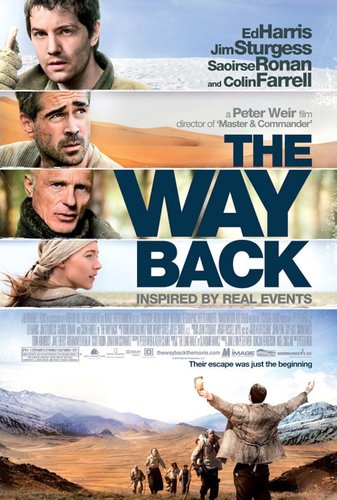
The Way Back

The Way Back

Movie · 2010 · 13 people

Sławomir Rawicz claimed to have escaped a Soviet gulag in the Second World War and walked about 6,400 kilometers to freedom, and his controversial 1956 memoir The Long Walk inspired The Way Back (Özgürlük Yolu in Turkey). Peter Weir directed this 2010 survival drama and wrote the screenplay with Keith Clarke. The book was translated into 25 languages. Weir decided to make the film after watching a BBC documentary about the story.

The story centers on a group of prisoners of different nationalities who escape a labor camp in Siberia. Jim Sturgess plays the Polish officer Janusz, Colin Farrell is Valka, Ed Harris is Mr. Smith and Saoirse Ronan is Irena. The group walks south through Mongolia and the Gobi Desert, trying to reach British India.

The film runs about 133 minutes and was shot in Bulgaria, Morocco and India as a US, Polish and Emirati co-production, with National Geographic among the producers. Reviews were generally positive, and it was nominated for the Oscar for Best Makeup but lost to The Wolfman. It was Weir's first film in seven years after Master and Commander, and it remains his last.

DirectorPeter Weir
Production companyNational Geographic Society

Reactions

You can pick up to 3 reactions.

Cast

Names without a link have no profile here yet.
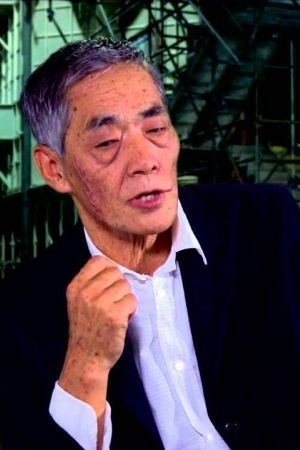
Haruhiko Yamanouchi Haruhiko Yamanouchi Film actor · 80 years old Official Jim Sturgess Colin Farrell Ed Harris Saoirse Ronan Mark Strong Gustaf Skarsgård Sebastian Urzendowsky Dragoș Bucur Yordan Bikov Zahari Baharov Sally Edwards Alexandru Potocean

Through different eyes

Cinephile Looks at script, editing and directing choices; keeps a distance from formula films.

The film keeps the escape itself short and puts its weight on the journey; the route from Siberia through Mongolia and the Gobi is the spine of the story. That choice is both its strength and its weakness. A walking structure is bound to be episodic, and keeping dramatic tension alive at every stage of a long survival story is hard; in my view the middle stretch repeats itself at times. On the other hand, shooting in Bulgaria, Morocco and India, with National Geographic on board, turns the landscape from scenery into the real force the characters are up against. A cast drawn from many nationalities lends credibility to a group that is scattered and slow to trust one another.

Action & Thriller Fan Puts pace, tension and set pieces first; little patience for slow drama.

Breaking out of a labor camp sounds made for tension, but this is not a classic escape movie. The real fight is with the road and with nature, not with the guards. If you want gunfights and chases you may be disappointed. For survival-story fans, though, the desert stretch is a real endurance test. Its length can wear on your patience.

History & Society Lens Asks about the period, the social background and what the work reflects.

By putting prisoners of many nationalities on the same road, the film uses a group portrait to show how the Soviet labor camps uprooted people during the Second World War. The small band led by a Polish officer works as a model of the exile and dislocation the war spread across Europe. It matters to know the source, though: Rawicz's memoir is disputed, so the film is not a historical document but a drama born of a testimony that is itself questioned. It can be a good way into the history of the Gulag, but it should not be anyone's only source.

These are not reader reviews: they are short editorial takes written from different viewer perspectives with AI assistance. Reader reviews are below.

Reviews (0)

Log in Log in to write a review.

Comments