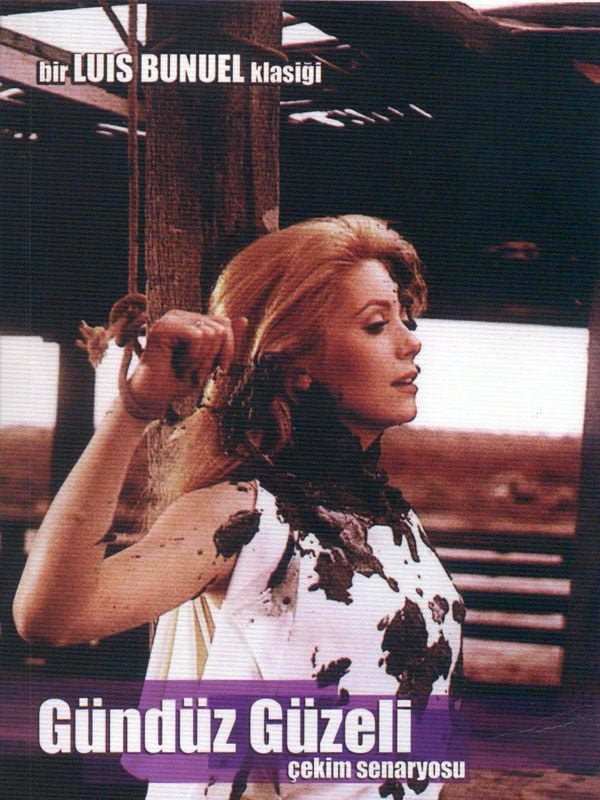
Burjuvazinin Gizli Çekiciliği

The Discreet Charm of the Bourgeoisie (Le Charme discret de la bourgeoisie)

Movie · 1972 · 15 people

Luis Buñuel wrote the surrealist dark comedy The Discreet Charm of the Bourgeoisie (Le Charme discret de la bourgeoisie) with Jean-Claude Carrière and directed it in 1972. A French-Italian-Spanish co-production, it won the Oscar for Best Foreign Language Film at the 1973 ceremony and was nominated for Best Original Screenplay. Audran won the BAFTA for best actress, Buñuel and Carrière the one for best original screenplay, and French critics gave it the Méliès Prize.

The premise is simple: upper-class friends try to meet for dinner and trade fashion, politics and gossip, but something always goes wrong. Among them is Rafael Acosta (Fernando Rey), ambassador to France of the imaginary South American country of Miranda. Paul Frankeur and Delphine Seyrig play Mr. and Mrs. Thevenot and Bulle Ogier plays Florence, with Stéphane Audran and Milena Vukotic also in the cast. The film consists of five gatherings and four dreams; the gatherings dominate early and the dreams later, but the two intertwine. The characters accept even the strangest events without surprise.

Buñuel wanted to shoot in Spain but was blocked by Franco-era censorship. He later called the film the second part of a trilogy, with The Milky Way and The Phantom of Liberty, about the search for truth.

DirectorLuis Buñuel

Reactions

You can pick up to 3 reactions.

Cast

Only cast members with a profile on this site are listed.

Delphine Seyrig Delphine Seyrig Actor · died at 58 Milena Vukotic Milena Vukotic Actor · 91 years old Fernando Rey Michel Piccoli Bulle Ogier Stéphane Audran Jean-Pierre Cassel Alix Mahieux Paul Frankeur Julien Bertheau Claude Piéplu Maxence Mailfort François Maistre Amparo Soler Leal Bernard Musson
Through different eyes

Cinephile Looks at script, editing and directing choices; keeps a distance from formula films.

Buñuel's mastery lies in systematically postponing the most basic promise of narrative: reaching a goal. A group of bourgeois friends who never manage to sit down to dinner turn classical dramaturgy's chain of desire, obstacle and resolution into an endless loop. As five gatherings and four dreams increasingly merge, the editing itself blurs the line between reality and dream; past a certain point, asking which scene is a dream stops making sense. The characters' calm acceptance of the strangest events is the rule of the game. Winning an Oscar and two BAFTAs proves how accessible such a radical structure was made.

History & Society Lens Asks about the period, the social background and what the work reflects.

The film stages upper-class etiquette as a ritual: the dinners meant for chatting about fashion, politics and gossip are how this class reproduces itself. The presence of Rafael Acosta, ambassador of the imaginary country of Miranda, satirises how diplomacy and privilege intertwine. That Buñuel wanted to shoot in Spain but gave up because of Franco-era censorship shows whom the satire touched. Seen today, what is most striking is that the class critique never raises its voice; it works through these people's polite indifference.

Yeşilçam Nostalgic A viewer raised on the classics, looking for warm storytelling and strong acting.

For a viewer who prizes classical storytelling, warmth and a bond with the characters, this film is not an easy companion. The characters are deliberately distant and the events deliberately strange; it is hard to find anyone to feel for. The structure, with dreams spilling into reality, is full of wit, but looking for a moral centre that touches the heart is in vain. Still, this is the coolness of a masterpiece, worth seeing as one of the landmarks of film history, so long as you come expecting a sharp satirical mind rather than Yeşilçam's warmth.

These are not reader reviews: they are short editorial takes written from different viewer perspectives with AI assistance. Reader reviews are below.

Reviews (0)

Log in Log in to write a review.

Comments