Şarküteri

Delicatessen

Movie · 1991 · 3 people

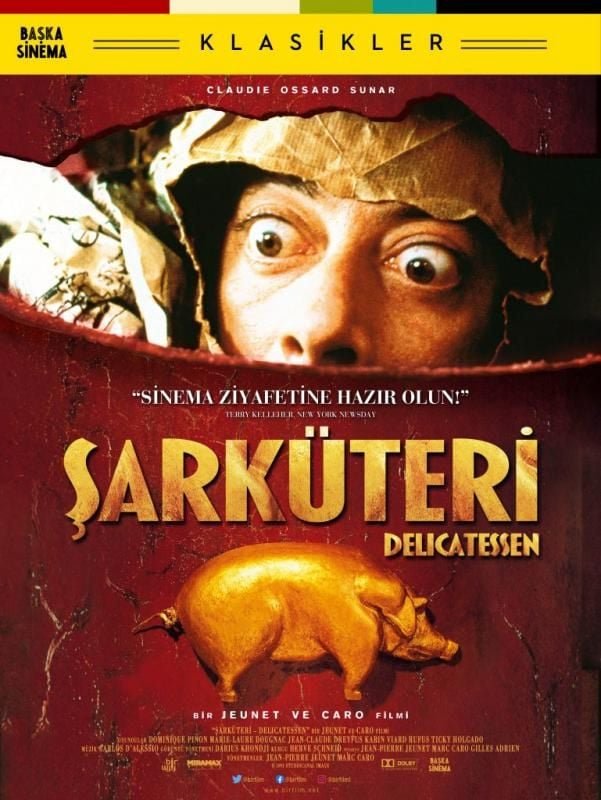
Marc Caro and Jean-Pierre Jeunet directed Delicatessen (Şarküteri in Turkish), a French black comedy from 1991 that was the first feature for both. A post-apocalyptic, dystopian fantasy, it is seen as a fine example of surrealist cinema and holds cult status; in North America it was released as "presented by Terry Gilliam". Many stylistic elements of the pair's later hits, The City of Lost Children and Amélie, already appear here.

The story takes place in an indeterminate France against a background of war and terrorism. Food is almost impossible to find, and strange eating habits have taken hold. Dominique Pinon plays Louison, a former clown who answers a maintenance job advertisement in a block above a delicatessen; his predecessor tried to escape hidden in a garbage bin. The butcher Clapet owns the building and rules its residents, with plans for the newcomer. Louison falls for the butcher's daughter Julie (Marie-Laure Dougnac). The tenants include troglodistes and a frog breeder; Karin Viard and Jean-Claude Dreyfus also appear.

It received 16 nominations and 15 awards: four Césars, a European Film Award, four prizes at Sitges (among them best director and best actor) and one from Fantasporto, plus a BAFTA nomination for best foreign film. Jeunet, Caro and Gilles Adrien wrote the screenplay.

DirectorMarc Caro, Jean-Pierre Jeunet
Production companyStudioCanal

Reactions

You can pick up to 3 reactions.

Cast

Only cast members with a profile on this site are listed.

Through different eyes

Cinephile Looks at script, editing and directing choices; keeps a distance from formula films.

Though it is Jeunet and Caro's first feature, Delicatessen feels like the work of directors whose style was fully formed from the start. The visual language we would later know from The City of Lost Children and Amélie is here in a rawer form, with much darker humour. The way it confines itself almost entirely to one apartment block, the structure that treats each odd neighbour as a little sketch, and the physicality Dominique Pinon brings to the ex-clown Louison are its greatest strengths. That sketch-like rhythm does sometimes stall the narrative, and a few of the side characters feel more like set dressing than story. Still, it is a bold, original debut that earns its cult status.

Family Viewer Asks whether the whole household can watch it; cares about humour and heart.

It may be named after a delicatessen, but this is not a comedy to watch with the kids. It shows a dark world where food has all but vanished and the butcher runs the whole building, so the humour is pitch black. The strange neighbours and its colourful look may well grab teenagers. I would say it suits high-school age and up. Young children and more easily rattled grandparents may find it too much.

Yeşilçam Nostalgic A viewer raised on the classics, looking for warm storytelling and strong acting.

To an eye raised on the classics, Delicatessen is at first a foreign and even rather chilly world. Its black humour and strangeness are far from the warm stories we grew up with. Yet at its heart lies an old-fashioned romance: the bond between Louison, who has given up clowning, and the butcher's daughter Julie burns like a candle in all that darkness. That fairy-tale quality wins you over, though a viewer with little taste for cynicism may now and then feel shut out of the film.

These are not reader reviews: they are short editorial takes written from different viewer perspectives with AI assistance. Reader reviews are below.

Reviews (0)

Log in Log in to write a review.

Comments