Volt

Volt

Movie · 2016 · 8 people

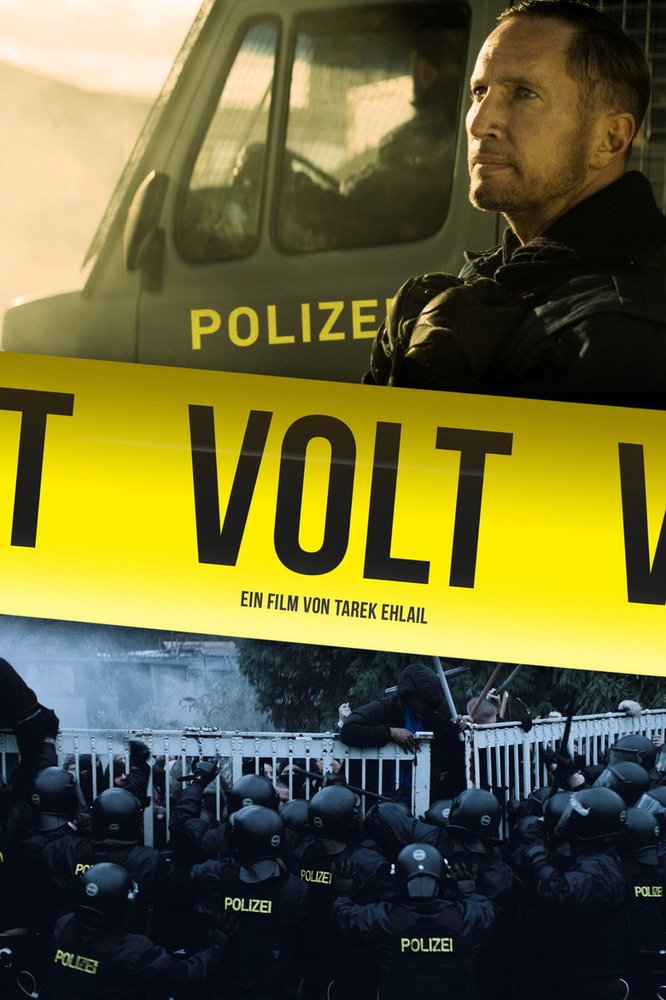
Tarek Ehlail wrote and directed Volt, a dystopian police thriller completed in 2016 as a German-French co-production. The German-language film runs about 81 minutes and sits between drama and thriller. It is set in the near future under an oppressive regime and puts at its centre a police officer's struggle with his conscience.

The hero is the police officer Volt. During an operation he kills a refugee, Hesham, and the killing goes unpunished. That impunity gives him no peace: his guilt draws him ever closer to the victim's world. By day he goes on living as a policeman, by night he sides with the refugees and witnesses the unrest his crime has set off. As pressure grows both inside the force and on the streets, he realises that what he did is unforgivable. Benno Fürmann plays Volt, with Sascha Alexander Geršak (Torsun), Denis Moschitto (Adama) and Joy Olasunmibo Ogunmakin (LaBlanche) in the cast alongside Anna Bederke, Stipe Erceg, André Hennicke and Kida Khodr Ramadan.

The film had its world premiere on 24 June 2016 at the Munich Film Festival (Filmfest München). It opened in German cinemas on 2 February 2017 and was broadcast on Arte in both France and Germany on 5 July 2018.

DirectorTarek Ehlail

Reactions

You can pick up to 3 reactions.

Cast

Only cast members with a profile on this site are listed.

Denis Moschitto Denis Moschitto Actor · 49 years old Kida Khodr Ramadan Kida Khodr Ramadan Actor · 50 years old Benno Fürmann Sascha Alexander Geršak Anna Bederke Ayo (şarkıcı) Stipe Erceg André Hennicke

Through different eyes

Cinephile Looks at script, editing and directing choices; keeps a distance from formula films.

Tarek Ehlail uses the dystopian police template less as a thriller device than as a vehicle for a drama of conscience. The double structure, with the hero a policeman by day and on the refugees' side by night, gives the film a clear, strong dramatic axis, and the unease of a crime gone unpunished plays out as inner unravelling rather than an outer chase. Having one person write and direct keeps the tone consistent. But the known risk of such allegories is present here too: when the near future and the oppressive regime remain an abstract backdrop, the world can lose credibility and the characters can turn into carriers of ideas. The film should be judged by how well it keeps its intensity without falling into that schematic trap.

History & Society Lens Asks about the period, the social background and what the work reflects.

By setting a police officer's killing of a refugee, and the impunity that follows, in the near future, the film touches one of the most sensitive debates of 2016 Europe: state violence, accountability and the precariousness of refugees. The dystopian frame lets it avoid becoming a straightforward topical political film. Yet one choice stands out: the story is told not from the refugees' point of view but through the perpetrator's eyes and conscience. That is a powerful way to understand guilt, but it also risks pushing the victims' own voices into the background, and the film is best watched with that question in mind.

Action & Thriller Fan Puts pace, tension and set pieces first; little patience for slow drama.

Say dystopian police thriller and you picture shootouts and chases, but Volt is not a film that meets that expectation. The tension comes not from guns but from an unpunished crime eating away at its hero and from the unrest growing in the streets. If you like a heavy drama of conscience, it will hold you; if you want fast action, the pace may feel slow.

These are not reader reviews: they are short editorial takes written from different viewer perspectives with AI assistance. Reader reviews are below.

Reviews (0)

Log in Log in to write a review.

Comments