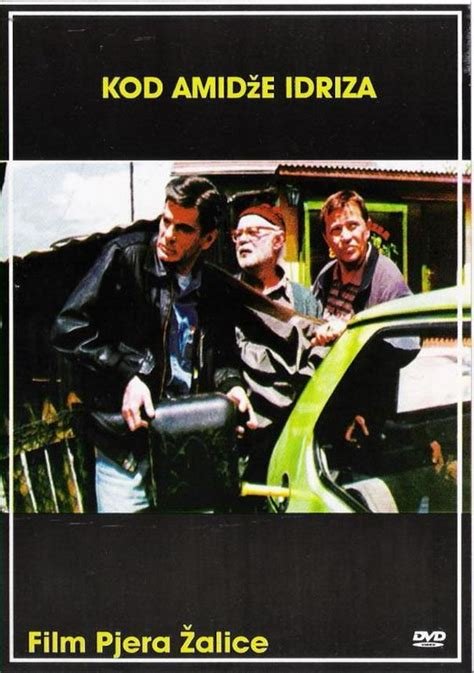
Days and Hours (Kod amidže Idriza)

Days and Hours (Kod amidže Idriza)

Movie · 2004 · 2 people

Kod amidže Idriza, released internationally as Days and Hours, is a 2004 Bosnian drama directed by Pjer Žalica from a script by Namik Kabil. Made in Bosnian and running about 93 minutes, it opened on August 20, 2004. Among its production companies are Refresh Production and the Radio-Television of the Federation of Bosnia and Herzegovina. The film was sent as Bosnia and Herzegovina's entry for Best Foreign Language Film at the 77th Academy Awards, but it did not make the list of nominees.

With its slow pace and sombre mood, the film is described as an oppressive work. It speaks about war and the suffering it leaves behind, about loneliness and a sense of being lost, and at its center are two elderly people whose only son was taken by the war. Mustafa Nadarević plays Idriz, the title's namesake, with Senad Bašić as Fuke and Semka Sokolović-Bertok as Sabira in the other leading roles. Sabira is one of Sokolović-Bertok's last parts.

The cast also includes Emir Hadžihafizbegović as Ekrem, Izudin Bajrović as Izudin, Jasna Žalica as Buba, Nada Đurevska as Begzada, and Enis Bešlagić, Dragan Marinković and Sanja Burić.

DirectorPjer Žalica
Production companyRefresh Production

Reactions

You can pick up to 3 reactions.

Cast

Names without a link have no profile here yet.

Also in the cast: Enis Bešlagić, Dragan Marinković, Sanja Burić, Mustafa Nadarević (Idriz), Senad Bašić (Fuke), Semka Sokolović-Bertok (Sabira), Jasna Žalica (Buba), Nada Đurevska (Begzada)

Through different eyes

AI-assisted editorial takes written from different viewer perspectives. They are not reader reviews; those are below.

Cinephile Looks at script, editing and directing choices; keeps a distance from formula films.

Žalica uses his film's slow rhythm as a choice, not a flaw: to convey the emptiness war leaves behind, he foregrounds the heavy passing of time rather than events. That minimalism strikes the right tone for a somber mood, but it also asks a great deal of patience; it is not for nothing that the film is described as oppressive. In a structure like this the tension has to come from dialogue and acting, and seasoned performers such as Nadarević and Sokolović-Bertok are its firmest support. In my view what makes it worthwhile is that it tries to show grief through small everyday details rather than big scenes; its weakness is that the approach sometimes slides into stasis. Being sent to the Academy Awards and missing the nominations is a reminder of how hard quiet films find it to reach a wide audience.

History & Society Lens Asks about the period, the social background and what the work reflects.

The film is about not the war itself but what it left behind, and it gets there through two elderly people whose only son the war took. That choice brings forward a group that tends to stay invisible in postwar Bosnian society: parents left alone after losing their children. Made in 2004, not long after the war, it asks how a society carries its grief and how loss seeps into everyday life. Putting loneliness and a sense of being lost so firmly in the foreground is a reminder that the postwar years were not only about rebuilding but also a quiet period of mourning.

Family Viewer Asks whether the whole household can watch it; cares about humor and heart.

A very heavy, somber film about loss and grief. The story of an elderly couple who lost their son in the war is not suitable for children, and it may struggle to hold teenagers too, since its pace is deliberately slow. A meaningful choice for adults who like serious drama, but if you want a light family evening, pick something else.

Reviews (0)

Log in Log in to write a review.

Comments