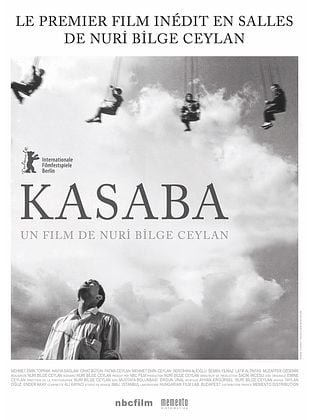
The Small Town (Kasaba)

The Small Town (Kasaba)

Movie · 1997 · 11 people

Kasaba is the first feature film by Nuri Bilge Ceylan, made in 1997. Running about 85 minutes, this semi-autobiographical Turkish drama is shot in black and white, and it began a career later full of international awards. Its restrained storytelling, dramatic photography and semi-documentary manner give it a distinctive cinematic voice.

The story is set in the 1970s in a gloomy small town in western Turkey. As spring begins, the children of a household where three generations live together set out to wander after school, and the viewer sees the town, the countryside and the people who live there through their eyes. The film follows how they cope with a life that grows more complicated as they grow up. Mehmet Emin Toprak plays Saffet, Havva Sağlam is Asiye, Cihat Bütün is Ali and Fatma Ceylan is the grandmother; Muzaffer Özdemir is also in the cast.

Ceylan both directed and wrote the film. The script was adapted from a story by his sister Emin Ceylan, inspired by the childhood memories they shared in a remote Anatolian town. A photographer by training, he uses long takes and landscape shots reminiscent of Tarkovski. The film had its world premiere in February 1998 and is known internationally as The Small Town.

DirectorNuri Bilge Ceylan

Reactions

You can pick up to 3 reactions.

Cast

Mehmet Emin Toprak Mehmet Emin Toprak Actor · died at 28 Saffet Muzaffer Özdemir Muzaffer Özdemir Actor · born 1957 Deli Ahmet Havva Saglam Cihat Bütün Fatma Ceylan Emin Ceylan Sercihan Alevoglu Semra Yilmaz Latif Altintas Timuçin Caymaz Gazanfer Ündüz Gazanfer Ündüz Actor · 76 years old

Also in the cast: Havva Sağlam Asiye

Through different eyes

Cinephile Looks at script, editing and directing choices; keeps a distance from formula films.

A startlingly mature visual language for a debut. The black-and-white images, long takes and time given over to landscape betray Ceylan's photographer's background in every frame, and that Tarkovsky-like patience turns the town from a setting into a state of mind. The semi-documentary approach and restrained storytelling add to its authenticity. On the other hand, the narrative is deliberately loose: anyone expecting a conventional plot may find the links between sections thin, and some long scenes sag under their own weight. Still, it is a distinctive beginning in which the seeds of the later films are plain to see.

Yeşilçam Nostalgic A viewer raised on the classics, looking for warm storytelling and strong acting.

For an eye used to Yeşilçam's provincial tales told with songs and big emotions, Kasaba speaks an entirely different language. There is no tear-jerking plot here, only a quiet spring seen through children's eyes and the air of a small town. That simplicity is, I think, both the film's strength and its distance: a lover of poetic cinema will find a deep flavour in it, but viewers looking for a warm, gripping story may feel left outside. Even so, that house where three generations live under one roof delicately rebuilds a world older generations know well.

History & Society Lens Asks about the period, the social background and what the work reflects.

The film shows a gloomy small town in western Turkey in the 1970s through children's eyes, and that choice says a lot historically. The three-generation household captures the texture of the provincial family of the period without grand statements: the settled world of the adults sits beside the children's world, which grows more complicated as they grow up. Because the script draws on a story by Emin Ceylan and on the siblings' shared childhood memories, the film also works as a record of local memory. Seen today, it can be read as a document of provincial life fading in a fast-changing country.

These are not reader reviews: they are short editorial takes written from different viewer perspectives with AI assistance. Reader reviews are below.

Reviews (0)

Log in Log in to write a review.

Comments