Massacre Time

Massacre Time (Le colt cantarono la morte e fu... tempo di massacro)

Movie · 1966 · 9 people

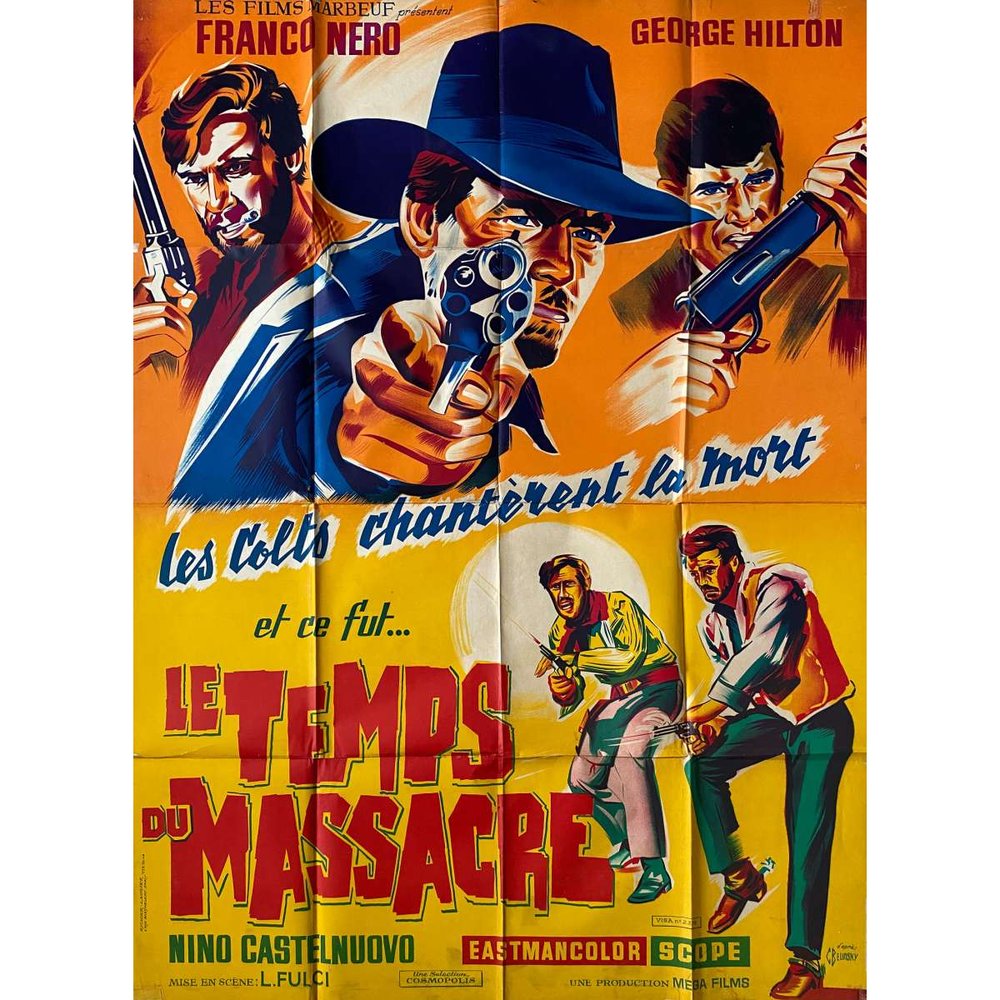
Franco Nero and George Hilton lead Massacre Time, a Spaghetti Western made in Italy in 1966. In France it is known as Le Temps du massacre and in Spain as Las pistolas cantaron a muerte; German audiences knew it as Django – Sein Gesangbuch war der Colt, with Django – Der Hauch des Todes as an alternative title. The original title, Le colt cantarono la morte e fu... tempo di massacro, translates roughly as "The colts sang death and it was... massacre time".

The film was directed and produced by Lucio Fulci, who would later be hailed as a master of horror, and it is one of the few westerns he made. Fernando Di Leo wrote the screenplay. The Italian-language picture runs about 88 minutes, and the cast also lists Nino Castelnuovo, Sal Borgese, Giuseppe Addobbati, Rina Franchetti, Linda Sini, John Bartha and Tom Felleghy.

It is counted among the better examples of its genre, notable for an aura of mystery and darkness that is unusual for a western. Now regarded as a minor classic, it received its German theatrical premiere on 12 May 1967.

DirectorLucio Fulci

Reactions

You can pick up to 3 reactions.

Cast

Only cast members with a profile on this site are listed.

Nino Castelnuovo Nino Castelnuovo Actor · died at 84 Sal Borgese Sal Borgese Actor · 89 years old Franco Nero George Hilton (oyuncu) Giuseppe Addobbati Rina Franchetti Linda Sini John Bartha Tom Felleghy

Through different eyes

Action & Thriller Fan Puts pace, tension and set pieces first; little patience for slow drama.

Franco Nero and George Hilton in the same western, with Lucio Fulci, later hailed as a horror master, in the director's chair. That combination alone is enough to spark curiosity. Unlike the sunny duel clichés of the genre, it is known for a mysterious, dark atmosphere, which makes it a good find for anyone who likes the harsh, gloomy side of the Spaghetti Western.

Cinephile Looks at script, editing and directing choices; keeps a distance from formula films.

Given how few westerns Fulci made, this film is an intriguing stop on the road to his later horror work. The sense of darkness and mystery seeping into the western mould can be read as an early trace of the feel for atmosphere he would become known for. Still, the label of minor classic describes it honestly: it may rank among the genre's better entries, but it is hard to argue that it reaches the narrative ambition or formal daring of the great Spaghetti Westerns. Fernando Di Leo's script does not stray far from the genre's familiar material. Valuable for cinephiles who know the genre and want to trace Fulci's path; for a newcomer to westerns it should not be the first choice.

History & Society Lens Asks about the period, the social background and what the work reflects.

The Spaghetti Western was a European reworking of the American frontier myth in the hands of Italian producers, so watching these films also means looking at how Europe imagined America. This one's reliance on a mysterious, dark mood rather than a heroic saga suggests a move away from a shining pioneer mythology toward a more sceptical picture of the world. In that sense it can be read as an example of how mid-sixties European popular cinema looked at American myths. It offers nothing direct to viewers looking for a social message; its value lies mainly in the history of the genre itself.

These are not reader reviews: they are short editorial takes written from different viewer perspectives with AI assistance. Reader reviews are below.

Reviews (0)

Log in Log in to write a review.

Comments