Miele

Miele

Movie · 2013 · 8 people

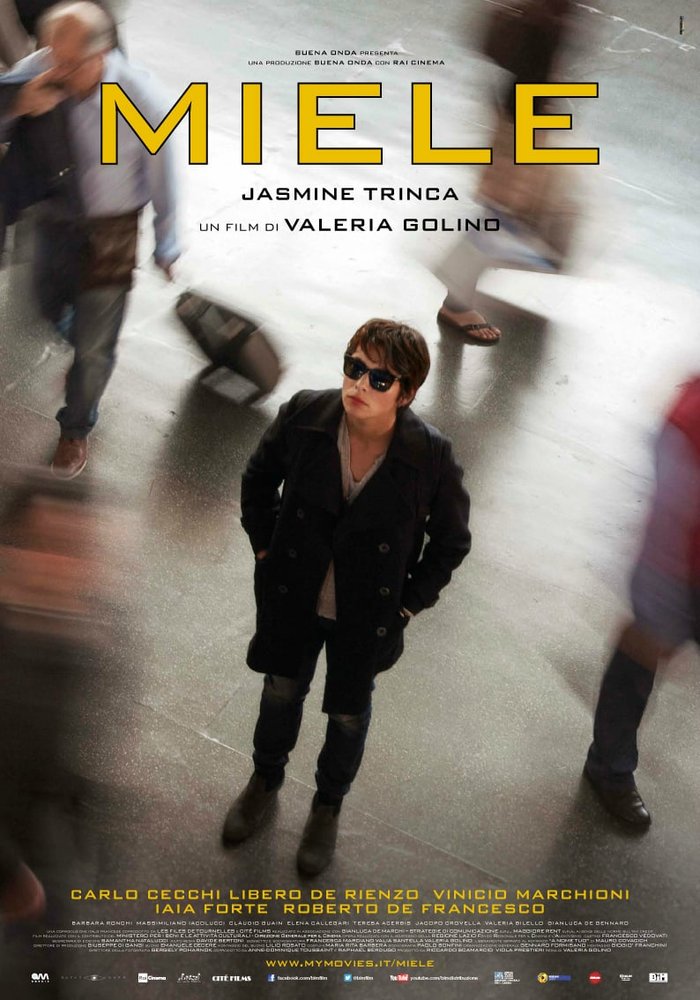
Actress Valeria Golino directed her first feature with Miele, a 2013 Italian-French drama. It follows a young woman who helps the terminally ill die. It was shown in the Un Certain Regard section of the 2013 Cannes Film Festival, where it earned a commendation from the Ecumenical Jury, and was nominated for the Lux Prize. Jasmine Trinca won the Silver Ribbon for best actress for the role.

Irene (Jasmine Trinca) lives alone in a house by the sea, not far from Rome. Her father and her boyfriend believe she is a university student; in fact, working under the code name Miele, she helps people on their deathbeds die without suffering. After giving a new client the lethal dose, she learns that Mr Grimaldi (Carlo Cecchi) is in fact a quite healthy man who simply no longer enjoys life. She then tries to stop the suicide. The cast also includes Libero De Rienzo (Rocco), Vinicio Marchioni (Stefano) and Iaia Forte.

Golino wrote the screenplay with Francesca Marciano and Valia Santella, freely adapting Mauro Covacich's novel Vi perdono, published in 2009 under the pen name Angela Del Fabbro. Rai Cinema is among the producers. Filmed in Italian, it runs about 96 minutes on a budget of 1.65 million euros.

DirectorValeria Golino
Production companyRai Cinema

Reactions

You can pick up to 3 reactions.

Cast

Only cast members with a profile on this site are listed.

Jasmine Trinca Jasmine Trinca Actor · 45 years old Iaia Forte Iaia Forte Actor · 64 years old Carlo Cecchi Vinicio Marchioni Libero De Rienzo Valeria Bilello Roberto De Francesco Gianluca Di Gennaro

Through different eyes

Cinephile Looks at script, editing and directing choices; keeps a distance from formula films.

Valeria Golino's first feature stands out for aiming to handle a hard subject without tipping into sensationalism. The script's smartest move is to test euthanasia not as an abstract ethical debate but through a single encounter that unsettles the inner balance of a woman who does her work quietly: a healthy man who has lost his taste for life makes visible the line Irene has drawn for herself. Jasmine Trinca's role, which earned her the Silver Ribbon, is the axis that carries most of the film's emotional weight. The risk of such a setup is that the encounter between the two characters turns into a symbolic duel of ideas, and how well the film keeps that balance also depends on the viewer's patience. Still, it shows striking maturity for an actor-director's debut.

History & Society Lens Asks about the period, the social background and what the work reflects.

What Miele draws attention to is how quietly and secretly decisions about the end of life can be carried out. Irene working under a code name, with her father and boyfriend unaware of what she really does, shows the work sitting in a shadow society has not named. While weighing the right to die without suffering, the film opens up the line between a terminally ill patient and a healthy person weary of life, the most delicate question in the euthanasia debate. Its commendation from the Ecumenical Jury is telling too: a jury close to religious values praising a film on this subject suggests it takes the question seriously rather than picking a side.

Family Viewer Asks whether the whole household can watch it; cares about humour and heart.

This film is not for children or teenagers. Its subject is helping the terminally ill die, and suicide; both are heavy, sensitive themes. If your household has recently been through a loss or a serious illness, think it over before watching. For adults, though, it is a thought-provoking drama worth a long conversation afterwards.

These are not reader reviews: they are short editorial takes written from different viewer perspectives with AI assistance. Reader reviews are below.

Reviews (0)

Log in Log in to write a review.

Comments