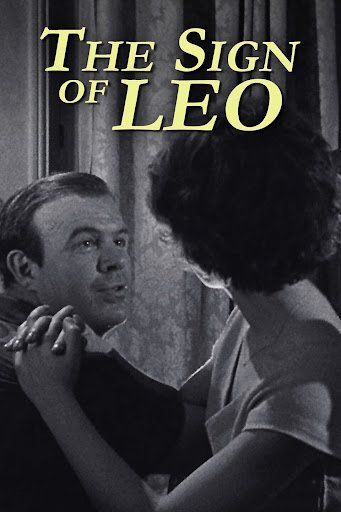
Sign of the Lion

Sign of the Lion (Le Signe du Lion)

Movie · 1959 · 3 people

Éric Rohmer's first feature, Le Signe du Lion (Sign of the Lion), waited until May 1962 for a cinema release, though he had shot it in real Paris locations during summer 1959. Produced by Claude Chabrol and running 103 minutes in black and white, the drama is one of the earliest French New Wave films, alongside Chabrol's À double tour and The 400 Blows. Rohmer wrote the script, Paul Gégauff the dialogue and Louis Saguer the music.

The story follows Pierre Wesserlin, an American musician leading a cheerful bohemian life in Paris. Believing a fortune is coming his way, he spends freely and runs up debts. When he learns the inheritance went to a cousin, his creditors cut him off and his supposed friends leave. Alone and penniless in the deserted August city, Pierre refuses to work and drifts into vagrancy. Luck and fate run through the film; the title refers to the sign of Leo, under which he says he was born, and he believes it protects him. Jess Hahn, Paul Crauchet, Stéphane Audran and Michèle Girardon are in the cast.

It was not a commercial success but won good notices. For eight years Rohmer then concentrated on short films and on the influential magazine Cahiers du cinéma.

DirectorÉric Rohmer

Reactions

You can pick up to 3 reactions.

Cast

Only cast members with a profile on this site are listed.

Through different eyes

Cinephile Looks at script, editing and directing choices; keeps a distance from formula films.

Rohmer's first feature clearly bears the marks of the early New Wave: real Parisian locations, black-and-white photography and a narrative that keeps its distance from classical dramatic plotting. What is most interesting is how the film follows a downfall with almost documentary patience; the city emptied out in August works as the outer counterpart of Pierre's loneliness. It treats luck and fate with ironic distance, through the hero's faith in his star sign, Leo. That patience does not reward every viewer, though; the slimness of the plot can make the middle stretch monotonous. It is easy to see why it won good notices despite failing commercially: flaws and all, it is a notable first step by a director searching for his own voice.

Action & Thriller Fan Puts pace, tension and set pieces first; little patience for slow drama.

Let me be honest: this film is too slow for me. You watch a man who has run out of money drift through the streets of Paris alone; no chases, no big confrontation. The tension comes from asking how far down Pierre will fall. Someone who enjoys quiet character dramas may watch it with interest, but for anyone after a fast pace, 103 minutes feels long.

History & Society Lens Asks about the period, the social background and what the work reflects.

Sign of the Lion takes a cool-headed look at the link between money and friendship. Pierre's circle stays by him as long as the inheritance is expected; when the money fails to come, creditors and so-called friends alike pull away. The picture shows how fragile the security beneath bohemian life's look of freedom really is. A foreign musician unable to find a foothold in the city adds another layer of loneliness. Pierre's refusal to work leaves the viewer with a question about labour and class. The August emptiness of Paris in 1959 can also be read as an interesting snapshot of urban life at the time.

These are not reader reviews: they are short editorial takes written from different viewer perspectives with AI assistance. Reader reviews are below.

Reviews (0)

Log in Log in to write a review.

Comments