The Facts of Murder

The Facts of Murder (Un maledetto imbroglio)

Movie · 1959 · 15 people

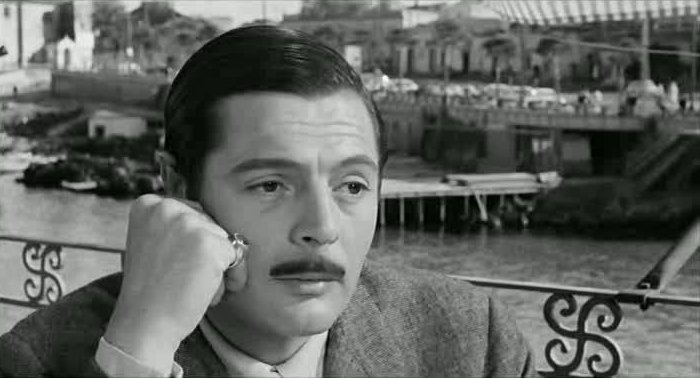
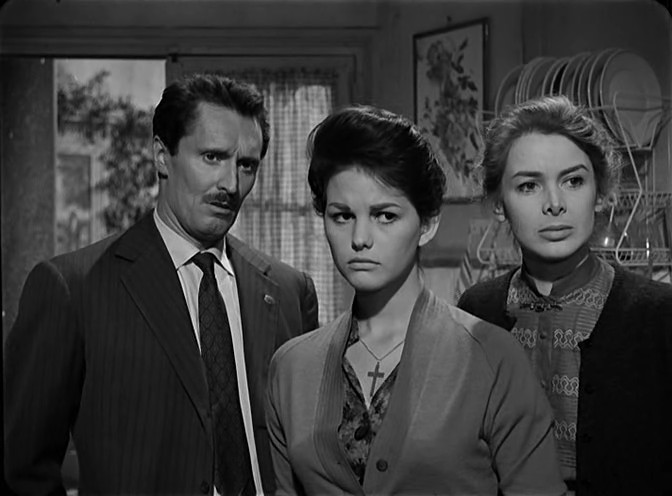
The Facts of Murder, released in Italy as Un maledetto imbroglio ("A damned mess"), is a 1959 Italian crime mystery directed by Pietro Germi. Germi also takes the lead, playing a Roman police commissioner who investigates a killing. In France it was known as Meurtre à l'italienne, in Germany as Unter glatter Haut, in Spain as Un maldito embrollo and in Greece under a title meaning "We are all guilty". The film runs about 120 minutes and tells a story with a strong strain of social criticism.

Germi wrote the screenplay with Alfredo Giannetti and Ennio de Concini. It is based on Carlo Emilio Gadda's 1957 novel Quer pasticciaccio brutto de via Merulana (That Awful Mess on Via Merulana in English). Alongside Germi, the cast includes a young Claudia Cardinale, Franco Fabrizi, Eleonora Rossi Drago and Claudio Gora, with Nino Castelnuovo, Saro Urzì and Cristina Gajoni also appearing, as do Gianni Musy, Toni Ucci, Pietro Tordi and Antonio Acqua. Art director Carlo Egidi designed the sets.

The film was restored and re-released in 1999, in both Italy and the United States.

DirectorPietro Germi

Reactions

You can pick up to 3 reactions.

Cast

Only cast members with a profile on this site are listed.
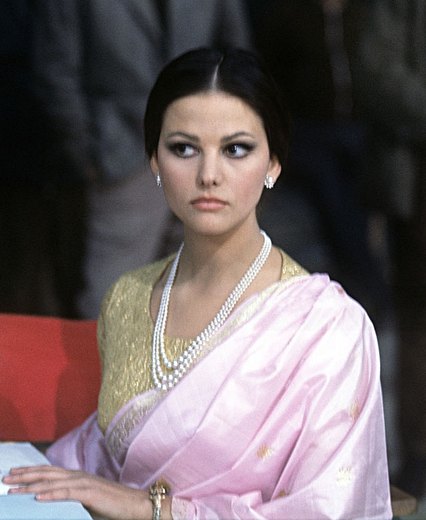
Claudia Cardinale Claudia Cardinale Actor · died at 87 Nino Castelnuovo Nino Castelnuovo Actor · died at 84 Pietro Germi Franco Fabrizi Cristina Gajoni Claudio Gora Eleonora Rossi Drago Saro Urzì Peppino De Martino Gianni Musy Toni Ucci Pietro Tordi Antonio Acqua Silla Bettini Renato Terra
Through different eyes

Cinephile Looks at script, editing and directing choices; keeps a distance from formula films.

Pietro Germi's film rests on an interesting double role: Germi both directs and plays the commissioner leading the investigation, so the film's gaze and its protagonist's nearly coincide. Fitting a well-known novel into a crime structure gives the screenplay, written with Alfredo Giannetti and Ennio de Concini, clarity, but it also risks flattening the layers of a literary text. Carlo Egidi's set design is well placed to make Rome a character rather than mere decor. In my view the long narrative grows heavy at times; even so, the 1999 restoration and re-release show that the film has found again the attention it deserves.

History & Society Lens Asks about the period, the social background and what the work reflects.

The film turns an ordinary murder investigation into a cross-section of Roman society, and that is where its strong strain of social criticism comes from. Its Greek title, meaning "We are all guilty", sums up well how the film was read: the idea that the crime is the product not of one person but of a milieu and its hypocrisy. At the end of the 1950s, as post-war Italy was changing fast, a crime story like this was a fitting tool for questioning the line between the respectable middle class and the street.

Action & Thriller Fan Puts pace, tension and set pieces first; little patience for slow drama.

A murder, a commissioner and a set of suspects: a classic but solid crime skeleton. But this is not a film about speed. As a crime mystery with a strong streak of social criticism, its tension comes mostly from the investigation itself. If you like a puzzle solved step by step you'll have a good time, but for anyone after action or chases it's a long film that asks for patience.

These are not reader reviews: they are short editorial takes written from different viewer perspectives with AI assistance. Reader reviews are below.

Reviews (0)

Log in Log in to write a review.

Comments