Yıkılmayan Adam

The Unbreakable Man (Yıkılmayan Adam) (translated)

Movie · 1977 · 3 people

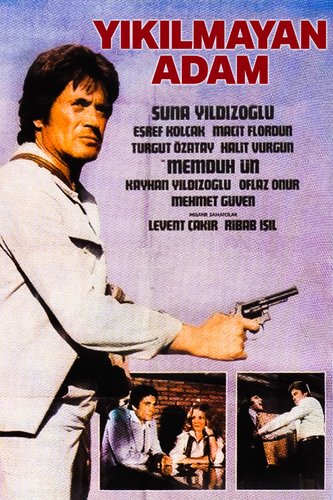
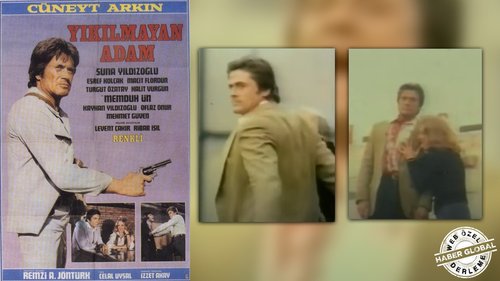
Remzi Jöntürk directed Yıkılmayan Adam (The Indestructible Man), a Turkish film from 1977. Listed as an adventure, political, historical and epic picture, it is in colour and runs about 81 minutes. It is the last of the three films known as Jöntürk's "Adam Trilogy", which began with Yarınsız Adam and Satılmış Adam. Cüneyt Arkın takes the lead.

The story follows a tough neighbourhood figure, a kabadayı, who stands with the good against the wicked, and the wealthy young woman he loves. Cüneyt Arkın plays the kabadayı Çakır, Suna Yıldızoğlu plays the young woman Fatoş and Eşref Kolçak plays Nadir. The cast also includes Levent Çakır (Hayri), Kayhan Yıldızoğlu (the Doctor), Memduh Ün, Macit Flordun and Kemal İskender, and the director himself appears in a small role as a drunkard. Its subject headings include heavy-industry drives, the people's revolutionary, hippie youth and the bourgeoisie's reign, all pointing to the political debates of the period.

The screenplay is by Ali Fuat Kalkan, with Deniz Kalkavan and Hasan Baykara as producers and Kalkavan Film as the production company. İzzet Akay is the cinematographer. A release date of 1 January 1979 is listed, two years after the production year. The film is remembered as one of the 1970s Yeşilçam pictures that blended adventure with politics.

DirectorRemzi Jöntürk
Production companyKalkavan Film
The Unbreakable Man (Yıkılmayan Adam) The Unbreakable Man (Yıkılmayan Adam)

Reactions

You can pick up to 3 reactions.

Cast

Through different eyes

Action & Thriller Fan Puts pace, tension and set pieces first; little patience for slow drama.

Cüneyt Arkın as a kabadayı standing with the good against the wicked: it's easy to see why this formula works. At about 81 minutes the film stays short and tight, with little room to dawdle. But as the political references pile into the story, the tension between the tough guy and the villains can slip into the background at times. A fun break for Arkın fans and lovers of seventies adventure.

History & Society Lens Asks about the period, the social background and what the work reflects.

Yıkılmayan Adam's subject headings read almost like the agenda of 1970s debate: the heavy-industry drive, the people's revolutionary, hippie youth, the reign of the bourgeoisie. Remzi Jöntürk sets these ideas inside a love story between a kabadayı and a wealthy young woman, trying to tell politics in the language of popular cinema. Having the tough guy side with the good turns class conflict into a matter of personal morality, which defines both the film's impact and its limits. For anyone watching the Adam Trilogy together, it stands as a small document of a period that blended adventure with politics.

Cinephile Looks at script, editing and directing choices; keeps a distance from formula films.

The final film of Remzi Jöntürk's Adam Trilogy builds a structure that moves freely between genres: adventure, political film and epic under one roof. On paper that ambition is bold, but at about 81 minutes the film is too short to carry so many layers. The love story between the kabadayı and the rich young woman draws on familiar genre moulds, while the political ideas can feel stuck onto the characters rather than growing out of them. İzzet Akay's colour photography and Cüneyt Arkın's command of the screen keep the film standing. Jöntürk's own cameo as a drunkard is a small, endearing directorial signature. For those who know Yarınsız Adam and Satılmış Adam, this closing chapter rewards a comparative reading.

These are not reader reviews: they are short editorial takes written from different viewer perspectives with AI assistance. Reader reviews are below.

Reviews (0)

Log in Log in to write a review.

Comments