Büşra

Büşra

Movie · 2010 · 6 people

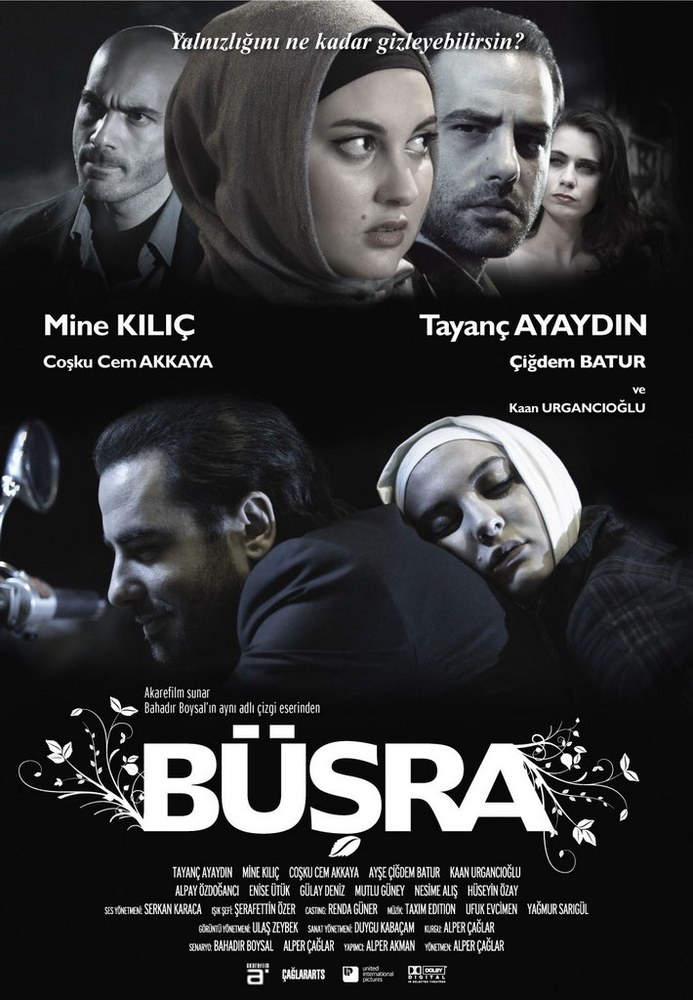
Alper Çağlar directed the Turkish drama Büşra, co-writing it with Bahadır Boysal, and it reached cinemas on March 19, 2010. Its source is Boysal's comic heroine of the same name, who appeared weekly in the humor magazine Leman. Running about 105 minutes, it is dated 2009 for production in some places and 2010 for release.

As in the printed strips, the story follows a heroine who turns up everywhere, from a headscarf fashion show to a masked ball. The contradictions peculiar to Turkish society keep landing her, and the people around her, in trouble. The film is built from four lonely people, four different outlooks and four painful stories that intertwine, and the inevitable tragedy shows that in societies without tolerance people are condemned to loneliness. The cast includes Tayanç Ayaydın, Çiğdem Batur, Kaan Urgancıoğlu, Enise Ütük, Murat Prosçiler and Mine Kılıç.

Turkish cinema had already adapted comic heroes such as Tarkan and Kara Murat, and strip characters such as Hüdaverdi, but Büşra stands apart as a politically tinged humor-magazine creation. One critic counted it among the interesting examples of a local cinema short on variety, and found the character hard to explain to newer viewers. In a society split into camps, the film pleased neither conservatives nor others and drew a heavy volley of criticism.

DirectorAlper Çağlar
Büşra Büşra Büşra

Reactions

You can pick up to 3 reactions.

Cast

Through different eyes

History & Society Lens Asks about the period, the social background and what the work reflects.

In bringing a character born in the pages of Leman magazine to the screen, Büşra puts the contradictions of Turkish society at its center. A journey from a headscarf fashion show to a masked ball is an intriguing way to portray a heroine caught between two worlds. Through the stories of four lonely people, the film asks how intolerance leaves people isolated. That it pleased no side in a society split into camps, and drew heavy criticism, also shows how sensitive its subject is. A thought-provoking document for anyone curious about Turkey's identity debates around 2010.

Cinephile Looks at script, editing and directing choices; keeps a distance from formula films.

Turning a weekly humor-magazine character into a feature-length tragedy is a bold choice, and Alper Çağlar and Bahadır Boysal deserve credit for taking that risk. A structure that weaves four points of view together promises a rich narrative on paper. Yet the film never quite finds its balance between the sharp, anarchic voice of the cartoon and the weight of drama; the tone keeps swinging between comedy and pain. As one critic noted, explaining the character to viewers unfamiliar with Büşra's anarchic streak is no easy task either. An interesting experiment for the genre variety of Turkish cinema, but not a fully settled film.

Family Viewer Asks whether the whole household can watch it; cares about humor and heart.

Its name may come from a humor character, but Büşra is not a comedy; it is a painful drama. It tells the stories of four lonely people and a tragedy, with social tensions in the mix. It is not suitable for young children, who would find it heavy. Teenagers and adults can watch it and talk it over afterwards. If you want a cheerful night in, this is not the film for it.

These are not reader reviews: they are short editorial takes written from different viewer perspectives with AI assistance. Reader reviews are below.

Reviews (0)

Log in Log in to write a review.

Comments