Hoşçakalın Çocuklar

Au revoir les enfants

Movie · 1987 · 3 people

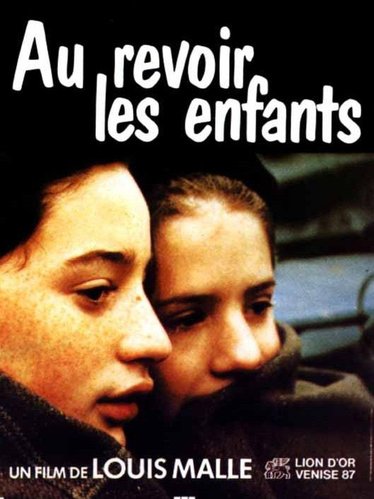
Louis Malle wrote, produced and directed Au revoir les enfants (Goodbye, Children), an autobiographical war drama from 1987. The co-production between France, Italy and West Germany marked Malle's return to French cinema after ten years in Hollywood and is counted among his finest work. It won the Golden Lion at Venice, the Louis Delluc Prize and a European Film Award for best screenwriter.

The story draws on the Carmelite boarding school near Fontainebleau that Malle attended at the age of twelve. In occupied France in 1944 the school is a refuge from the war until a newcomer, Jean Bonnet, turns out to be one of the Jewish boys hidden under false names. A hesitant start between Julien Quentin (Gaspard Manesse) and Jean (Raphaël Fejtö) grows into an intense friendship, until the Gestapo arrive at the school. Francine Racette plays Julien's mother, and François Berléand, Philippe Morier-Genoud and Irène Jacob are also in the cast.

The plot rests on the real actions of Père Jacques, a priest and headmaster who sheltered Jewish children. The score draws on Franz Schubert. The film received two Oscar nominations in 1988 and won seven Césars, including Best Film and Best Director.

DirectorLouis Malle
Production companyNouvelles Éditions de Films, MK2 Productions, NEF Filmproduktion, Stella Films

Reactions

You can pick up to 3 reactions.

Cast

Only cast members with a profile on this site are listed.

Through different eyes

History & Society Lens Asks about the period, the social background and what the work reflects.

Inspired by the Carmelite boarding school Malle entered at twelve, the film portrays occupied France in 1944 not through battle scenes but from inside a school. Jewish boys hidden under false names and the real actions of Père Jacques, the priest who sheltered them, make concrete the choices ordinary people faced in history's darkest hours. The friendship between Julien and Jean shows a bond that reaches across religious difference being tested under the pressure of occupation. Without lecturing, and through a child's eyes, the film opens up friendship, loyalty and betrayal for reflection, and it remains a powerful, personal way of reckoning with history.

Family Viewer Asks whether the whole household can watch it; cares about humour and heart.

This is a valuable film to watch with children, but it can be heavy for the little ones. The subject is Jewish children hidden during the war and the Gestapo arriving at the school. Its weight is mostly emotional. I would watch it with children over twelve, and only if you talk about it afterwards. It shows beautifully what friendship and courage mean. A good chance to watch as a family and then talk about history.

Cinephile Looks at script, editing and directing choices; keeps a distance from formula films.

Malle's return to French cinema after a decade in Hollywood is a tightly controlled narrative drawn from his own childhood. The film shuns big dramatic gestures; it weaves the hesitant closeness between Julien and Jean patiently into everyday school life, deliberately building up the weight it will carry towards the end. Gaspard Manesse and Raphaël Fejtö have a naturalness rarely seen in child performances. The Schubert-based score deepens the emotion without milking it. The Golden Lion at Venice and seven Césars reward that craft. My one reservation is that the measured pace of the early boarding-school observation may feel too still for some viewers, but the patience pays off.

These are not reader reviews: they are short editorial takes written from different viewer perspectives with AI assistance. Reader reviews are below.

Reviews (0)

Log in Log in to write a review.

Comments