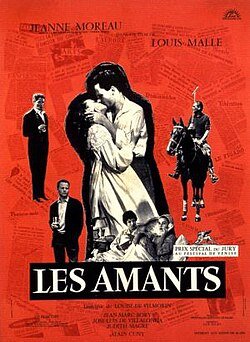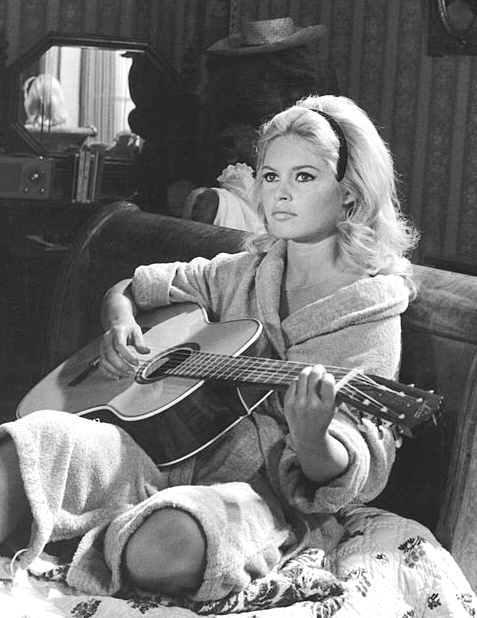
A Very Private Affair

A Very Private Affair (Vie privée)

Movie · 1962 · 15 people

Brigitte Bardot and Marcello Mastroianni play the leads in Louis Malle's 1962 romantic drama A Very Private Affair, a French-Italian production. Its French title, Vie privée, means "private life". The film runs about 104 minutes and was made in French; it is known in Germany as Privatleben and in Spain as Una vida privada. Malle wrote the screenplay with Jean-Paul Rappeneau and Jean Ferry. The story weighs the price of fame and draws on Bardot's life at the time.

The film centres on the daily life of a world-famous actress. Her every step is watched by a curious crowd and by press photographers who never let go, and almost nothing is left of a private sphere. The screenplay is semi-autobiographical and deals with the press pressure Bardot lived under at the height of her fame, the price of fame and the loss of privacy. Her contradictory public image also shows in the film: on one side an immoral sex symbol, on the other a film star waiting to be taken seriously.

Besides Bardot and Mastroianni, the cast includes Dominique Zardi, Nicolas Bataille, Nora Ricci, Jacqueline Doyen, Eléonore Hirt, Dirk Sanders, Isarco Ravaioli, Ursula Kübler and Christian de Tilière.

DirectorLouis Malle

Reactions

You can pick up to 3 reactions.

Cast

Only cast members with a profile on this site are listed.
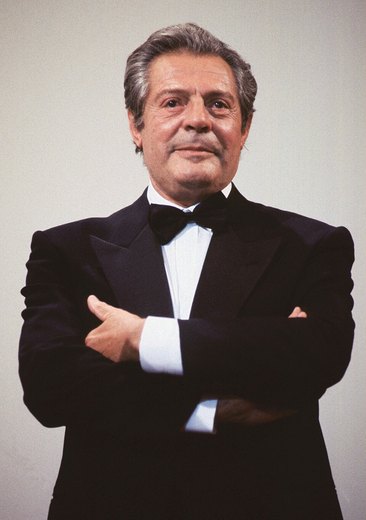
Marcello Mastroianni Marcello Mastroianni Actor · died at 72 Dominique Zardi Actor · died at 79 Brigitte Bardot Dirk Sanders Isarco Ravaioli Louis Malle Nora Ricci Nicolas Bataille Jacqueline Doyen Éléonore Hirt Gregor von Rezzori Élie Pressmann Ursula Kübler Christian de Tillière Max Mégy
Through different eyes

Cinephile Looks at script, editing and directing choices; keeps a distance from formula films.

The film's real daring lies in nearly superimposing actor and role: Bardot plays a world-famous actress in a semi-autobiographical script about the pressure of her own fame. Malle thereby sets up a neat paradox: a film that criticises the loss of privacy is also a camera putting Bardot in front of the audience once again. That self-reflexive layer sets it apart from an ordinary star melodrama. But the idea is stronger than the storytelling: a structure built on observing daily life struggles to form a clear dramatic line, and at times the film shows its thesis instead of dramatising it. Still, an essential stop in Malle's career for anyone interested in fame and image.

History & Society Lens Asks about the period, the social background and what the work reflects.

Made when celebrity culture and press photography were growing fast, the film stands out for naming the price of fame so early. An immoral sex symbol on one side, a star waiting to be taken seriously on the other: Bardot's contradictory image shows plainly how female celebrities are judged at two extremes in public. A life that crowds and camera lenses never let go of feels even more familiar in today's social media age. So beyond being a period document, the film still poses a current question about the line between privacy and public interest.

Family Viewer Asks whether the whole household can watch it; cares about humour and heart.

This is a drama for adults. It is about fame, press pressure and the loss of a private life; not a story that will hold children's attention. Bardot's sex-symbol image is also among the film's themes, so it is not a suitable pick with young kids. Watched with older teens who are curious about celebrities' lives, it is a good chance to talk about how fame is not always as glamorous as it looks.

These are not reader reviews: they are short editorial takes written from different viewer perspectives with AI assistance. Reader reviews are below.

Reviews (0)

Log in Log in to write a review.

Comments