Aşıklar

The Lovers (Les Amants)

Movie · 1958 · 3 people

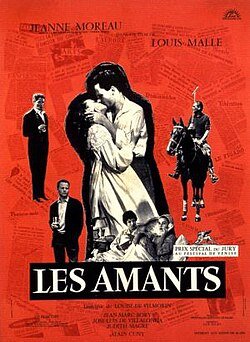
Louis Malle made the French drama Les Amants (The Lovers in English-speaking countries) in 1958. Malle was only 25 at the time; it was his second feature and is counted among the early works of the New Wave. It did well at the French box office with about 2.6 million admissions, but stirred up fierce controversy in the United States over alleged obscenity. At Venice that year it was nominated for the Golden Lion and won the Special Jury Prize.

The story follows an unhappy, married woman from a bourgeois background who rediscovers human warmth through an affair. Jeanne Moreau leads the cast, with Jean-Marc Bory, Alain Cuny and José Luis de Vilallonga beside her; Judith Magre and Jean-Claude Brialy also appear. Its source is Dominique Vivant's story Point de Lendemain, set in the 18th century, with events moved to the 1950s.

Louise de Vilmorin wrote the dialogue and Henri Decaë shot the black-and-white images. The main musical theme is Brahms's B-flat major chamber piece (Op. 18). Its daring scenes led to bans in many countries, and in Brazil it became the subject of a lawsuit in the 1960s.

DirectorLouis Malle

Reactions

You can pick up to 3 reactions.

Cast

Only cast members with a profile on this site are listed.

Through different eyes

Yeşilçam Nostalgic A viewer raised on the classics, looking for warm storytelling and strong acting.

Jeanne Moreau's melancholy, thoughtful face is among the loveliest memories of black-and-white cinema. In The Lovers, Henri Decaë's images and Brahms's chamber music come together so that the film flows almost like a poem. The story of a woman seeking warmth in an unhappy marriage will feel familiar to anyone who has read Madame Bovary. But I must also say this: to my mind the story's moral balance is somewhat lacking, and the affair is glorified a little too much. An eye used to Yeşilçam's measured melodramas may find this boldness both striking and unsettling.

Cinephile Looks at script, editing and directing choices; keeps a distance from formula films.

Shot by Louis Malle at just 25, this second feature deserves its place in film history as one of the early works of the New Wave. Moving Dominique Vivant's 18th-century story into the bourgeois provinces of the 1950s, the adaptation places female desire at its centre without judging it, a genuinely bold stance for its time. Henri Decaë's black-and-white photography turns Jeanne Moreau's face into a narrative instrument in its own right. Choosing Brahms's chamber music as the main theme is an elegant decision that sets the emotional tone. The weak point is that the portrait of bourgeois society stays somewhat schematic; the supporting characters rarely become more than representatives of a class. Still, the Special Jury Prize at Venice and about 2.6 million admissions in France show it won over both critics and audiences.

Family Viewer Asks whether the whole household can watch it; cares about humour and heart.

This film is not suitable for children. It tells the story of an extramarital affair. Its daring scenes got it banned in many countries. It is from 1958, black-and-white and quiet, so teenagers are likely to get bored too. It speaks to adults who love classic French cinema. For a family evening, it is better to choose another film.

These are not reader reviews: they are short editorial takes written from different viewer perspectives with AI assistance. Reader reviews are below.

Reviews (0)

Log in Log in to write a review.

Comments