İki Süngü Arasında

Between Two Bayonets (İki Süngü Arasında)

Movie · 1952 · 3 people

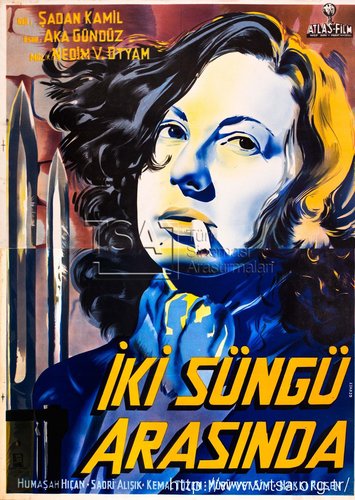
Şadan Kâmil directed and shot İki Süngü Arasında ("Between Two Bayonets"), a black-and-white Turkish drama from 1952. Adnan Fuat Aral wrote the screenplay, reportedly adapting a novel credited to Eser Aka Gündüz, with music by Nedim Otyam; the film was produced by Atlas Film under producer Nazif Duru.

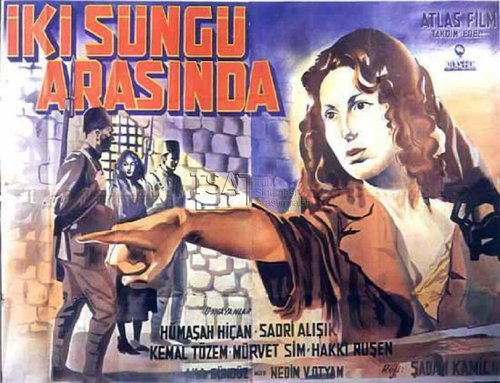
The story follows Emine, a woman who has spent twelve years in prison and keeps engineering incidents whenever her release nears so that she can remain behind bars. Her hostility toward the outside world eventually gets her committed to a psychiatric ward, where the sympathetic Dr. Fikret draws out her history: raised as a servant girl in a wealthy household, she considers falling in love with the family's son the great mistake of her life. After she injures the prison warden, her court appearances take place with her handcuffed between two bayonet-carrying soldiers — the detail that gives the film its title — until Fikret intervenes and has the practice ended, allowing Emine to find her footing back in society.

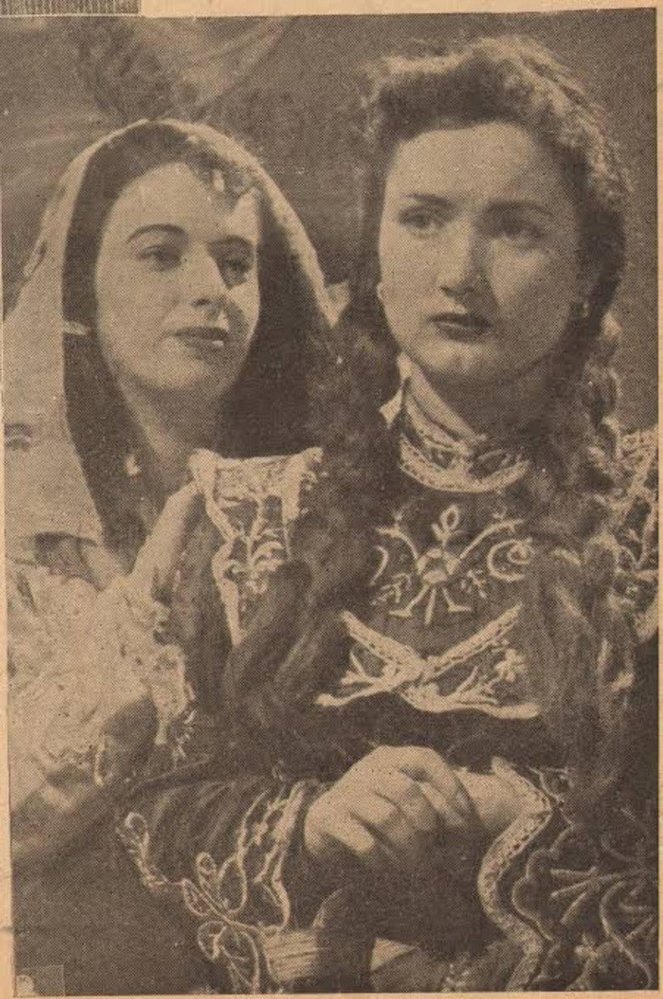
Sadri Alışık stars as Dr. Fikret opposite Hümaşah Hiçan as Emine, with supporting turns from Atıf Kaptan, Mürüvvet Sim, Faik Coşkun, Kemal Tözem, and Hakkı Ruşen.

DirectorŞadan Kâmil
Production companyAtlas Film
Between Two Bayonets (İki Süngü Arasında)

Reactions

You can pick up to 3 reactions.

Cast

Sadri Alışık Actor · died at 69 Atıf Kaptan Mürüvvet Sim

Through different eyes

Yeşilçam Nostalgic A viewer raised on the classics, looking for warm storytelling and strong acting.

Coming from Yeşilçam's early years, this film tells of a woman who has spent years in prison finding her way back to life, and it believes that kindness and compassion can change a person. Seeing Sadri Alışık at the centre of a serious drama, as a doctor patiently listening to a patient's past, has a value of its own. Nedim Otyam's music and the black-and-white images carry that sincere atmosphere of old cinema. It may feel slow to eyes used to today's speed, but it is a humane story with a firm moral centre.

History & Society Lens Asks about the period, the social background and what the work reflects.

The film's most striking feature is that it roots its story in the practice of besleme, girls taken in as servants and raised in wealthy households. The class and belonging problems of such girls were a real social wound in the Turkey of that time; Emine regarding her love for the family's son as the great mistake of her life shows how even the right to dream was restricted for a servant girl in that order. How institutions such as prison and the asylum close in on a woman is made concrete in the image of her being led between two bayonets. Tying the way out to one doctor's goodwill, however, reflects a tendency to overcome institutional problems through an individual saviour.

Cinephile Looks at script, editing and directing choices; keeps a distance from formula films.

Directed and shot by Şadan Kâmil, the film builds its narrative on Emine telling a doctor about her past, an ambitious structure for 1952 that adds intrigue from the outset. The price of this frame is clear too: in my view the doctor risks remaining mostly a device who listens and supplies solutions, with little of his own inner life opened up. Emine deliberately causing trouble whenever her release draws near is a very strong psychological starting point; how far this complex behaviour can be explored may well be limited by the melodramatic habits of the period. A notable example for anyone interested in early psychological dramas in Turkish cinema.

These are not reader reviews: they are short editorial takes written from different viewer perspectives with AI assistance. Reader reviews are below.

Reviews (0)

Log in Log in to write a review.

Comments