Santa Claus Is a Stinker

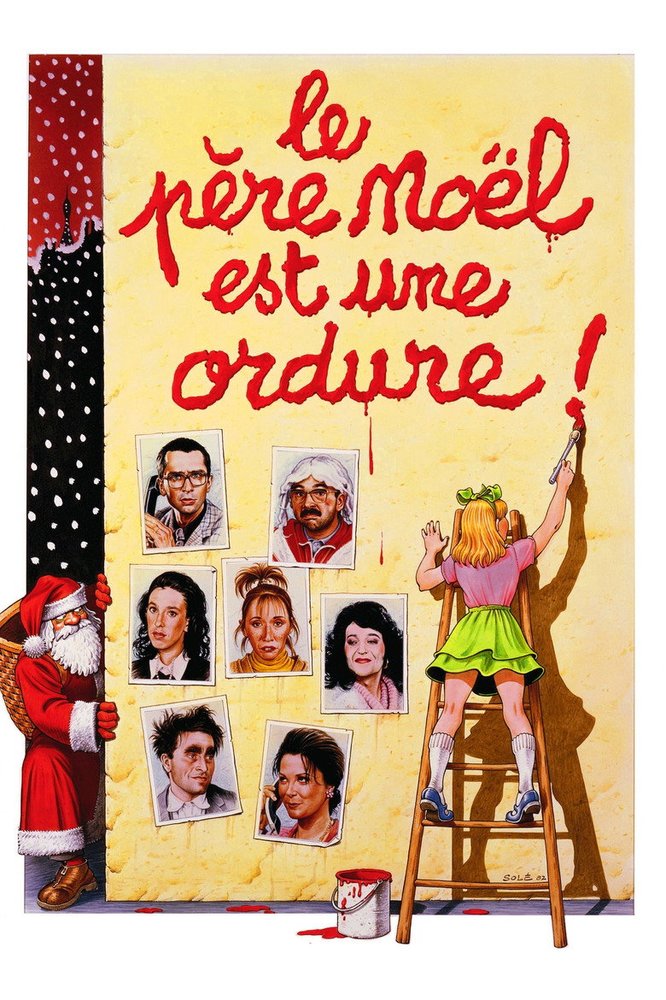
Santa Claus Is a Stinker (Le père Noël est une ordure)

Movie · 1982 · 15 people

Jean-Marie Poiré directed the 1982 French comedy Santa Claus Is a Stinker, known in French as Le père Noël est une ordure. The French title, which translates roughly as "Father Christmas is a scumbag", sets the tone at once: crude, mocking and deliberately provocative. The film adapts a stage comedy created by the Le Splendid troupe in 1979. Described as a burlesque and a Christmas film, the 88-minute picture is now regarded as a cult classic.

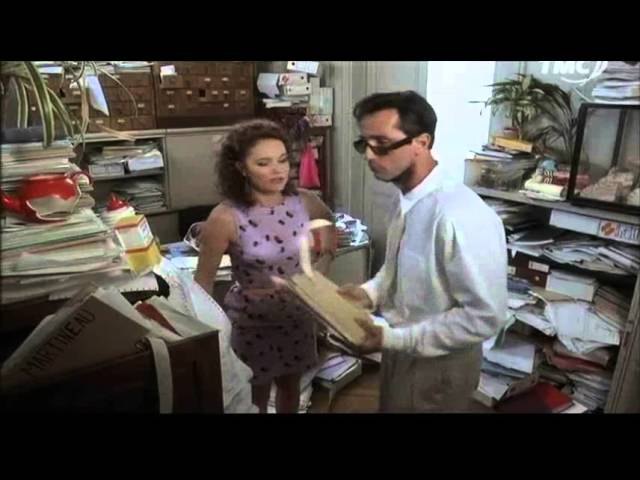
The story unfolds on Christmas Eve in a Paris apartment that houses a helpline for lonely and distressed people. Everyone who comes through the door or onto the phone that night is a caricature: the association's volunteers, a half-homeless couple (one dressed as Santa), a neighbour from an imaginary Balkan country, and a man in women's clothes struggling with loneliness and discrimination. The cast includes Thierry Lhermitte, Gérard Jugnot, Christian Clavier, Anémone, Roland Giraud, Josiane Balasko and Marie-Anne Chazel, with Martin Lamotte, Jacques François, Bruno Moynot and Claire Magnin.

Poiré, Balasko and Chazel wrote the screenplay together. Both play and film draw on 1970s Italian comedies, notably Ettore Scola's Affreux, sales et méchants and Dino Risi's segments in Les Nouveaux Monstres.

DirectorJean-Marie Poiré

Reactions

You can pick up to 3 reactions.

Cast

Only cast members with a profile on this site are listed.

Christian Clavier Christian Clavier Film actor · 74 years old Roland Giraud Roland Giraud Actor · 84 years old Thierry Lhermitte Gérard Jugnot Anémone Josiane Balasko Marie-Anne Chazel Michel Blanc Martin Lamotte Jacques François Bruno Moynot Claire Magnin François Rostain Jean-Pierre Clami Jeannette Batti
Through different eyes

Cinephile Looks at script, editing and directing choices; keeps a distance from formula films.

The film's stage origins show in every frame: a setting centred on a helpline flat, chaos that rises with each new character through the door, and the Le Splendid troupe's timing carried over from the theatre. Poiré brings that stage energy to the screen without trying much to open it up, which gives the film a peculiar, cramped rhythm. The black humour, fed by the merciless Italian comedies of Scola and Risi, still feels bold today. But that is also the weak spot: since everyone is a caricature from start to finish, the characters do not deepen as the jokes pile up, and the film becomes a chain of gags. There is an energy that explains its cult status, yet not every viewer will have patience for sarcasm this unrelenting.

Family Viewer Asks whether the whole household can watch it; cares about humour and heart.

Don't sit down with the kids just because it is a Christmas film. This is a deliberately provocative, mocking comedy with crude, biting humour. Teenagers may laugh at some of the jokes, but watching together you may feel uncomfortable at times. It is a far better pick for a group of adult friends who enjoy this kind of rough humour.

History & Society Lens Asks about the period, the social background and what the work reflects.

The film's satire takes aim at the show of goodness on Christmas Eve: a helpline listening to people in crisis, its volunteers and the lost souls who knock on the door. By turning even the volunteers into caricatures it points a mocking lens at good intentions themselves, and it can be read as a sharp critique of middle-class charity in its day. Seen from today, though, some of the caricatures take on another meaning. Jokes built around a neighbour from an imaginary Balkan country, or a man in women's clothes struggling with discrimination, expose prejudice for some viewers and reproduce it for others. In my view the film never clearly picks a side.

These are not reader reviews: they are short editorial takes written from different viewer perspectives with AI assistance. Reader reviews are below.

Reviews (0)

Log in Log in to write a review.

Comments