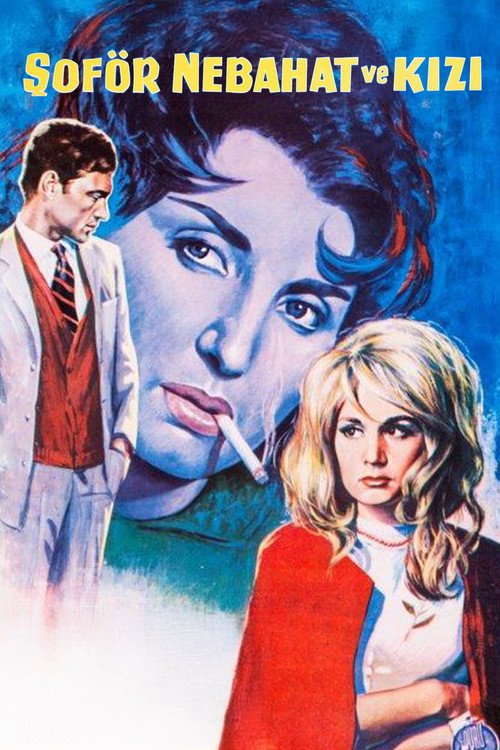
Driver Nebahat and Her Daughter (Şoför Nebahat ve Kızı)

Driver Nebahat and Her Daughter (Şoför Nebahat ve Kızı) (translated)

Movie · 1964 · 6 people

Directed by Süreyya Duru in 1964, this black-and-white drama is the second film in the Şoför Nebahat series. Nebahat, played by Sezer Sezin, took the wheel at seventeen when her father died, later married a lawyer, and after their separation returned to driving. She now lives with her daughter Hülya in a modest Istanbul neighborhood, sharing an easy camaraderie with her fellow drivers at the dolmuş stand.

Hülya, portrayed by Filiz Akın, is ashamed of her mother's trade and her plain friends, and longs for the world of her wealthy classmates. A secret drinking party she throws while her mother is out sparks a bitter quarrel, and she flees to her father Bülent, a former lawyer reduced to working as a scribe; the poverty she finds there sends her back home. Hoping to please her, Nebahat goes into debt to buy a restaurant from a man named Cengiz Sertel, but the deal brings the family nothing but trouble.

Cengiz's schemes culminate in a killing, and Nebahat takes the blame upon herself, landing in court. The combined efforts of Murat, played by Cüneyt Arkın, of her loyal driver friends and of Bülent, together with Hülya's confession, bring the truth to light, and the story closes on a hopeful note.

DirectorSüreyya Duru
Production companyDuru Film

Reactions

You can pick up to 3 reactions.

Cast

Through different eyes

Yeşilçam Nostalgic A viewer raised on the classics, looking for warm storytelling and strong acting.

Sezer Sezin's Nebahat is one of Yeşilçam's most endearing heroines: an honorable mother who took the wheel when she lost her father young and raised her daughter by the sweat of her brow. In this second film the rift between mother and daughter is the heart of the story. Filiz Akın's Hülya, ashamed of her mother, captures a young girl dazzled by wealth very well. The warm solidarity of the drivers at the stand recalls the loveliest side of the old neighborhood films. Within those black-and-white images, the respect for hard work and loyalty still warms the heart today.

History & Society Lens Asks about the period, the social background and what the work reflects.

The film shows plainly how class difference creates tension inside a family in 1960s Istanbul. A woman driving a dolmuş is a striking figure given the social expectations of the time. Hülya's shame at her mother's trade and her envy of wealthy classmates reflect the conflict between the wish to rise and the sense of belonging, and her return after seeing the poverty at her father's sharpens it further. On the other hand, the melodrama that arrives later with debt, scheming and a killing pushes the social observation aside. Here the film surrenders a little too readily to the conventions of its day.

Family Viewer Asks whether the whole household can watch it; cares about humor and heart.

A family film with a strong message about the rift between a mother and her daughter. It shows the value of hard work and friendship beautifully. But it includes a drinking party, a big quarrel, a killing and a court case. That may be a bit much for young children. It is better with teenagers; the story of a girl ashamed of her mother has a lot to say to young people in particular.

These are not reader reviews: they are short editorial takes written from different viewer perspectives with AI assistance. Reader reviews are below.

Reviews (0)

Log in Log in to write a review.

Comments