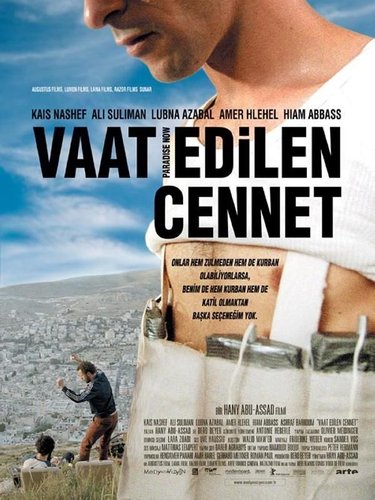
Vaat Edilen Cennet

Paradise Now (Vaat Edilen Cennet)

Movie · 2005 · 4 people

Palestinian-Dutch director Hany Abu-Assad made Paradise Now (Turkish title Vaat Edilen Cennet), a 2005 psychological drama. This Arabic-language co-production runs about 90 minutes; its title alludes to a promised paradise. It won the Golden Globe for Best Foreign Language Film and was the first Palestinian film nominated for an Oscar in that category. It also won the European Film Award for best screenplay and the Golden Calf for best feature.

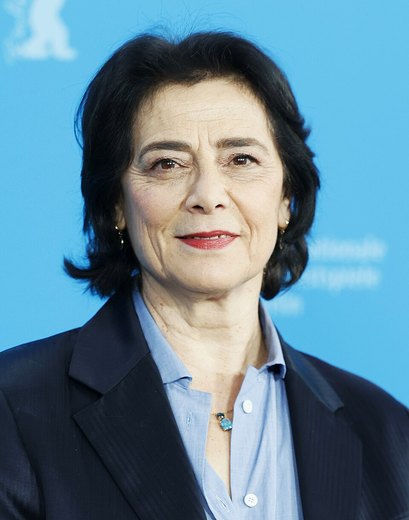
The story focuses on the last 48 hours of two childhood friends from Nablus who have been prepared to carry out a suicide attack in Tel Aviv. After a last night with their families, unexpected events arise on their journey and fate slowly pulls them apart. The film looks from the inside at the world of such bombers, against a backdrop of poverty and frustration. The cast includes Ali Süleyman, Kais Nashef, Lubna Azabal, Hiyam Abbas, Ashraf Barhom and Amer Hlehel.

Abu-Assad wrote the script with Bero Beyer and Pierre Hodgson, and Augustus Film and Lama Films produced. It was shot in the West Bank in 2004 and shown in 45 countries. The director faced pressure; some accused him of glorifying suicide attacks, others of betraying the Palestinian cause. Abu-Assad calls the film an artistic view of the political issue.

DirectorHany Abu-Assad
Production companyAugustus Film

Reactions

You can pick up to 3 reactions.

Cast

Only cast members with a profile on this site are listed.
Through different eyes

Cinephile Looks at script, editing and directing choices; keeps a distance from formula films.

In Paradise Now, Hany Abu-Assad tackles one of the hardest subjects imaginable, the last 48 hours of two childhood friends prepared for a suicide attack, without tipping into sensationalism. The tight 90-minute structure draws its tension not from action but from waiting and hesitation. Quiet moments such as the last night with their families are where the film's real power lies. The script by Abu-Assad, Bero Beyer and Pierre Hodgson shows why it won at the European Film Awards: it refuses to reduce the characters to a single explanation and lets us watch their paths slowly diverge. Shooting in the West Bank lends it an almost documentary sense of reality. The Golden Globe and the Oscar nomination are no accident; this is a disturbing but cinematically disciplined film.

History & Society Lens Asks about the period, the social background and what the work reflects.

Through the story of two young men from Nablus, Paradise Now tries to understand from the inside the people behind acts that shocked the world. Poverty and frustration form the backdrop, and the film presents them as context, not justification. That the director was accused both of glorifying such attacks and of betraying the Palestinian cause shows how delicate the ground is. In Abu-Assad's own words, this is an artistic view of a political issue. It hands the viewer no ready verdict; instead it leaves you alone with hard questions. A heavy but important film for anyone who wants to understand the social reality of the region.

Family Viewer Asks whether the whole household can watch it; cares about humour and heart.

This film follows the last two days of two young men preparing for a suicide attack. The subject is very heavy and definitely not for children. Teenagers should only watch it with an adult, and talk about it afterwards. The film doesn't put violence in the foreground, but the emotional weight it carries is great. Not for family night; it's for adults looking for a serious film.

These are not reader reviews: they are short editorial takes written from different viewer perspectives with AI assistance. Reader reviews are below.

Reviews (0)

Log in Log in to write a review.

Comments