
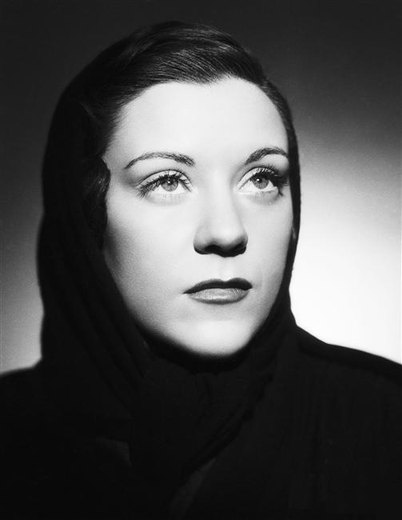
Maria Casarès
Stage actor · died at 74
Profile
| Age | died at 74 |
|---|---|
| Birth date | November 21, 1922 |
| Birthplace | A Coruña |
| Died | November 22, 1996 |
| Profession | Stage actor, Film actor, Actor |
| Zodiac sign | Scorpio |
| Education | Cours Simon, Paris Konservatuvarı |
| Spouse | André Schlesser |
Maria Casarès — Biography
María Victoria Casares Pérez was born on 21 November 1922 in A Coruña, in Spain's Galicia region, and died on 22 November 1996 at the Logis de la Vergne in Alloue, Charente, the home she had occupied for many years. Known in France as Maria Casarès, this Spanish-born French performer ranks among the finest tragic actresses of the twentieth-century French stage, chiefly on the strength of her theatre work, and she pursued nearly her whole career in France.
Her father, Santiago Casares Quiroga, was a politician who had held ministerial office and led the government of the Second Spanish Republic under President Manuel Azaña. María first studied at the Instituto-Escuela in Madrid, then settled in France with her family in 1936 after her father was driven into exile. She trained as an actress in Paris at the Cours Simon and the Paris Conservatoire. She took French nationality in 1975, although French audiences had long before claimed her as their own under the spelling Maria Casarès.
Her stage career began in 1942 and continued without interruption until her death, stretching across more than fifty years. She excelled in contemporary readings of the classical tragedies while also joining avant-garde theatrical experiments. In her youth she moved close to Jean Vilar and to prominent members of the existentialist milieu. Together with Edwige Feuillère and Madeleine Renaud she formed the most celebrated trio of tragic actresses of her generation, and beyond the stage she appeared regularly in film and television.
Her most luminous years on screen came in the 1940s and 1950s. Les Dames du bois de Boulogne (1945) and Les Enfants du paradis (1945), where she played Nathalie, secured her a place among the great classics of French cinema. These were followed by the Duchess of Sanseverina in La Chartreuse de Parme (1948), the Princess embodying Death in Jean Cocteau's Orphée (1950), L'Homme qui revient de loin (1950), and Le Testament d'Orphée (1960), in which she reprised the role of the Princess. Late in her career she portrayed Sister Agatha in Flavia the Heretic (1974).
France made her a Knight of the Légion d'honneur, an Officer of the National Order of Merit and a Commander of the Order of Arts and Letters. She won the Molière Award for best actress and the Prix du Brigadier, and received a César nomination for best supporting actress. Spain honoured her with the Castelao Medal and the Gold Medal of Merit in the Fine Arts. She married André Schlesser, and over the course of her life she also shared relationships with Albert Camus, Gérard Philipe and Jean Servais.
Reactions
You can pick up to 3 reactions.
Comments (0)