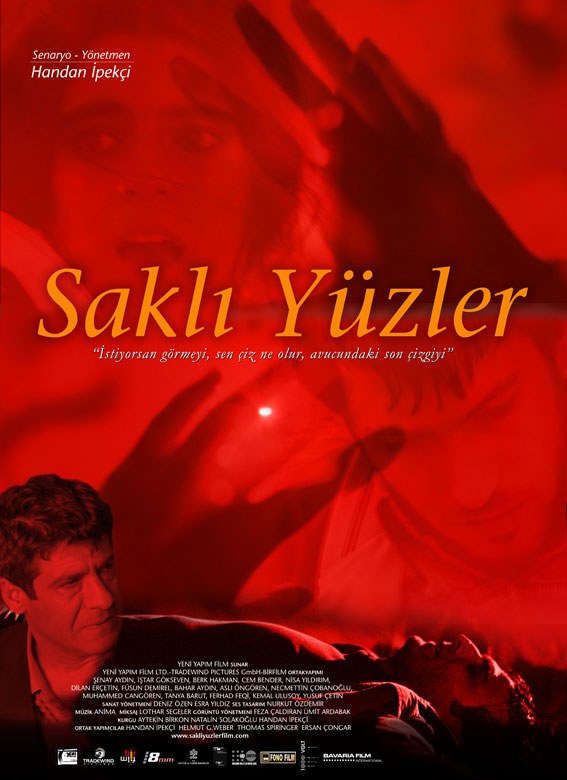
My Father Is in the Military (Babam Askerde)

My Father Is in the Military (Babam Askerde) (translated)

Movie · 1995 · 6 people

Handan İpekçi's first feature, from 1995, was Babam Askerde (My Father Is in the Military), a Turkish drama and political film. She also wrote the screenplay and produced it, with Yeni Yapımlar Ltd. as the production company. Shot in color on 35 mm and running 86 minutes, it opened on April 21, 1995, and is counted among the September 12 films.

The story follows three children from different social classes whose parents are arrested during the September 12 period. Overnight they lose their fathers' affection and are left with explanations that sound hollow, trying to give their pain some meaning within a child's own world. Instead of open political speech, the film conveys the pressure of the time through a quiet fragility in the children's gaze.

Tevfik Şenol was the cinematographer, A. Sinan Hatipoğlu composed the music, Nevzat Dişiaçık edited, Ayşe Akıllıoğlu was art director, and Erkan Aktaş handled sound recording and the final mix. The cast includes Murat Daltaban, Gülnihal Yazıcı, Yunus Gencer, Zühal Gencer Erkaya, Nurettin Şen, Nuran Bozkurt, Yasemin Alkaya, Hülya Karakaş, Ceylan Öcal and Ali Sürmeli. At the 7th Ankara International Film Festival in 1995, the film won İpekçi both the Promising New Director and Promising New Screenwriter awards.

DirectorHandan İpekçi
Production companyYeni Yapımlar Ltd.

Reactions

You can pick up to 3 reactions.

Cast

Also in the cast: Gülnihal Yazıcı, Yunus Gencer, Zuhal Gencer Erkaya, Nurettin Şen, Nuran Bozkurt, Hülya Karakaş, Ceylan Öcal

Through different eyes

Yeşilçam Nostalgic A viewer raised on the classics, looking for warm storytelling and strong acting.

In Yeşilçam, stories told through a child's eyes were usually built on floods of tears and grand emotions. Babam Askerde chooses to tell the same pain in a very different language, quietly, conveying the pressure of its time not through loud speeches but through the children's fragile gaze. That restraint gives the film a certain dignity. Yet an eye used to the warmth and enveloping music of the old melodramas may find this calm telling distant at times. It is a film that reminds us one need not shout to touch the heart, but it is not an easy one to love.

History & Society Lens Asks about the period, the social background and what the work reflects.

Babam Askerde stands out among the September 12 films for its point of view: it shows the impact of the coup era not from inside politics or prisons, but through the eyes of children whose parents have been arrested. Choosing three children from different social classes is a significant decision; it shows that the pressure of the time shook families from every layer of society, not just one group. The hollow explanations the children are given are a powerful detail for understanding the silence in homes during those years and the way events were covered up. A valuable film for anyone curious how recent history reached into family life.

Family Viewer Asks whether the whole household can watch it; cares about humor and heart.

Don't mistake this for a children's film just because its main characters are kids. The subject is heavy: parents being arrested, separation and an absence no one explains. It is too sad and too hard to grasp for young children. It means more watched with middle- and high-school teenagers, on an evening when the older generation can talk about those years. Leave time to talk afterwards.

These are not reader reviews: they are short editorial takes written from different viewer perspectives with AI assistance. Reader reviews are below.

Reviews (0)

Log in Log in to write a review.

Comments