I Miss You Too (Ben de Özledim)

I Miss You Too (Ben de Özledim) (translated)

Movie · 1981 · 15 people

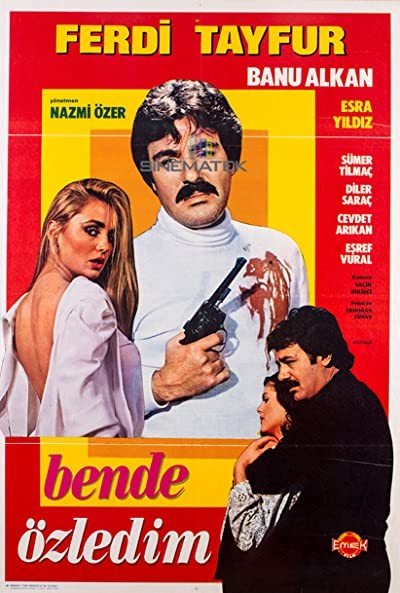
Turkish melodrama Ben de Özledim ("I Miss You Too") dates from 1981. Blending arabesk, emotional drama and adventure, it was shot in color on 35 mm and runs about 89 minutes. Emek Film produced it, with Yeni Lale Film credited for pre-production work. On release it drew a large audience and became the most-watched Turkish film of 1982. It is remembered among the arabesk films in which the singer Ferdi Tayfur appeared on screen.

The story is set in Istanbul and uses the familiar themes of arabesk melodrama: love, marriage, infidelity, debts and creditors, inheritance and revenge. Promissory notes, a rented house, birthday and rummy parties, blindness and a wheelchair are among the elements that recur in the plot. Ferdi Tayfur and Banu Alkan share the leading roles, playing characters named Ferdi and Banu. Esra Yıldız plays Gül, Sümer Tilmaç is Ekrem, Diler Saraç plays Banu's mother, Cevdet Arıkan is Salih, Eşref Vural is Rıza and Ahmet Açan is the doctor. The film was also dubbed: Ferdi Tayfur's voice is Esen Günay's and Banu Alkan's is Ayşin Atav's.

Nazmi Özer directed and also produced the film. The screenplay is by Erdoğan Tünaş and the cinematography by Salih Dikişçi.

DirectorNazmi Özer
Production companyEmek Film

Reactions

You can pick up to 3 reactions.

Cast

Through different eyes

Yeşilçam Nostalgic A viewer raised on the classics, looking for warm storytelling and strong acting.

Ferdi Tayfur's arabesk films are a memory of a time when song and story walked hand in hand, and this one, as the most-watched Turkish film of 1982, shows what audiences of that era held on to. Love, betrayal, debt and revenge are brought together with Erdoğan Tünaş's familiar melodrama craft. Heavy motifs like blindness and a wheelchair openly carry the tear-leaning side of the old melodramas. Someone looking for Yeşilçam's subtler touch may find it too loud; but for anyone wanting to understand the heartstrings of arabesk cinema, it is a valuable document.

History & Society Lens Asks about the period, the social background and what the work reflects.

The film bears the marks of the years when arabesk was becoming the emotional world of the city. Details such as promissory notes, a rented house and debts show the daily worries of people trying to hold on in Istanbul, while birthday parties and konken card evenings point to the comfort of another class; the melodrama feeds on the tension between those two worlds. Another striking point is that the leads were dubbed: even a singing star's speaking voice belonging to someone else is a reminder of how image and voice were built separately in the cinema of the period.

Family Viewer Asks whether the whole household can watch it; cares about humour and heart.

The subject matter is heavy: betrayal, debt, revenge, blindness, all told with plenty of tears. For grandparents who love arabesk music it can be a pleasant dose of nostalgia. For young children both the story and the emotional weight are too much; they will probably get bored or lose track of what is happening and why. If you watch it with teenagers, it helps to talk first about the exaggerated style of melodramas from that era.

These are not reader reviews: they are short editorial takes written from different viewer perspectives with AI assistance. Reader reviews are below.

Reviews (0)

Log in Log in to write a review.

Comments