Gelibolu

Gallipoli (Gelibolu)

Movie · 2005 · 3 people

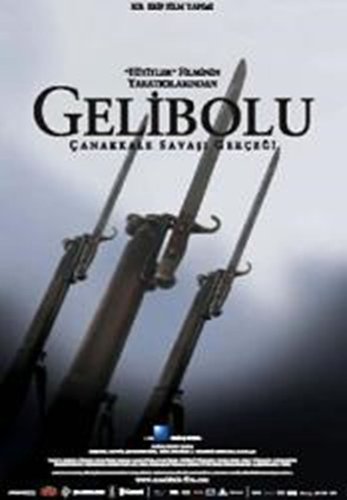
Shown abroad as Gallipoli, Gelibolu was made in 2005 as a documentary by Turkish writer-director Tolga Örnek. Its account of the 1915 campaign gives voice to both camps: the Turkish defenders, and the British troops and Anzacs of the Australian and New Zealand Army Corps who fought against them. It opened in Turkey on 18 March 2005, the 90th anniversary of the battle, and reached New Zealand and Australian cinemas in April. Doğuş Group was the main sponsor.

The film foregrounds the suffering and feelings of soldiers in the trenches regardless of religion, language or nationality. Ten main characters carry it through their letters and diaries: two British, three New Zealanders, three Australians and two Turks. Jeremy Irons, Sam Neill, Zafer Ergin, Sungun Babacan and Nüvit Candaner appear in the voice cast. It draws on letters, documents and photographs never before made public.

Preparation took about six years: more than seventy archives were searched, over 80,000 photographs examined and 16 international historians consulted. British and Australian war museums, New Zealand's Ministry of Culture and Turkish military museums took part. Shot in High Definition and printed to 35 mm, it is described as the first Turkish documentary made that way. Hamdi Döker produced it for Ekip Film, Volker Tittel shot it and Demir Demirkan composed the score. Örnek had earlier directed documentaries on Atatürk, Nemrut and the Hittites.

DirectorTolga Örnek
Production companyEkip Film

Reactions

You can pick up to 3 reactions.

Cast

Through different eyes

History & Society Lens Asks about the period, the social background and what the work reflects.

Gallipoli's central ambition is to tell the war not as a national epic but as suffering shared in the trenches. The letters and diaries of two British, three New Zealand, three Australian and two Turkish soldiers bring people who faced each other into the same human condition. Opening on the 90th anniversary of the battle in both Turkey and the Anzac countries turns the film into a project of shared memory. The approach carries a tension, too: viewers expecting a heroic narrative may find this perspective, which looks past religion, language and nationality, unfamiliar. In my view that unfamiliarity is exactly the film's value; it invites us to listen to Gallipoli from both sides with the same seriousness.

Cinephile Looks at script, editing and directing choices; keeps a distance from formula films.

In an archive documentary the real cinema happens in selection and editing; the material Tolga Örnek distilled from more than seventy archives and over 80,000 photographs is, in that sense, the film's greatest asset. Tying the narrative to the letters of ten characters is a smart structural choice that gives a scattered history a dramatic spine. A voice cast that includes Jeremy Irons and Sam Neill also lends the texts weight. Still, this form, with letter readings laid over photographs and documents, runs the risk of monotony over a long sitting; the rhythm largely has to be carried by Demir Demirkan's score and the pace of the editing. Shooting in High Definition and printing to 35 mm shows that the documentary was conceived for the cinema.

Family Viewer Asks whether the whole household can watch it; cares about humour and heart.

A valuable documentary about Gallipoli that can be watched with middle- and high-school-age children. Through the letters, history stops being facts to memorise and becomes a human story. But it puts the suffering in the trenches up front, and real photographs of the war may upset young children. It is a heavy subject, so it is best watched with an adult who can talk through their questions afterwards.

These are not reader reviews: they are short editorial takes written from different viewer perspectives with AI assistance. Reader reviews are below.

Reviews (0)

Log in Log in to write a review.

Comments