Hôtel du Nord

Hôtel du Nord

Movie · 1938 · 15 people

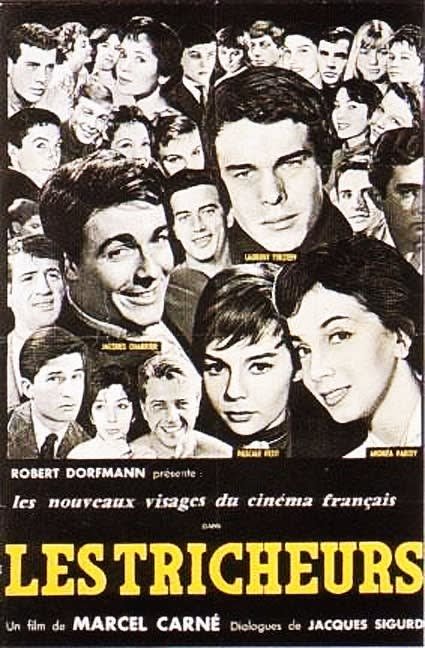
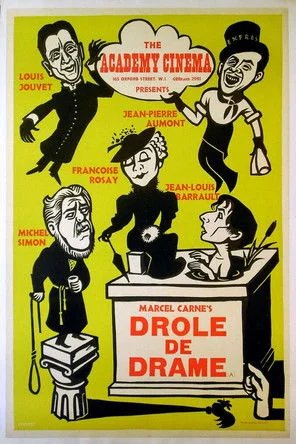
Marcel Carné directed Hôtel du Nord, a French drama of about 95 minutes (some sources call it a melodrama) that was released in France on 10 December 1938. Jean Aurenche and Henri Jeanson wrote the screenplay. It is counted among the notable works of poetic realism, a tendency sometimes described as an early form of film noir, or "pré-noir". Its image, music and dialogue give working-class lives a poetic dimension.

Very loosely inspired by Eugène Dabit's 1929 novel, the film shares none of its characters; the only thing the two have in common is the setting, the hotel on the quai de Jemmapes in Paris. The story concerns two couples in this modest boarding house in a working-class district. In one, the young lovers Pierre and Renée, without steady work, try to die together but survive. In the other are the prostitute Raymonde and Edmond, a petty crook hiding from his old accomplices. The paths of the two couples become entangled under the hotel roof.

Annabella and Jean-Pierre Aumont lead the cast, with Louis Jouvet and Arletty. Although she has only a supporting part, Arletty had a phenomenal success with the film. Paulette Dubost, Bernard Blier, François Périer, Jane Marken, Albert Rémy, Andrex and Dora Doll also appear.

DirectorMarcel Carné

Reactions

You can pick up to 3 reactions.

Cast

Only cast members with a profile on this site are listed.

François Périer François Périer Film actor · died at 82 Albert Rémy Actor · died at 55 Annabella Arletty Louis Jouvet Jean-Pierre Aumont Paulette Dubost Bernard Blier Jane Marken Albert Malbert André Brunot Andrex Armand Lurville Charles Bouillaud Dora Doll
Through different eyes

Cinephile Looks at script, editing and directing choices; keeps a distance from formula films.

What makes Hôtel du Nord one of the cited examples of poetic realism is its skill at turning a modest boarding house in a working-class district into a world of its own. By crossing two couples' paths under one roof, Carné builds a single-setting narrative that works almost like a chorus. Taking nothing from the novel but its setting is also a bold liberty in adaptation. Seen with today's eyes, though, the young lovers' story leans too heavily on melodrama in my view; the film's real vitality comes from the supporting characters, and Arletty making such an impact in a mere supporting part is the best proof. The pré-noir label, meanwhile, makes it an important stop on the family tree for anyone curious about film noir's forerunners.

History & Society Lens Asks about the period, the social background and what the work reflects.

The film looks at the margins of 1930s Paris: young people without steady work, a woman who makes her living on the street, a petty crook hiding from his old accomplices. All of them live side by side in the same modest hotel on the quai de Jemmapes. Poetic realism's view of the working class has a romantic tint here, yet it makes real hardships such as insecurity and despair visible. The boarding house works like a micro-society where different kinds of poverty meet under one roof. Its wish to bring ordinary people's lives to the screen in a poetic language makes the film a valuable document of its era's social sensibility.

Family Viewer Asks whether the whole household can watch it; cares about humour and heart.

An old French classic whose subjects are entirely for grown-ups. There is a young couple trying to die together, a prostitute, and a man hiding from his former accomplices. This is not a film to watch with children. It suits older teenagers curious about film history or adults who like old films; for a family evening, it is better to pick something else.

These are not reader reviews: they are short editorial takes written from different viewer perspectives with AI assistance. Reader reviews are below.

Reviews (0)

Log in Log in to write a review.

Comments