Nasreddin Hoca ve Timurlenk

Nasreddin Hodja and Timur (Nasreddin Hoca ve Timurlenk) (translated)

Movie · 1954 · 12 people

Faruk Kenç directed the black-and-white Turkish comedy Nasreddin Hoca ve Timurlenk ("Nasreddin Hodja and Timur"), released on 11 March 1954. Bringing the folk figure of Nasreddin Hodja to the screen, it runs about 71 minutes; Zeki Alpan wrote the screenplay and Faruk Kenç produced it. The film was made by İstanbul Film and And Film, with dubbing done at Lale Film.

Although the title recalls the folk tales that pair the Hodja with Timur, the story is set mostly in Akşehir. It pits Nasreddin Hoca (İsmail Hakkı Dümbüllü) against Kadı Cafer Efendi (Zeki Alpan), a tyrannical judge who plagues the townspeople and whose word is law. The judge sets his eye on the dancer Şehnaz (İnci Birol) and finds a way to have her lover Ceylan Recep (Tamer Balcı) jailed. Meanwhile the Hodja's son Firuz (Ali Üstüntaş) and Gülfem (Alev Koral), the daughter of a notable, are in love.

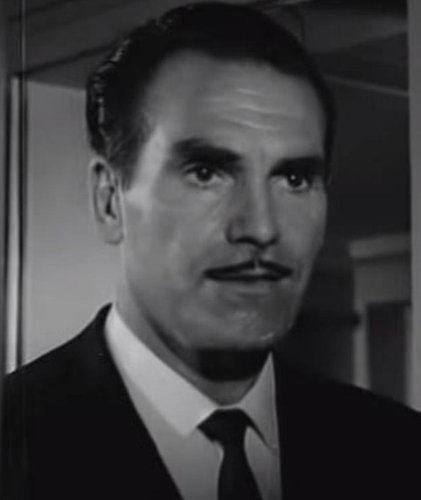
The cast includes Halide Pişkin as Zübeyde Hatun, Vedat Karaokçu as Timur, Salih Tozan as Mişon Efendi and Adil Güldürücü as a thief. Hasan Mutlucan wrote the music, Kazım Koşkan shot the film and Ertem Göreç edited it. İnci Birol was dubbed by Nevin Akkaya.

DirectorFaruk Kenç

Reactions

You can pick up to 3 reactions.

Cast

İsmail Hakkı Dümbüllü Actor · 1897 – 1973 Zeki Alpan Vedat Karaokçu Halide Pişkin Halide Pişkin Actor · died at 57 Alev Koral Ali Üstüntaş Tamer Balcı Tamer Balcı Actor · died at 75 Salih Tozan İnci Birol Muzaffer Hepgüler Adil Güldürücü Cemal Karakas
Through different eyes

Yeşilçam Nostalgic A viewer raised on the classics, looking for warm storytelling and strong acting.

Bringing Nasreddin Hodja to the screen means giving flesh to a wisdom people have passed down for centuries, and this film had the nerve to do it in the early years of Yeşilçam. A Hodja who resists a tyrannical judge with his wits carries the moral compass of the old folk tales intact: when power does wrong, cleverness and conscience step in. Entrusting the music to Hasan Mutlucan suits a story so rooted in folk culture. A precious keepsake for anyone who loves the naive, heartfelt storytelling of that era; eyes used to today's pace will need a little patience.

History & Society Lens Asks about the period, the social background and what the work reflects.

The film builds Nasreddin Hodja less as the hero of a joke than as the conscience of ordinary people. The judge he faces stands for an authority whose word is law and who has become a curse on the townsfolk, which is the Hodja tradition of mocking power carried over to cinema. The romance between the Hodja's son and the daughter of a local notable adds the class distance of small-town life to the story. It is an interesting example of how 1950s Turkish cinema leaned on folk culture, though it should be read as folklore reimagined rather than as a portrait of a historical period.

Cinephile Looks at script, editing and directing choices; keeps a distance from formula films.

Although the title puts the Hodja and Timur side by side, the script's centre of gravity is the feud with the judge in Akşehir, which leaves a clear gap between the encounter the title promises and what the story is really about. Squeezing the judge's scheming, two separate love stories and the Timur thread into one short narrative makes the structure feel scattered, in my view; the plot pulls in several directions instead of gathering around one main line. That Zeki Alpan both wrote the screenplay and played the villain is an interesting detail: the character who drives the story is carried by its author. Post-synchronised sound, as in many films of those years, can leave a slight distance between performance and voice.

These are not reader reviews: they are short editorial takes written from different viewer perspectives with AI assistance. Reader reviews are below.

Reviews (0)

Log in Log in to write a review.

Comments