Crimen

Crimen

Movie · 1960 · 13 people

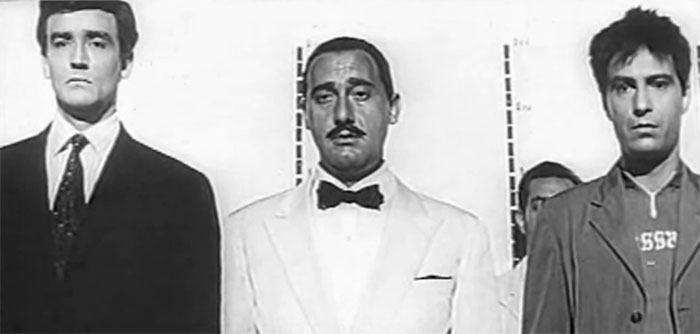
Mario Camerini directed Crimen in 1960, an Italian comedy built around a murder and mixing whodunit plotting with farce. Made as a French-Italian co-production, it travelled abroad under many names: ...And Suddenly It's Murder! and Killing in Monte Carlo in English, Chacun son alibi in France, Crimen en Monte Carlo in Spain and I exi ypoptoi (The Six Suspects) in Greece. It runs 106 minutes.

Alberto Sordi, Vittorio Gassman, Nino Manfredi, Silvana Mangano and Bernard Blier lead the cast, joined by Dorian Gray, Franca Valeri, Sylva Koscina, Tino Scotti and Georges Rivière. The story is built around alibis and secrets that tangle together once a crime has to be explained. Camerini wrote the script with Rodolfo Sonego and Luciano Vincenzoni, and by some accounts Oreste Biancoli also contributed.

The premise proved strong enough to be remade three times. In 1971 Camerini revisited his own film as Io non vedo, tu non parli, lui non sente with Gastone Moschin, Enrico Montesano and Alighiero Noschese. Once Upon a Crime (1992), directed by Eugene Levy, starred John Candy and James Belushi. The 2006 Hindi version 36 China Town, by Abbas–Mustan, had a large ensemble led by Akshaye Khanna, Shahid Kapoor and Kareena Kapoor, with Priyanka Chopra in a special appearance.

DirectorMario Camerini

Reactions

You can pick up to 3 reactions.

Cast

Only cast members with a profile on this site are listed.
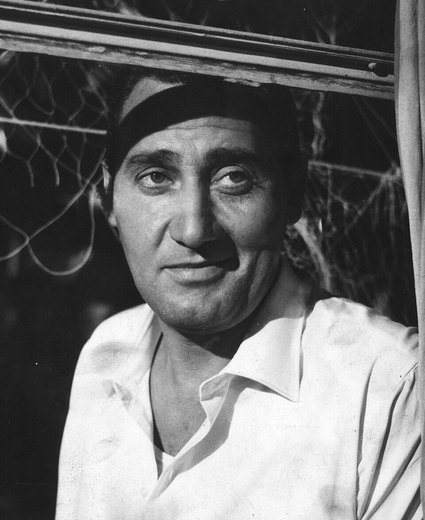
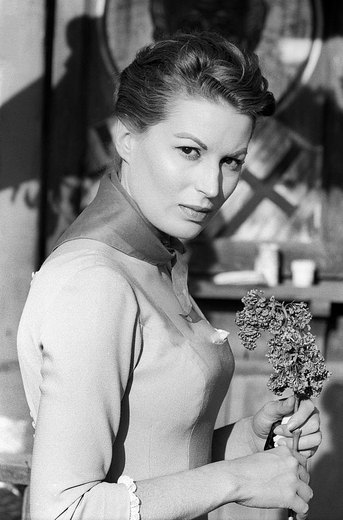
Alberto Sordi Alberto Sordi Film actor · died at 82 Silvana Mangano Silvana Mangano Actor · died at 59 Vittorio Gassman Nino Manfredi Dorian Gray Franca Valeri Bernard Blier Tino Scotti Philomena Georges Rivière Sylva Koscina Michele Riccardini María Martín
Through different eyes

Cinephile Looks at script, editing and directing choices; keeps a distance from formula films.

Crimen brings commedia all'italiana players such as Alberto Sordi, Vittorio Gassman and Nino Manfredi together in a single murder farce with a crowded cast. Camerini builds it like a classic whodunit, on alibis and secrets, but the real weight lies in the comedy of those secrets getting tangled. The danger in ensemble farces like this is that the story scatters while every star is given room, and in my view the film does not always keep that balance. The strength of the idea is clear, though: three remakes, from Camerini's own 1971 version to John Candy's Once Upon a Crime and the Hindi 36 China Town, show the basic mechanism works across cultures.

History & Society Lens Asks about the period, the social background and what the work reflects.

Crimen's structure rests on everyone's alibis and secrets spilling out once a crime has to be explained. That set-up lends itself well to a comic look at the gap between the face people show and what they hide. When suspicion turns everyone against everyone and nobody looks wholly innocent, you also sense how fragile social respectability is. The fact that the idea travelled from Italy to America and India in remakes shows that the comedy of ordinary people under suspicion resonates in very different societies.

Family Viewer Asks whether the whole household can watch it; cares about humour and heart.

It is a comedy built around a murder, but the tone is closer to farce than to suspense. The humour runs on alibis and secrets that get mixed up. Because the story is told through a big cast and a tangled set-up, small children may easily lose track. It is a better choice for teenagers and adults who enjoy a whodunit puzzle.

These are not reader reviews: they are short editorial takes written from different viewer perspectives with AI assistance. Reader reviews are below.

Reviews (0)

Log in Log in to write a review.

Comments