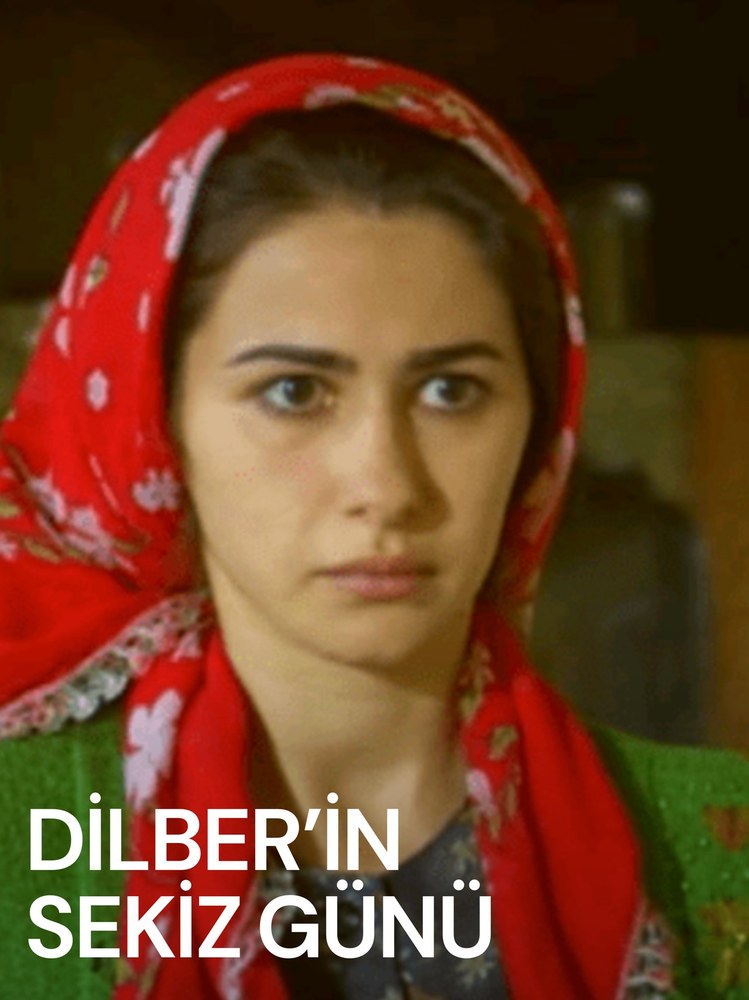
Dilber'in Sekiz Günü

Dilber's Eight Days (Dilber'in Sekiz Günü)

Movie · 2008 · 4 people

Cemal Şan wrote and directed Dilber's Eight Days (Dilber'in Sekiz Günü), a 2008 Turkish drama running about 107 minutes. It is the second of the director's three "Love Trilogy" films, coming after Zeynep's Eight Days (2007) and before Ali's Eight Days (2009). All three titles carry the phrase "Eight Days". Şan is also reported to have produced the film.

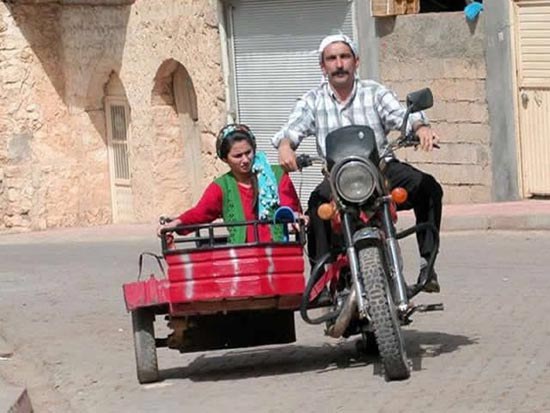
The story is built around Dilber, a young woman in a poor village in the east. Her only dream is to marry her childhood sweetheart Ali, but when she realises the union will never happen she shuts herself in the family barn and swears to marry the first man who asks for her. A lame stranger who arrives in the village puts that vow to the test. Turned away by the man she loves, the young woman ends up leaving the village with a stranger. Nesrin Cavadzade plays Dilber, with Fırat Tanış, Mustafa Üstündağ and Necmettin Çobanoğlu alongside her, and Osman Akça is also named in the cast.

The film was shown in competition at the 45th Antalya Golden Orange Film Festival, held from 10 to 19 October 2008. It opened across Turkey on 24 April 2009 and was nominated at the 3rd Yeşilçam Awards on 23 March 2010.

DirectorCemal Şan
Dilber's Eight Days (Dilber'in Sekiz Günü) Dilber's Eight Days (Dilber'in Sekiz Günü) Dilber's Eight Days (Dilber'in Sekiz Günü)

Reactions

You can pick up to 3 reactions.

Cast

Through different eyes

Cinephile Looks at script, editing and directing choices; keeps a distance from formula films.

The middle panel of Cemal Şan's Love Trilogy, Dilber's Eight Days carries the personal stamp of a project in which one person wrote, directed and produced. The structure is spare: a vow, a lame stranger who arrives in the village, and the testing of that vow. That simplicity gives the film the feel of a folk tale, but it also leaves nearly all the weight on Nesrin Cavadzade's shoulders. Strong performers such as Fırat Tanış and Mustafa Üstündağ give the supporting roles some heft. My reservation is length: 107 minutes can at times feel long for so slender a story, and its frame is not layered enough to keep nearly two hours taut throughout. Still, its selection for the Golden Orange competition points to a film that takes its craft seriously.

History & Society Lens Asks about the period, the social background and what the work reflects.

The film centres on a poor village in the east, a world where marriage looks like almost the only door open to a young woman. Dilber shutting herself in the family barn and swearing to marry the first man who asks for her can be read as a personal revolt, but also as a sign of how narrow her room for choice is. In an order where a union with her childhood sweetheart is out of reach and decisions are hemmed in by family, neighbours and vows, one is reminded how often women's fates in rural life rest in other people's hands. Watched alongside the trilogy's other two films, it may offer a wider picture of love colliding with social limits.

Family Viewer Asks whether the whole household can watch it; cares about humour and heart.

This is a heavy drama. It has a broken romance, a vow and hard decisions. It is not suitable for young children: the subject is heavy and the storytelling asks for patience. For teenagers and adults, though, there is a lot to talk about afterwards: a young woman's dreams, her family and the promise she makes. If you want comedy or a light evening, pick another film. It suits a quiet, thoughtful viewing better.

These are not reader reviews: they are short editorial takes written from different viewer perspectives with AI assistance. Reader reviews are below.

Reviews (0)

Log in Log in to write a review.

Comments