The Lamb (Kuzu)

The Lamb (Kuzu)

Movie · 2014 · 12 people

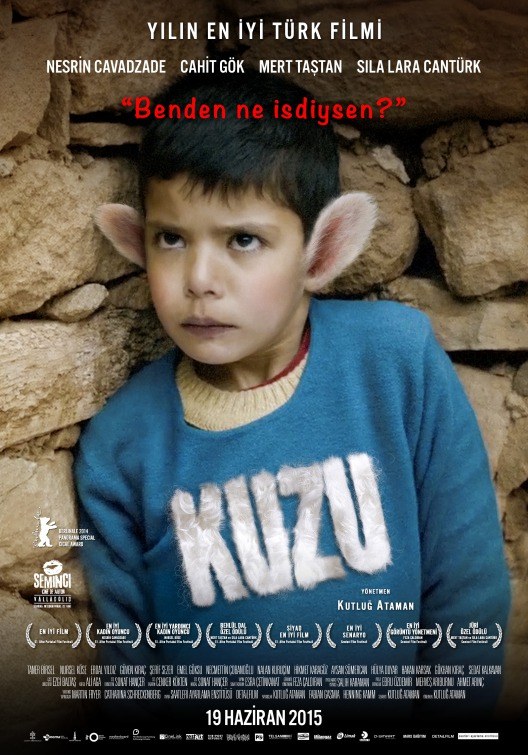
Kuzu (The Lamb) is a 2014 Turkish-German drama about a young mother in a poor village in eastern Anatolia who tries to find a lamb for her son's feast. Kutluğ Ataman wrote and directed it. Its working title was Güneye Bakan Duvar. It premiered in the Panorama section of the 64th Berlin International Film Festival, where it received a CICAE award, and opened in Turkey on June 19, 2015.

Twenty-seven-year-old Medine (Nesrin Cavadzade) wants to throw a feast for her five-year-old son Mert. It needs a lamb roasted in the tandoor, but the family cannot raise the money. Her husband İsmail (Cahit Gök) is distracted by a visiting singer. Mert's sister Vicdan, jealous of his attention, frightens him with talk that he will be sacrificed if no lamb turns up, so he goes searching. Medine, battling poverty and social pressure, must finally seek help from an unexpected place.

The producers include Fabian Gasmia, Henning Kamm and Catharina Schreckenberg, through Sil Saatleri Ayarlama Enstitüsü. Music is by Can Erdogan-Sus, photography by Feza Çaldıran. The film won Best Film at the Antalya Golden Orange and was shown in Sarajevo, London, Thessaloniki and Seattle.

DirectorKutluğ Ataman
Production companySil Saatleri Ayarlama Enstitüsü
The Lamb (Kuzu)

Reactions

You can pick up to 3 reactions.

Cast

Through different eyes

AI-assisted editorial takes written from different viewer perspectives. They are not reader reviews; those are below.

Cinephile Looks at script, editing and directing choices; keeps a distance from formula films.

In Kuzu, Kutluğ Ataman builds a story not around a big dramatic event but around a small wish: a mother's struggle to find a lamb for her son's circumcision feast. The tight running time keeps the narrative free of padding. The film moves Medine's fight against poverty and social pressure in parallel with the fear Mert lives through a child's eyes; his sister's threat that he will be sacrificed adds a dark fairy-tale tone to a realist drama. Nesrin Cavadzade's performance is the film's load-bearing column. Its Berlin Panorama screening and Best Film win at the Golden Orange feel like a fair return on this restrained but sharp craftsmanship.

History & Society Lens Asks about the period, the social background and what the work reflects.

Kuzu shows, in a poor village in eastern Anatolia, the pressure a tradition puts on a family's budget. A lamb roasted in the tandoor for a circumcision feast is not just food here but the family's standing in front of its neighbors. Medine wrestling alone with both poverty and social expectations shows how, in rural life, the load so often falls on the woman; her husband's mind being on a visiting singer only sharpens that loneliness. The film even frames sibling jealousy in the language of tradition, through the idea of sacrifice. A calm, observational portrait of the provinces that never lectures.

Family Viewer Asks whether the whole household can watch it; cares about humor and heart.

Kuzu starts like a warm family story, but a small boy living in fear that he will be sacrificed may frighten some children. Poverty and family tension are heavy subjects too. The pace is calm and little ones may get bored. But it carries tender feelings about motherhood and siblings. Better suited to watching with kids older than primary-school age, together with parents.

Reviews (0)

Log in Log in to write a review.

Comments