Geriye Kalan

The Remaining (Geriye Kalan) (translated)

Movie · 2012 · 5 people

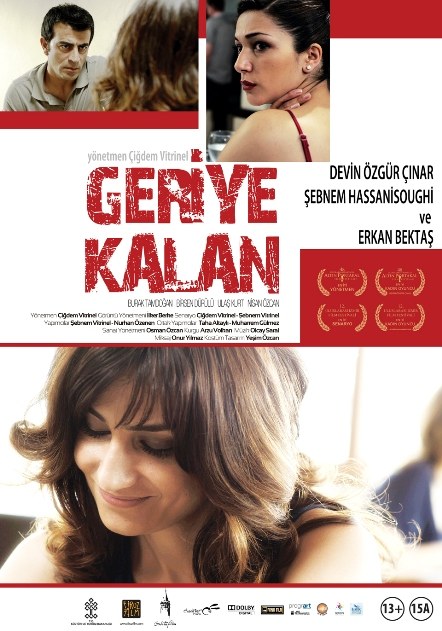
Infidelity in a marriage, seen through three people, is the subject of Geriye Kalan, the Turkish drama that was Çiğdem Vitrinel's first feature. Vitrinel directed and produced it and co-wrote the script with Şebnem Vitrinel. It came back from the competition of the 48th Golden Orange Film Festival with Best Director and, for Devin Özgür Çınar, Best Actress, and reached cinemas on 7 September 2012 at about 97 minutes.

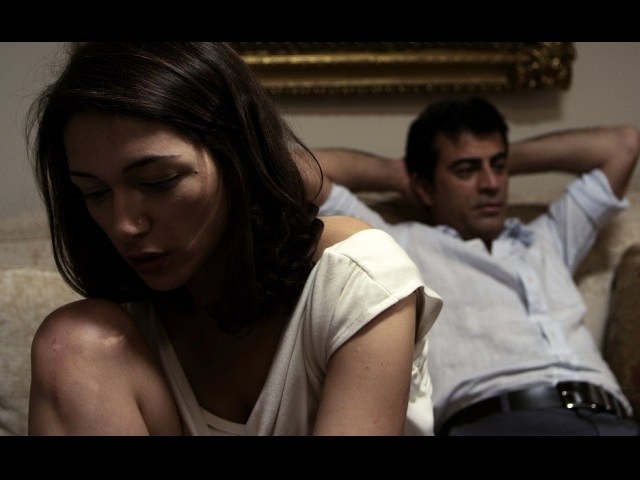
Sevda has spent seven years keeping her marriage orderly and peaceful, and has tied her whole future to her husband Cezmi. Her world falls apart when she learns he is involved with Zühal, who works at the same hospital. Zühal, the triangle's other corner, is divorced and raising a sick son; squeezed between work and his needs, she finds excitement, passion and trust in Cezmi. While Sevda clings to her marriage and worms her way into the other woman's life, the unexpected return of Zühal's ex-husband Mustafa, who wants to reconcile, shakes the balance again.

Devin Özgür Çınar, Şebnem Hassanisoughi, Erkan Bektaş and Burak Tamdoğan share the leads, with Birsen Dürülü also in the cast. One reviewer notes it tells no new story: an upper-middle-class couple whose bond has shrunk to sex and money, and the fear of losing what one has.

DirectorÇiğdem Vitrinel
The Remaining (Geriye Kalan) The Remaining (Geriye Kalan) The Remaining (Geriye Kalan) The Remaining (Geriye Kalan)

Reactions

You can pick up to 3 reactions.

Cast

Through different eyes

Cinephile Looks at script, editing and directing choices; keeps a distance from formula films.

Çiğdem Vitrinel's first feature chooses to tell its story of infidelity through three people rather than locking it into one point of view, and that structural decision is the film's greatest strength. Giving each corner of the triangle formed by Sevda, Zühal and Cezmi its own weight keeps the audience from easy judgement. The Best Director prize from the 48th Golden Orange and Devin Özgür Çınar's Best Actress award come as no surprise; the cracking of Sevda's orderly life rests largely on Çınar's performance. On the other hand, as one reviewer put it, the film tells no new story. Mustafa's unexpected return shakes the balance and livens up the structure, yet the narrative never quite escapes the familiar patterns of the love triangle. At about 97 minutes, the running time is well judged.

History & Society Lens Asks about the period, the social background and what the work reflects.

Geriye Kalan treats infidelity not as a morality tale but as an upper-middle-class marriage taking stock of itself. The contrast between Sevda, who has given seven years to keeping her marriage orderly and tied her whole future to her husband, and Zühal, divorced and raising a sick son while squeezed between work and care, brings into view the economic and emotional dependencies that shape women's lives. As one critic observed, the real subject is a bond shrunk to sex and money and the fear of losing what one has. A story about people who work at the same hospital also says something about how urban working life spills into private life.

Yeşilçam Nostalgic A viewer raised on the classics, looking for warm storytelling and strong acting.

Yeşilçam loved a love triangle too, but in those films a glimmer of hope, a chance of forgiveness, always lingered even amid the pain. Geriye Kalan looks on from a cooler, more distant place. Devin Özgür Çınar's award-winning performance deserves its due; she conveys the helplessness of a woman clinging to her marriage with real sincerity. Even so, a view of marriage as a bond reduced to sex and money leaves a viewer like me, who looks for a moral centre in a story, a little chilled. So I respect the film, but I find it hard to love.

These are not reader reviews: they are short editorial takes written from different viewer perspectives with AI assistance. Reader reviews are below.

Reviews (0)

Log in Log in to write a review.

Comments