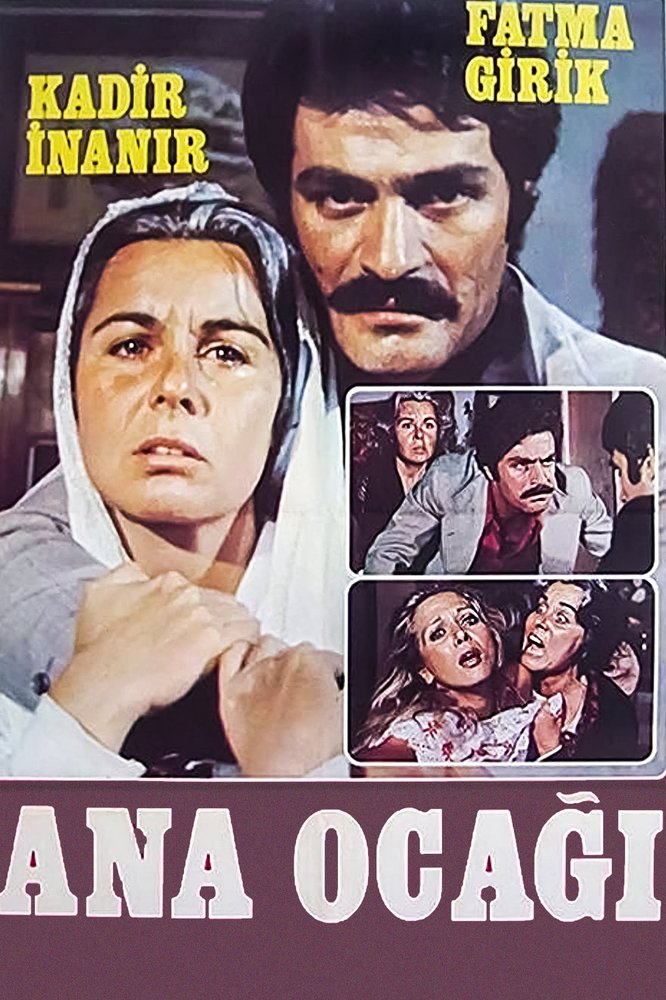
Ana Ocağı

Mother's Home (Ana Ocağı) (translated)

Movie · 1977 · 3 people

Osman F. Seden wrote and directed the Turkish drama Ana Ocağı ("Mother's Home"). Recorded as a 1977 production, it was released on 1 February 1978. Shot in color, it runs 87 minutes and is classed as drama. Memduh Ün produced it under the Uğur Film banner. Kadir İnanır and Fatma Girik share the leading roles.

Fatma, left a widow, carries on her husband's transport business to raise her children, and as the years pass finds them hard to handle. Her son Kadir, made rebellious by fatherlessness and poverty, is hungry for money and power, and the hunger pushes him into the criminal underworld. Kamil, a crime boss, starts using him for dirty work, but fears that Kadir may one day learn who killed his father, so he sets a trap for him. Fatma Girik plays the mother, Kadir İnanır plays Kadir, Yıldırım Gencer is Kamil, Betül Aşçıoğlu plays Nur and Hikmet Taşdemir is Kamil's right-hand man Hikmet. Seden himself appears as a lawyer. Prison, the mafia, revenge and suicide figure among its dark elements.

Cahit Engin was the cinematographer. The film was also dubbed: Jeyan Mahfi Tözüm voices Fatma Girik and Abdurrahman Palay voices Kadir İnanır.

DirectorOsman Fahir Seden
Production companyUğur Film

Reactions

You can pick up to 3 reactions.

Cast

Through different eyes

Yeşilçam Nostalgic A viewer raised on the classics, looking for warm storytelling and strong acting.

Seeing Fatma Girik as a widowed mother who shoulders her late husband's transport business to raise her children alone touches one of Yeşilçam's truest veins. Osman F. Seden, who both wrote and directed, sets a mother's heart against the ambition of a son raised in the shadow of poverty. Kadir İnanır's rebellious young man recalls the angry heroes of those years. To my mind the film's heart beats not in the dark streets but by the hearth, and its title says so beautifully. The voices of Jeyan Mahfi Tözüm and Abdurrahman Palay add that familiar warmth so typical of the cinema of the time.

History & Society Lens Asks about the period, the social background and what the work reflects.

Ana Ocağı asks a question that late-1970s cinema often returned to: why are money and power so seductive to a young man who grows up fatherless and poor? Fatma, who keeps her late husband's transport business going and becomes the family's breadwinner, is an interesting figure in terms of the gender roles of the period. Kadir's slide into the underworld shows where poverty and crime intersect. Elements such as prison, the mafia and revenge lean on the popular formulas of the day, so the social observations sometimes get lost in the noise of melodrama. Even so, the tension between mother and son makes you think about how family ties are tested under economic pressure.

Family Viewer Asks whether the whole household can watch it; cares about humour and heart.

The title may sound like a warm family film, but Ana Ocağı is a heavy drama. It deals with dark subjects such as the mafia, prison and revenge, so it isn't one to watch with children. The story of a mother's hard work and her son going down the wrong road gives adults plenty to think about. Grandparents who love old Turkish films will enjoy it, but leave the little ones for another evening.

These are not reader reviews: they are short editorial takes written from different viewer perspectives with AI assistance. Reader reviews are below.

Reviews (0)

Log in Log in to write a review.

Comments