Dönüş

Return (Dönüş) (translated)

Movie · 1972 · 3 people

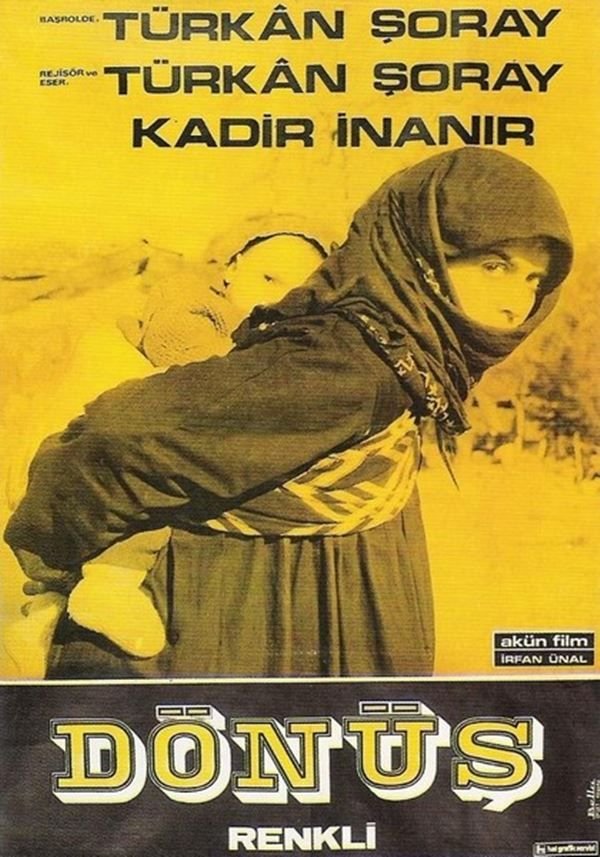
Released in 1972, the Turkish drama Dönüş ("Return") runs about 94 minutes. It is Türkân Şoray's first film as a director, and she also takes the female lead. Safa Önal wrote the script. The film is one of a run of Turkish pictures, starting in the early 1970s, that put the "Almancılar", the Turkish workers in Germany, at the centre of the story; in French it is Le Retour.

The story is built around two people: İbrahim (Kadir İnanır), a migrant worker in Germany, and his wife Gülcan (Türkân Şoray), whom he left in the village. İbrahim has grown ever more alienated from the society he lives in, and has even married a German woman and had a child. Gülcan lives alone in the village and her name becomes the subject of gossip. İbrahim sees it as his duty to clear his honour and returns home. A painful reckoning begins between the emigrant husband and his village wife. Bilâl İnci and Osman Alyanak also appear.

The production treats the damage labour migration does to family ties, and the weight of honour codes in the countryside, in an emotional register. Some viewers describe a film they have watched many times since childhood and cried at each time.

DirectorTürkân Şoray

Reactions

You can pick up to 3 reactions.

Cast

Through different eyes

Yeşilçam Nostalgic A viewer raised on the classics, looking for warm storytelling and strong acting.

Dönüş, Türkân Şoray's first time behind the camera, shows that she was not only a great actress but also a sensitive storyteller. She plays Gülcan, left alone in the village and targeted by gossip, with such quiet dignity that her looks say more than words. Kadir İnanır makes the hardness of İbrahim, estranged in a foreign land, believable. Safa Önal's script sometimes leans a little too much on suffering, but in the cinema of those years tears were nothing to be ashamed of. It is no accident that it is remembered as a film people watch again and again, crying every time.

History & Society Lens Asks about the period, the social background and what the work reflects.

Dönüş is an important link in the chain of early-1970s films about the "Almancı", Turkish workers in Germany, and it shows that migration was not only an economic matter but a rupture within families. İbrahim, estranged in Germany where he has started a new family, and Gülcan, left alone in the village, stand for the two ends of labour migration: the identity crisis of those who left and the social policing of those who stayed. The gossip around Gülcan shows how easily a woman's honour became public business in rural life. İbrahim returning in the name of honour while he himself has built another life lays bare a double standard. The film tells this not as a thesis but as an emotional drama, a valuable record of the period's social memory.

Family Viewer Asks whether the whole household can watch it; cares about humour and heart.

A very emotional film that will make you cry, so keep tissues handy. But the subject is heavy: a second marriage, village gossip and a harsh reckoning over honour. Not suitable for young children. Watched with teenagers, it can open a good conversation about migration, family and the pressure placed on women. A classic that grandmothers will gladly sit down to.

These are not reader reviews: they are short editorial takes written from different viewer perspectives with AI assistance. Reader reviews are below.

Reviews (0)

Log in Log in to write a review.

Comments