C Blok

Block C (C Blok) (translated)

Movie · 1994 · 13 people

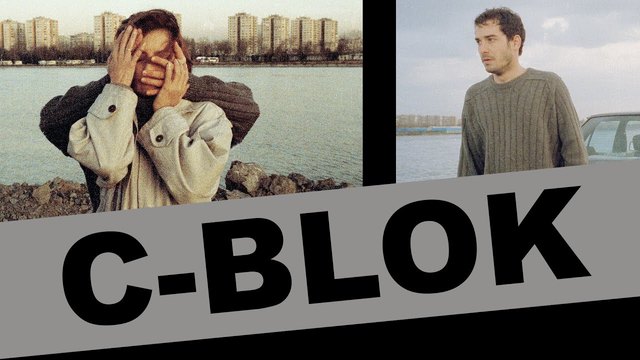
Zeki Demirkubuz made his first feature film, the 1994 Turkish drama C Blok (C Block). Demirkubuz wrote, directed and produced it for Mavi Filmcilik, and it opened in August 1994. It runs 92 minutes. Demirkubuz is regarded as one of the most distinctive directors in Turkish cinema, and this debut is remembered as a successful first film. It won the Jury Special Award in the national competition at the 1994 Istanbul Film Festival, plus prizes at the Ankara Film Festival and the 1995 SİYAD awards.

The story centres on Tülay, who lives in Block C of a housing complex. Her marriage continues only on paper, and happiness is just a word she knows the meaning of. One day she sees her maid and the building's caretaker together in her own bed and begins to take stock of her already troubled life. Shaken, she seizes a chance that comes her way and decides to build a completely different life. Serap Aksoy plays Tülay, with Fikret Kuşkan, Güler Ökten, Selçuk Yöntem and Zuhal Gencer Erkaya in the cast.

The film later found audiences again: Tv2 showed it in 2012 in a strand of first films by Derviş Zaim, Demirkubuz, Tolga Örnek and Semih Kaplanoğlu, and it reached the TOD platform in 2025.

DirectorZeki Demirkubuz
Production companyMavi Filmcilik

Reactions

You can pick up to 3 reactions.

Cast

Through different eyes

Yeşilçam Nostalgic A viewer raised on the classics, looking for warm storytelling and strong acting.

For an eye used to the warm, hopeful homes of Yeşilçam, C Blok is a cold wind. There is no world here where evil is defeated and hearts are reconciled in the end; there is a marriage quietly coming apart in a housing-block flat and a woman estranged from her own life. The heart-warming centre of the classics is left out on purpose, and in my view that stance will not embrace every viewer. Still, Tülay's decision to rebuild her life can be read as a new voice next to the women of our old melodramas who bowed to their fate.

Cinephile Looks at script, editing and directing choices; keeps a distance from formula films.

Written, directed and produced by Demirkubuz himself, this debut rests its dramatic structure on a single breaking point: Tülay finding her maid and the caretaker in her own bed. The rest traces the shock that moment sends through one character. Such a structure is strong to the extent that it trusts suggestion over explanation, and confining the story to one housing block gives it a tight frame. Its weakness comes from the same place: because the character's inner change is left largely to the viewer's reading, the gaps may feel too wide for anyone looking for clear motives. The festival prizes look deserved for a first film, but this minimal language is not for everyone.

History & Society Lens Asks about the period, the social background and what the work reflects.

Even the housing block in the title is a sign of its time: for the urban middle class of the nineties, a tidy, sheltered and yet isolating place to live. The film's breaking point has a class dimension. The maid and the caretaker, the household's invisible workers, taking over the owner's bed shows how fragile the order Tülay thought she possessed really is. A marriage that survives only on paper also recalls how hard divorce was as an option for women of the period. In that sense the film is more than one woman's story; it is a small but sharp observation of class and gender in city life.

These are not reader reviews: they are short editorial takes written from different viewer perspectives with AI assistance. Reader reviews are below.

Reviews (0)

Log in Log in to write a review.

Comments