Hep Ezildim

I Was Always Oppressed (Hep Ezildim) (translated)

Movie · 1989 · 1 person

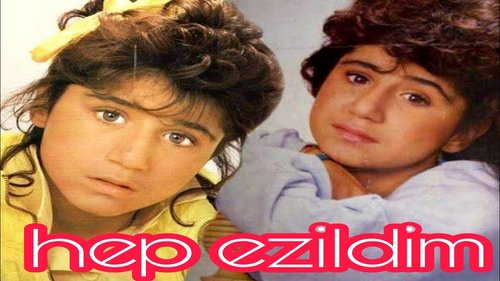
The 1989 Turkish film Hep Ezildim ("I Was Always Crushed") blends drama, arabesk and adventure. It was directed by Temel Gürsu from a screenplay by Erdoğan Tünaş, produced under the Gözde Film banner with Zikri Göksoy credited as producer. Shot in colour on 35 mm, it puts a broken household at the centre of its story.

The story begins with Doctor Orhan Olcay, a neurosurgeon regarded as one of the most respected in the city, who works at a hospital in Istanbul. He grows close to one of his patients, a woman, and falls in love, but she refuses to leave him alone, and his marriage and family are pushed to the brink of collapse. The emotional weight rests on a little girl who struggles to bring the shattered family back together. Orçun Sonat plays Orhan, and Ceylan shares the lead billing. The cast also includes Tuluğ Çizgen as Nuran, Hakan Tanfer as Tahsin, Ünsal Emre as Celal and Sibel Gökçe as Nazan, with the child actor Şahin Nacar as Ahmet.

Salih Dikişçi was the director of photography and Kadir Şeker composed the music. In the dubbed version, Nilgün Kasapbaşoğlu voices Ceylan and Erhan Yazıcıoğlu voices Orçun Sonat, while Sineray handled the film's preparation and voice work.

DirectorTemel Gürsu
Production companyGözde Film
I Was Always Oppressed (Hep Ezildim)

Reactions

You can pick up to 3 reactions.
Cast

Through different eyes

Yeşilçam Nostalgic A viewer raised on the classics, looking for warm storytelling and strong acting.

The arabesque dramas of the late eighties carried the legacy of Yeşilçam melodrama into a sadder key, and Hep Ezildim draws from that same vein. Placing the story's burden on a child's shoulders was a path the old masters loved too: weighing the mistakes of grown-ups against a child's innocence is the contrast that grips an audience most deeply. But it is a double-edged sword; when the measure slips, feeling gives way to a tear-jerking machine. Lovers of classic melodrama will find a familiar warmth, yet in my view the film should be judged by how close it comes to the subtle simplicity of those classics.

History & Society Lens Asks about the period, the social background and what the work reflects.

In the late eighties arabesque was strong not only in music but in cinema, and this film carries that sensibility into the home of a wealthy, respected doctor: status and profession are not enough to keep the household from being shaken. Leaving the task of reuniting the family to a little girl is a typical example of how stories of the period used the child as the conscience of the adults. What is open to debate is how the blame is shared out: foregrounding the woman who will not let go as the threat to the home is a familiar pattern that places responsibility on the outsider rather than the married man. Anyone looking with today's eyes cannot miss that choice.

Family Viewer Asks whether the whole household can watch it; cares about humour and heart.

At its heart are a family on the verge of falling apart and a little girl trying to save it, a story children can easily connect with. But since it deals with an affair and a broken home, young kids may ask hard questions. The arabesque mood is heavy and sad, too. In my view it suits older children and teenagers better; if you want a cheerful family evening, pick another film.

These are not reader reviews: they are short editorial takes written from different viewer perspectives with AI assistance. Reader reviews are below.

Reviews (0)

Log in Log in to write a review.

Comments