Dolap Beygiri

The Mill Horse (Dolap Beygiri) (translated)

Movie · 1982 · 4 people

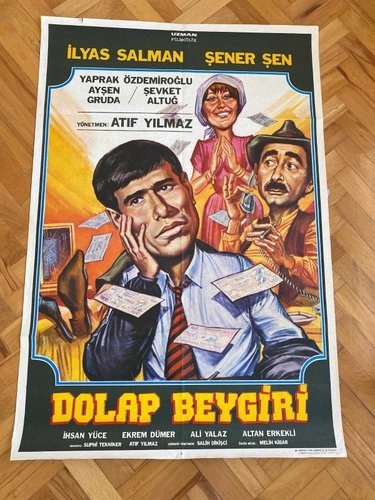
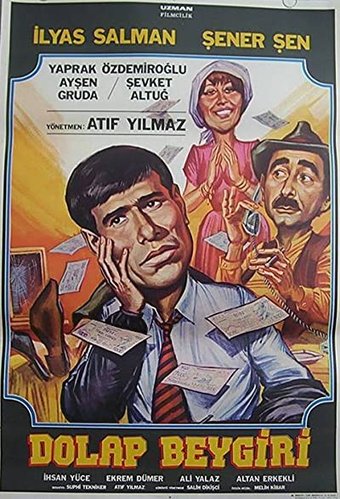
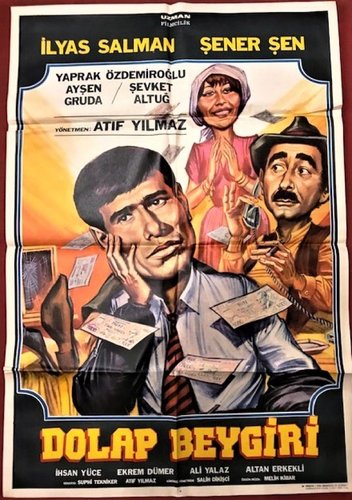
Atıf Yılmaz directed Dolap Beygiri, a Turkish film from 1982. It combines comedy, political content and drama, was shot in colour on 35 mm and runs about 90 minutes. Yılmaz co-wrote the screenplay with Suphi Tekniker. Uzman Film made it with Ferit Turgut as producer, and it opened on 1 October 1982. Melih Kibar composed the music and Salih Dikişçi was the cinematographer. It has been called an Atıf Yılmaz classic.

After finishing college, Ali becomes a civil servant but is dismissed for his honesty and his refusal to take bribes. Reassigned to the big city, he moves in with his sister Hacer and her husband Yakup. The harder he tries to serve the public with a sense of sacred duty, the more he upsets those content with the system. Yakup is an opportunist who has taken more than his share of a corrupt order, and he makes Ali's job much harder. Bribery, fraud and decay form the backdrop.

İlyas Salman plays Ali, Şener Şen is Yakup and Ayşen Gruda is Hacer. Şevket Altuğ appears as the manager, Altan Erkekli as a clerk and Ali Yalaz as Rıfkı. As was usual then, some of the actors were dubbed by voice artists, and Acar Film handled the preparation work.

DirectorAtıf Yılmaz
Production companyUzman Film
The Mill Horse (Dolap Beygiri) The Mill Horse (Dolap Beygiri)

Reactions

You can pick up to 3 reactions.

Cast

Through different eyes

History & Society Lens Asks about the period, the social background and what the work reflects.

In 1982 Atıf Yılmaz tells a story of bribery and corruption through the eyes of an honest civil servant. Ali losing his job for refusing bribes, then facing the same order all over again in the big city, gives meaning to the image in the title, the treadmill horse: a life going round in the same circle. His brother-in-law Yakup is a vivid example of the opportunist who has taken more than his share from the system. The film paints a society where honesty in public service has a price, and it does so in a tragicomic key. That the subject still feels familiar today is perhaps the most thought-provoking thing about it.

Cinephile Looks at script, editing and directing choices; keeps a distance from formula films.

The script by Atıf Yılmaz and Suphi Tekniker tries to combine comedy, political content and drama in a single character's journey. The contrast between İlyas Salman's guileless honesty and Şener Şen's sly opportunism is the film's dramatic backbone, and the two actors' different rhythms give their scenes a lively tension. Ayşen Gruda's Hacer is caught between those two poles. Salih Dikişçi's cinematography and Melih Kibar's music give the production a careful frame. Its weakness is that the message is sometimes spelled out too plainly; because Ali's honesty is built almost flawless, the character stays somewhat one-dimensional. Dubbing some of the actors with voice artists also breaks the unity of the performances here and there.

Family Viewer Asks whether the whole household can watch it; cares about humour and heart.

Topics like bribery, fraud and corruption may bore young children. But the film puts its weight on humour and conscience. The scenes where İlyas Salman and Şener Şen face off will make the grown-ups laugh. It says that being honest is hard but worth it, which makes it a good film to watch with teenagers and talk about afterwards. Suitable from about age twelve.

These are not reader reviews: they are short editorial takes written from different viewer perspectives with AI assistance. Reader reviews are below.

Reviews (0)

Log in Log in to write a review.

Comments